
The 1940s were a defining decade for women’s hairstyles, marked by elegance, practicality, and iconic looks that continue to inspire today. For women with long hair, the era offered a stunning array of structured updos, soft waves, and polished rolls that balanced glamour with wartime practicality. Whether you’re seeking a vintage-inspired look for a special event or simply love the classic aesthetic, exploring these authentic 1940s womens hairstyles for long hair reveals timeless techniques and sophisticated silhouettes that remain effortlessly chic.
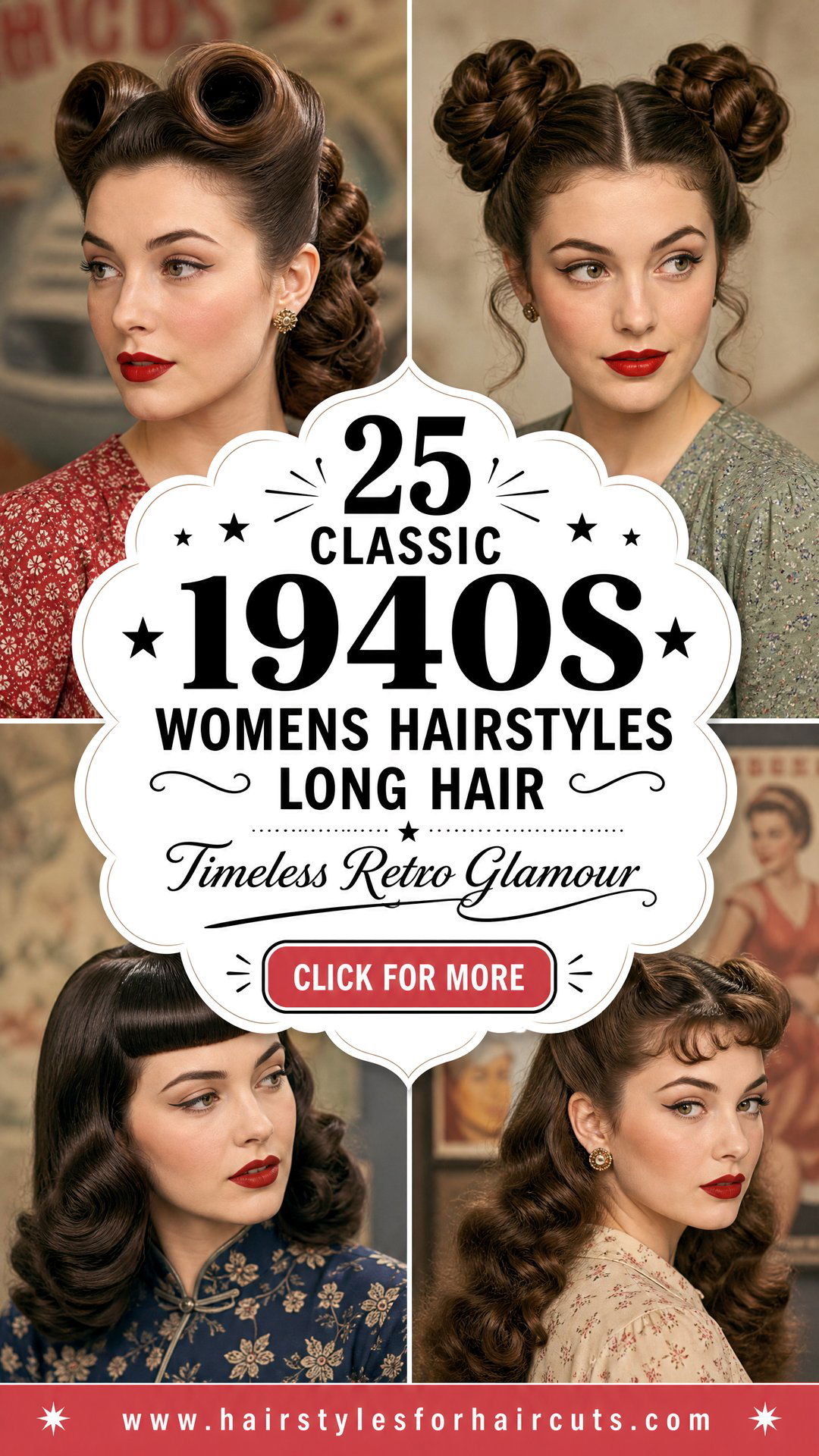
1. Victory Rolls Updo
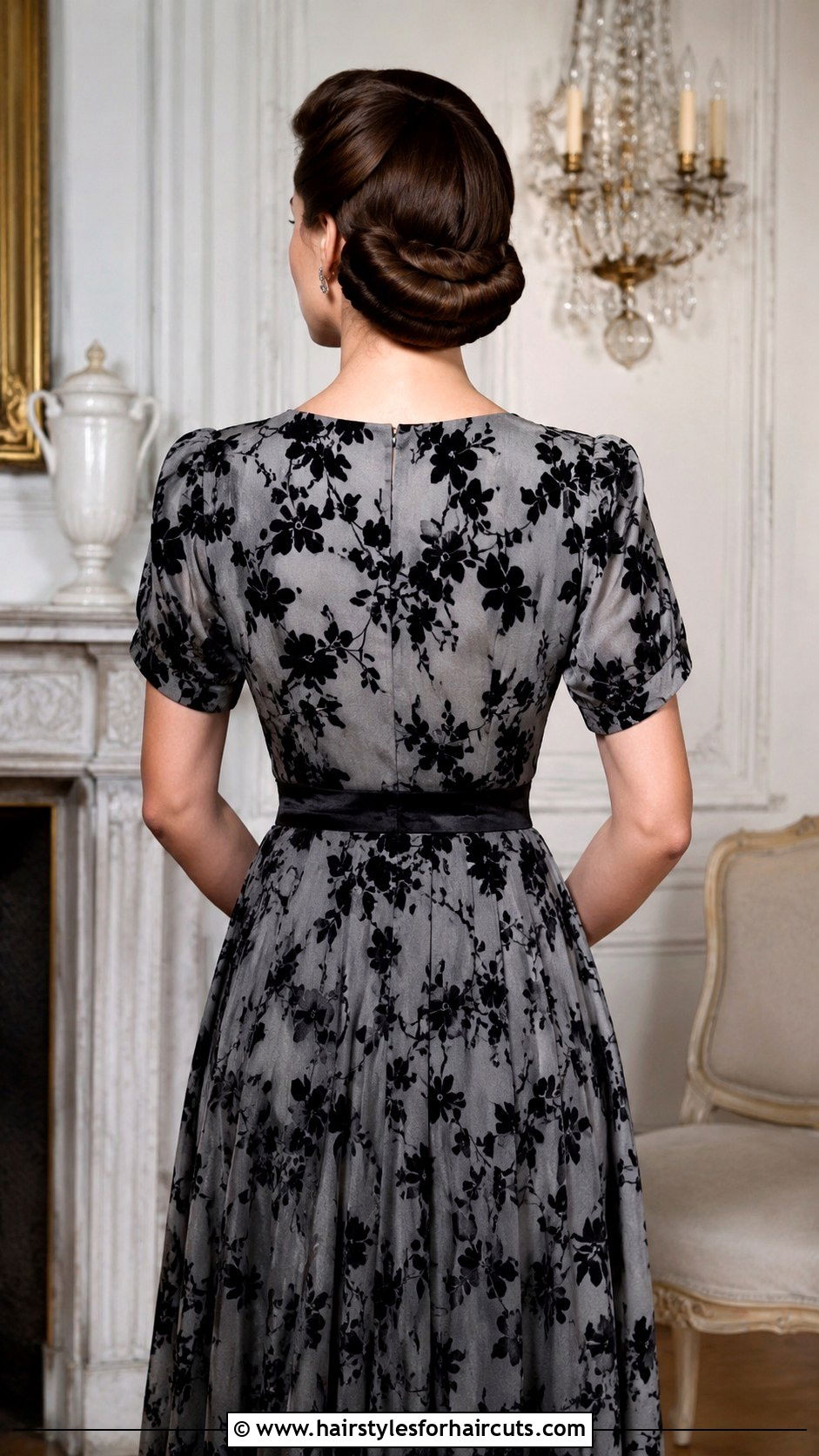
The Victory Rolls updo is perhaps the most iconic hairstyle of the 1940s, instantly recognizable and synonymous with the era’s wartime spirit. This style features two symmetrical, barrel-shaped rolls swept upward and back from the forehead, often framing the face and creating striking height and volume. The rolls were typically smooth and sculpted, achieved through careful pin curling and setting, and could be worn with the ends tucked under or left to sweep into a chignon or cascade of curls at the nape. Perfect for both formal occasions and everyday glamour, the Victory Rolls embodied a sense of patriotic pride and feminine resilience, making it a powerful symbol of the period.
2. Pageboy Haircut

The Pageboy haircut was a sleek and polished style that embodied the sophisticated side of 1940s fashion. This look featured hair that was cut in a long, U-shaped or horseshoe shape at the back, usually falling just below the shoulders, with the front sections smoothly turned under to create a clean, curved line that framed the face 【turn0search1】【turn0search12】. Unlike more voluminous styles, the Pageboy emphasized shine and neatness, often styled with a deep side part and finger waves for a streamlined, elegant finish. It was a versatile choice that could be dressed up or down, making it a staple for women seeking a refined and manageable long hairstyle.
3. Pin Curls Set
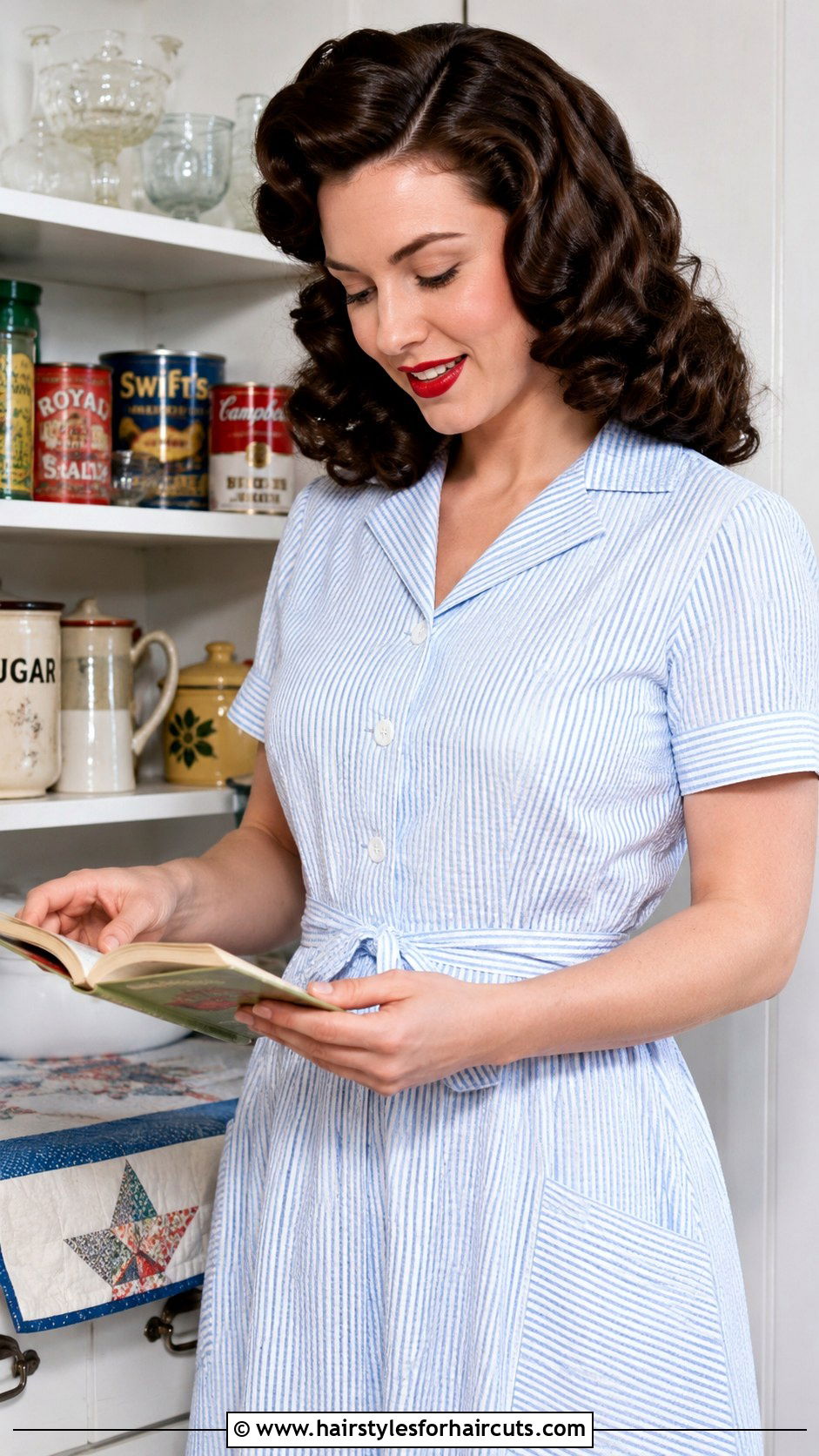
Pin curls were the fundamental building block of most 1940s hairstyles, and for long hair, a full pin curl set created a foundation of lasting waves and curls. This technique involved taking small sections of damp hair, wrapping them into coils flat against the scalp, and securing them with bobby pins until dry. Once set and brushed out, the hair would form soft, bouncy curls or waves that could be arranged into various styles, from loose, romantic waves to more structured updos. The pin curl set was essential for achieving the era’s signature textured looks, providing hold and movement that defined the decade’s approach to long hair styling 【turn0search4】.
4. Rolls With Long Hair
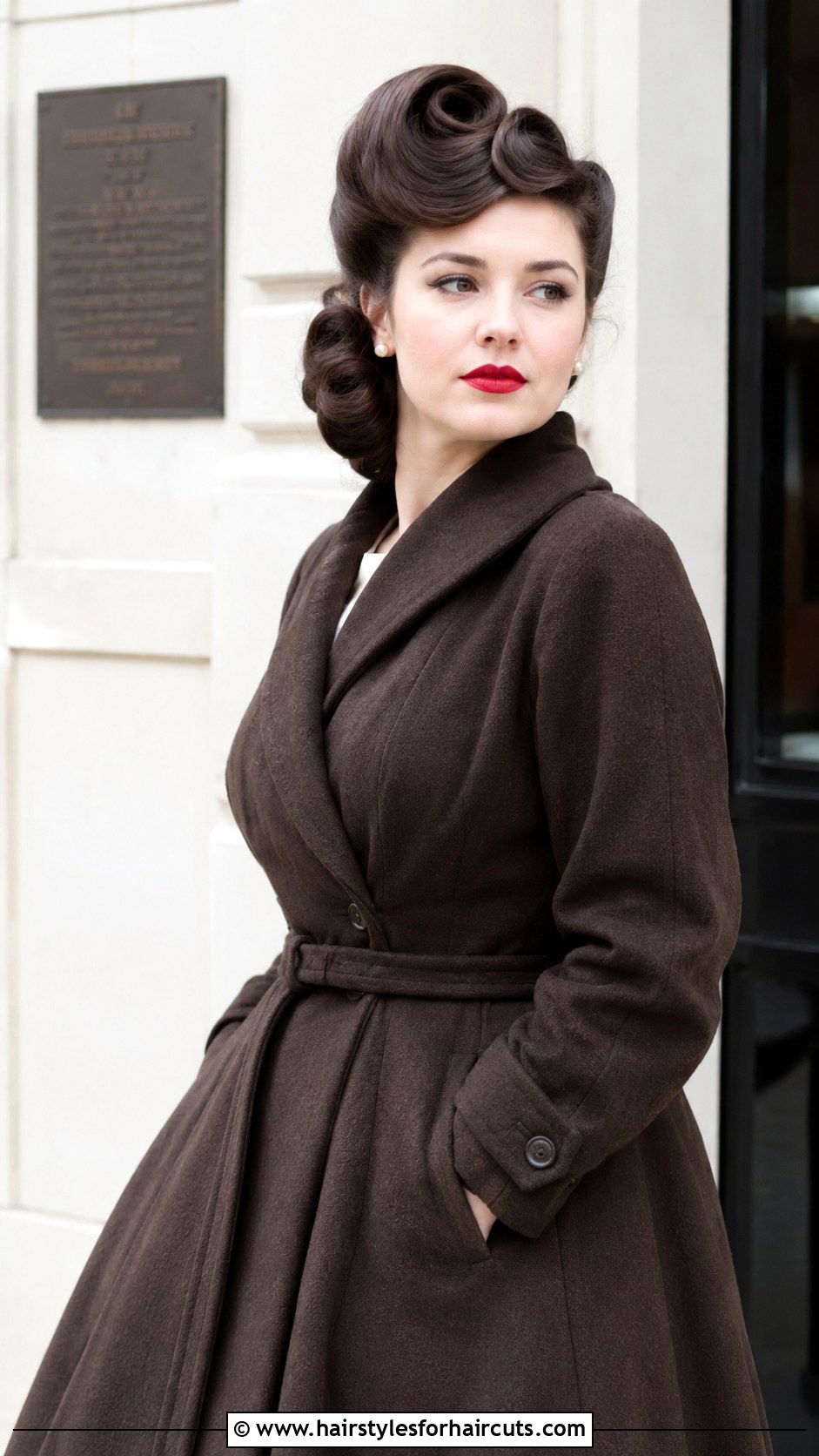
Beyond the classic Victory Rolls, the 1940s featured a variety of roll-based styles that artfully incorporated long hair. These could include single large rolls positioned asymmetrically, a series of smaller rolls cascading down the back, or rolls integrated into more complex updos. The hair would often be styled into smooth, tubular shapes, secured with pins, and combined with waves or curls for added dimension. This approach allowed for immense creativity, enabling women to adapt their long hair into structured, architectural styles that looked both intricate and polished, perfect for an evening out or a sophisticated daytime look 【turn0search4】.
5. Pompadour Style
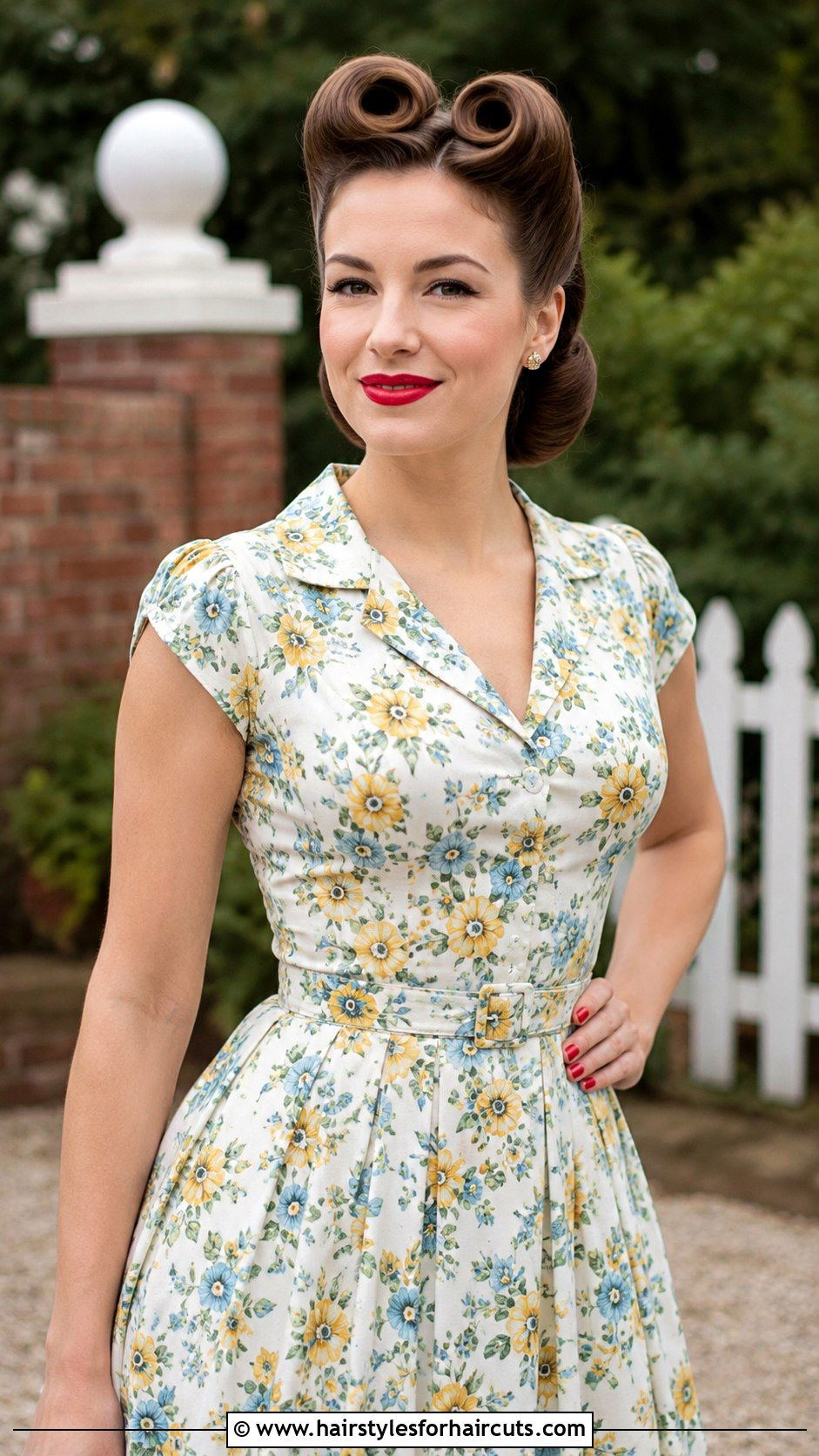
The 1940s pompadour was a dramatic and face-framing style that added height and volume at the front, while the long hair was swept back and secured into a roll or chignon. This look was often achieved by creating a smooth, puffed section of hair over the forehead, which could be styled as a soft, rounded puff or a more structured, sculpted roll. The sides and back were then seamlessly integrated into an updo or allowed to flow into long, styled curls. The pompadour was a favorite of Hollywood stars and added a touch of regal elegance to any long-haired look, emphasizing the eyes and cheekbones 【turn0search4】【turn0search14】.
6. Chignon Updo
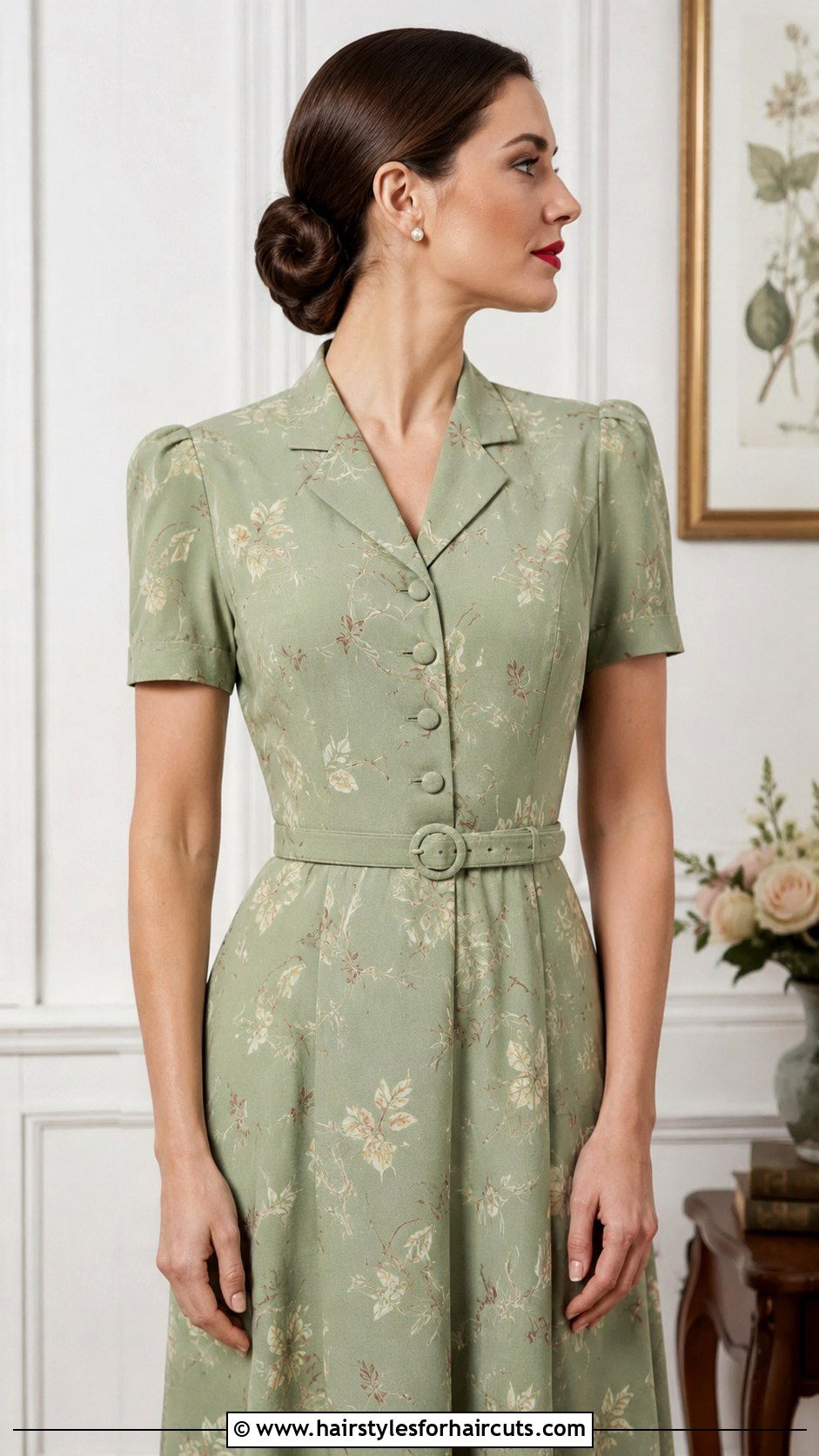
The chignon was a timeless and elegant updo for 1940s women with long hair, offering a simple yet sophisticated way to manage length. This style involved gathering the hair at the nape of the neck and twisting or rolling it into a smooth, low knot or bun. Variations included the figure-eight chignon, the rope chignon, or a soft, rolled bun. It was often paired with a sleek top section or soft waves around the face, creating a balanced look that was both practical for wartime work and refined for social events. The chignon’s enduring appeal lies in its classic grace and versatility 【turn0search17】.
7. Side Sweep Hairstyle

The side sweep hairstyle was a glamorous and romantic option for long hair, characterized by a deep side part and the bulk of the hair swept dramatically to one side. This style could feature soft, cascading curls, structured waves, or a smooth, polished sweep that tucked behind the ear and fell over one shoulder. It often incorporated elements like a small roll or a pin curl detail at the crown for added interest. The side sweep exuded old Hollywood allure and was a popular choice for evening, offering a sense of asymmetry and movement that framed the face beautifully 【turn0search17】.
8. Ears Buns
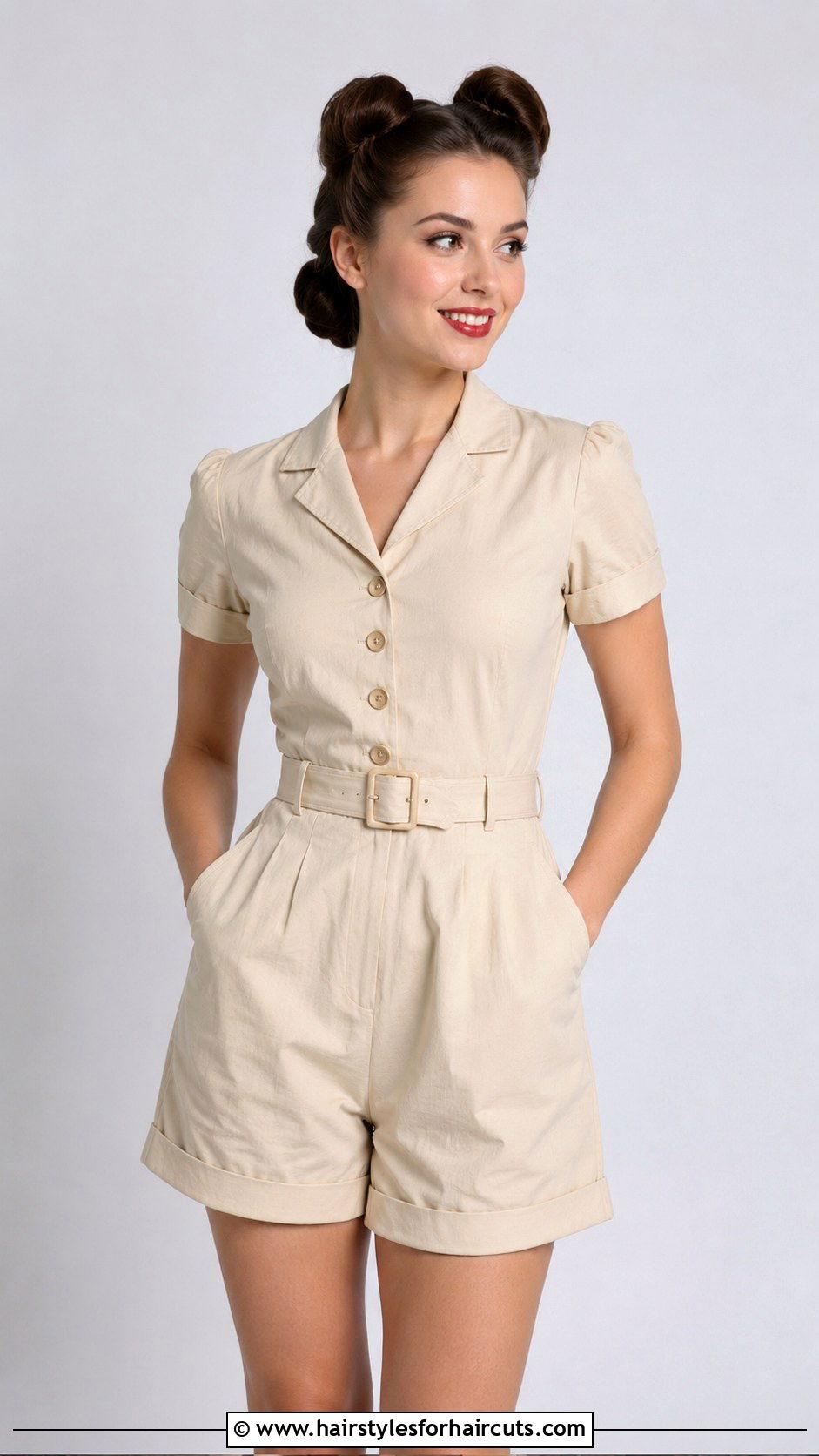
Also known as “ear buns” or “muffin” styles, this playful yet practical 1940s look involved creating two small, rounded buns positioned just above and behind each ear. The rest of the long hair was typically styled into a chignon or cascade of curls at the back. This style kept hair neatly off the face and neck while maintaining a distinctly feminine and decorative quality. It was a charming option that balanced whimsy with functionality, often seen in more casual or daytime settings, and it showcased how even long hair could be styled in creative, face-framing ways 【turn0search17】.
9. Chinese Page Boy

A specific variation of the Pageboy, the Chinese Page Boy was noted for its sleek, straight-across line at the back, with the ends sharply turned under to create a blunt, uniform edge. The front was styled with a smooth, deep side part and tucked behind the ears, resulting in a clean, geometric silhouette. This look required precise cutting and styling to maintain its sharp lines and was often associated with a more modern, streamlined aesthetic within the 1940s. It demonstrated how the era’s styles could range from soft and wavy to structured and architectural 【turn0search17】.
10. Crescent Chignon
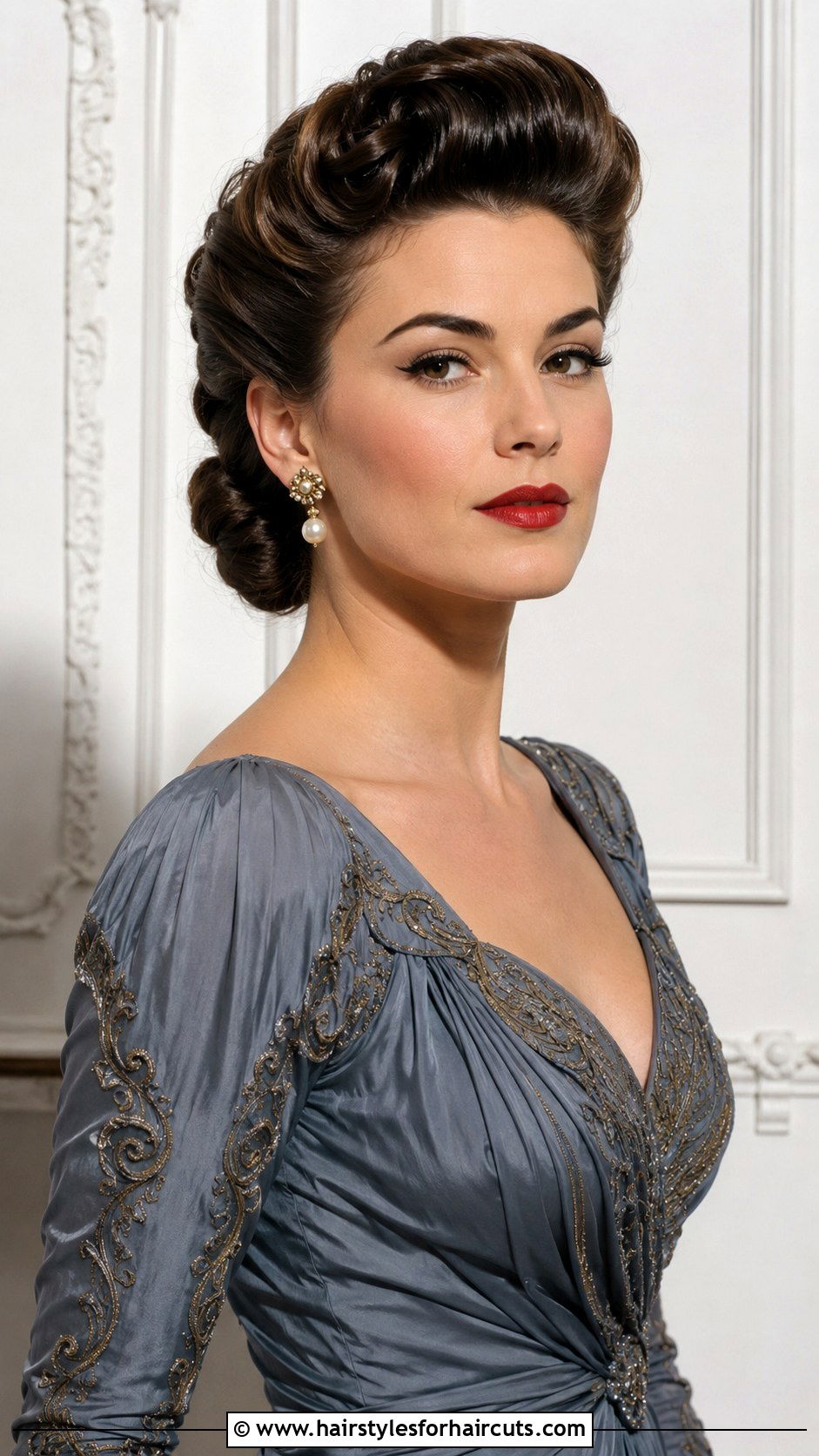
The crescent chignon was an elegant variation where the hair was rolled into a curved, moon-like shape at the nape, rather than a simple round bun. This could be achieved by twisting the hair into a roll and securing it in a way that formed a gentle crescent or a more defined, sculptural curve. It added a touch of artistic flair to the classic chignon, making it a favorite for more formal occasions. The style often featured smooth, sleek hair around the crown and sides, allowing the unique shape at the back to take center stage 【turn0search17】.
11. Half Up Half Down Curls
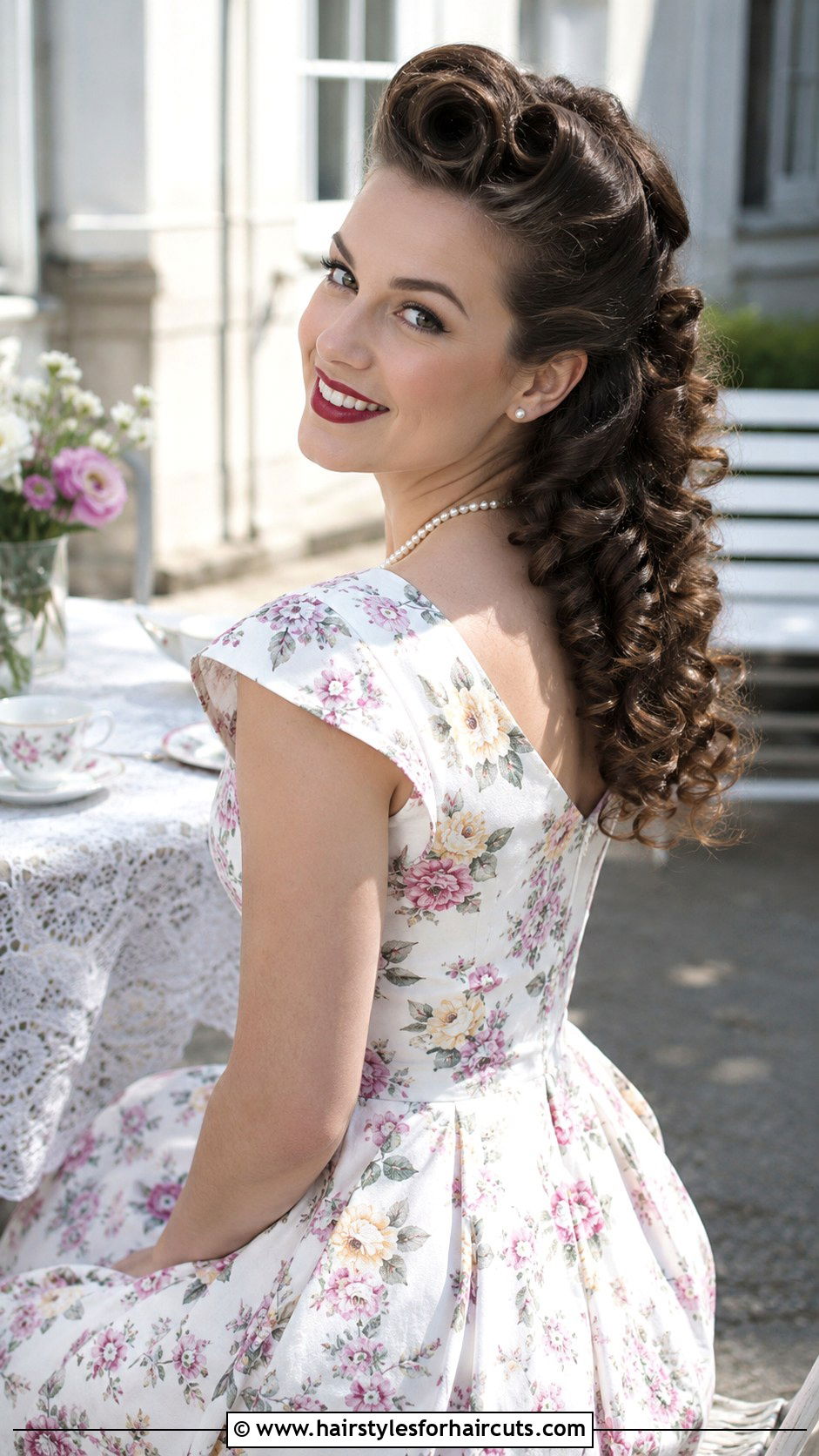
This romantic style combined the elegance of an updo with the softness of loose curls. The top and side sections of long hair were pulled back and secured into a roll, pompadour, or decorative detail at the crown, while the remaining length fell in cascading curls or waves down the back. It was a versatile look that could be dressed up with accessories like flowers or decorative combs. The half-up style offered the best of both worlds, keeping hair away from the face while still showcasing long, textured locks, perfect for a daytime or evening event 【turn0search15】.
12. Milkmaid Braids
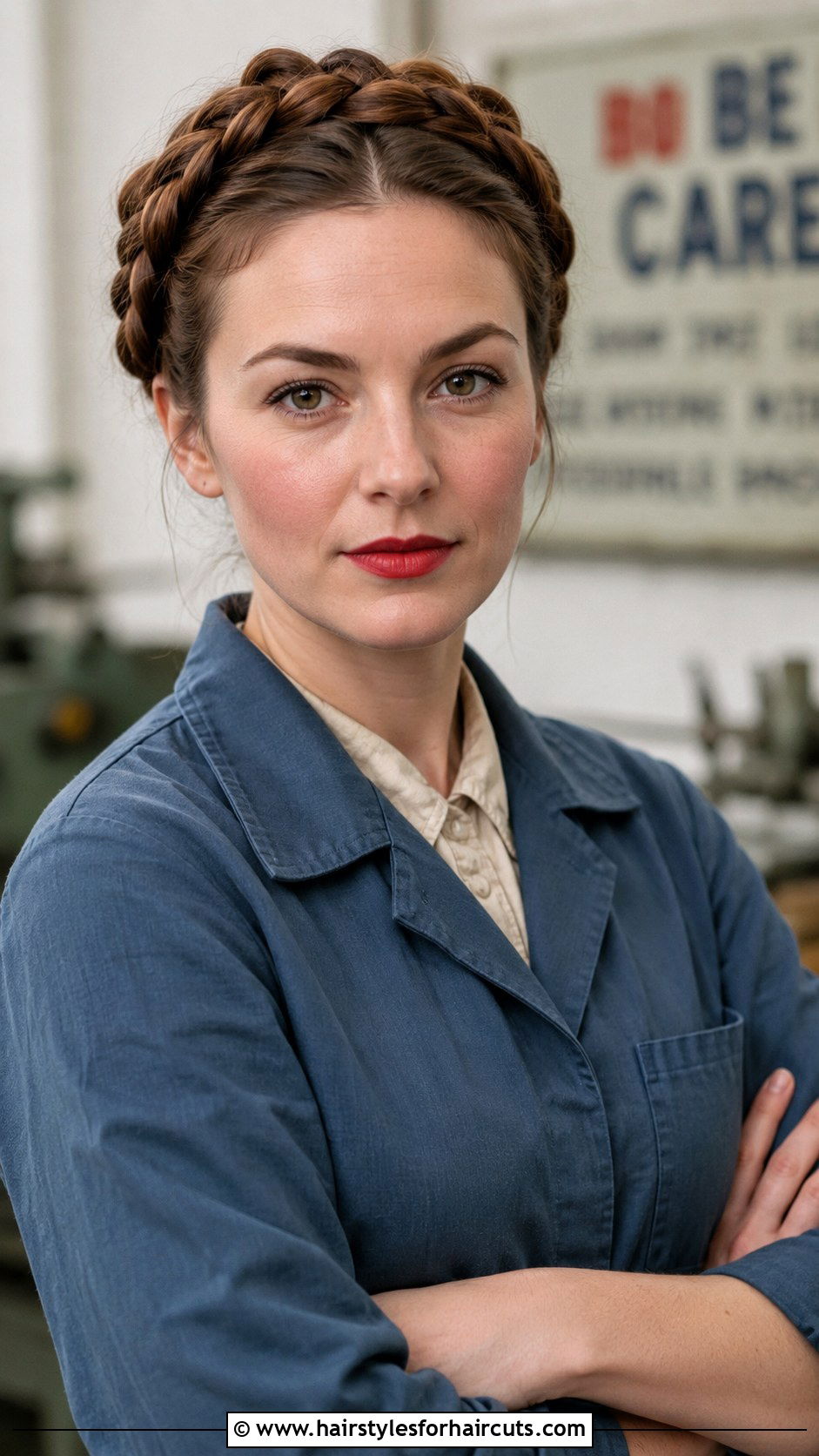
While often associated with earlier decades, milkmaid braids were also a practical and charming style for the 1940s, especially for work or casual settings. This involved creating two braids that were then wrapped around the crown of the head and pinned in place, forming a kind of braided “crown.” For long hair, this could incorporate more intricate braiding patterns or thicker, more substantial braids. The style was neat, secure, and kept hair completely contained, reflecting the era’s need for practicality while still maintaining a feminine, rustic charm 【turn0search3】.
13. Scarf Or Turban Style

During the 1940s, especially with women entering the workforce in large numbers, hairstyles that incorporated scarves and turbans became incredibly popular for long hair. Hair would be styled into a basic updo, such as a chignon or roll, and then a scarf or turban would be wrapped around the head, covering the hair completely and tied at the top or front. This served the dual purpose of keeping hair tidy and out of machinery while also allowing for a fashionable, patriotic display with prints and colors. It was a defining look of the wartime era 【turn0search14】.
14. Finger Waves
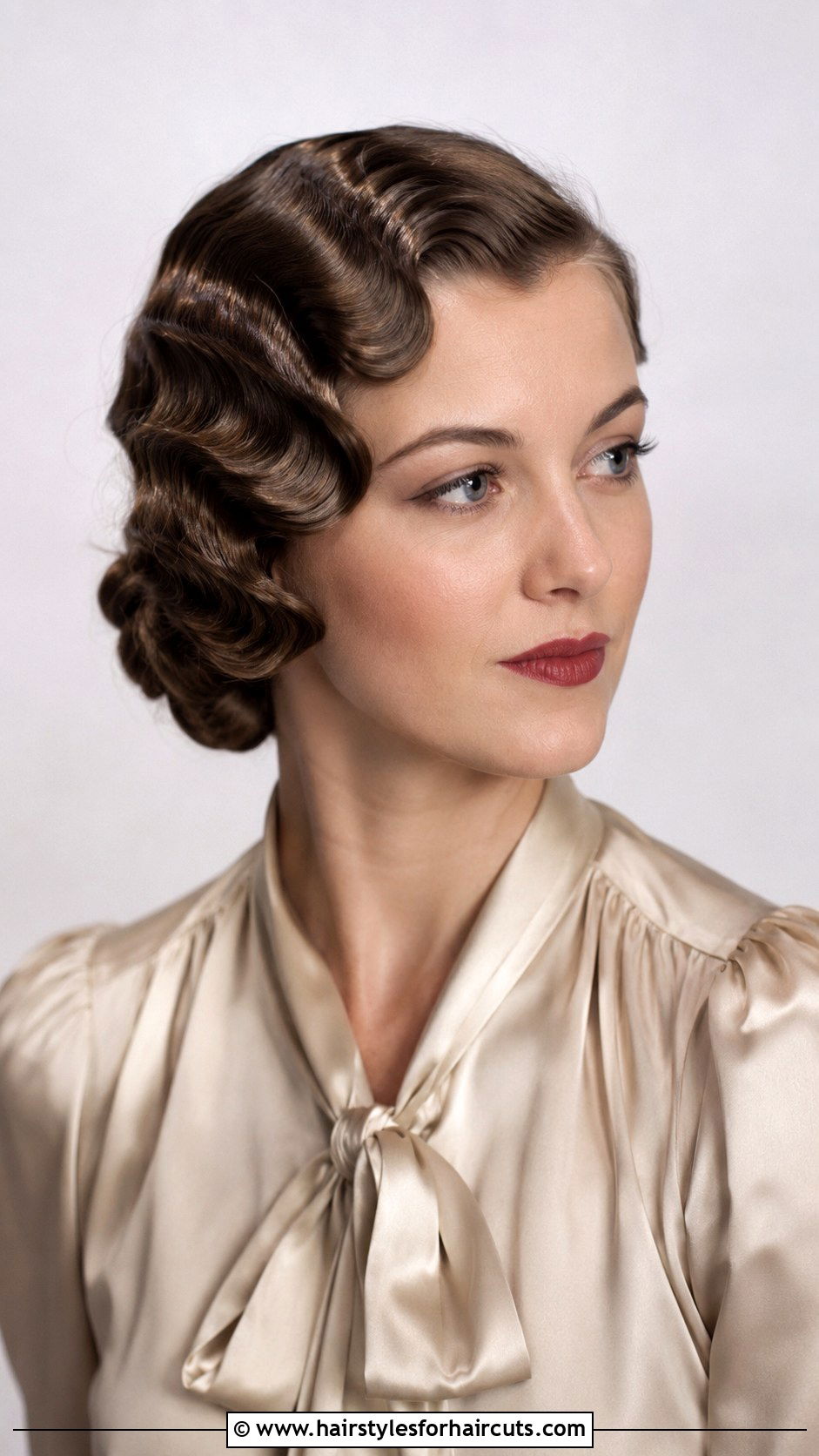
Finger waves were a sophisticated sculpting technique that created S-shaped waves close to the scalp. While often seen on shorter hair, they were also used on long hair, particularly for styling the front and sides into a sleek, polished frame before the back was styled into an updo or curls. The waves were formed by pressing the hair into shape with the fingers and clips while it dried, resulting in a highly structured and shiny look. Finger waves added a touch of glamour and precision to any long-haired style, epitomizing the era’s love for neatness and control 【turn0search3】.
15. Gibson Girl Updo

Though the Gibson Girl style peaked in the early 1900s, its influence lingered into the 1940s, particularly in the form of a soft, full updo. This style featured a gentle pouf at the front and crown, achieved with backcombing and smooth styling over it, with the long hair gathered into a loose, often airy chignon or cascade of curls at the back. It was a romantic, feminine look that conveyed a sense of classic elegance and was less structured than some of the more wartime-driven styles, offering a softer alternative for special occasions 【turn0search3】.
16. Barrel Curls

Barrel curls were large, voluminous curls created by wrapping sections of hair around a large-barrel curling iron or, more authentically for the 1940s, by using large pin curls or rag rollers. These curls added dramatic bounce and movement to long hair and could be worn all over or concentrated at the ends. They were often styled with a deep side part and could be swept to one side or arranged over the shoulders. Barrel curls were a glamorous choice for evening, providing a striking contrast to the more tailored and tidy daytime looks 【turn0search3】.
17. Peek A Boo Bangs
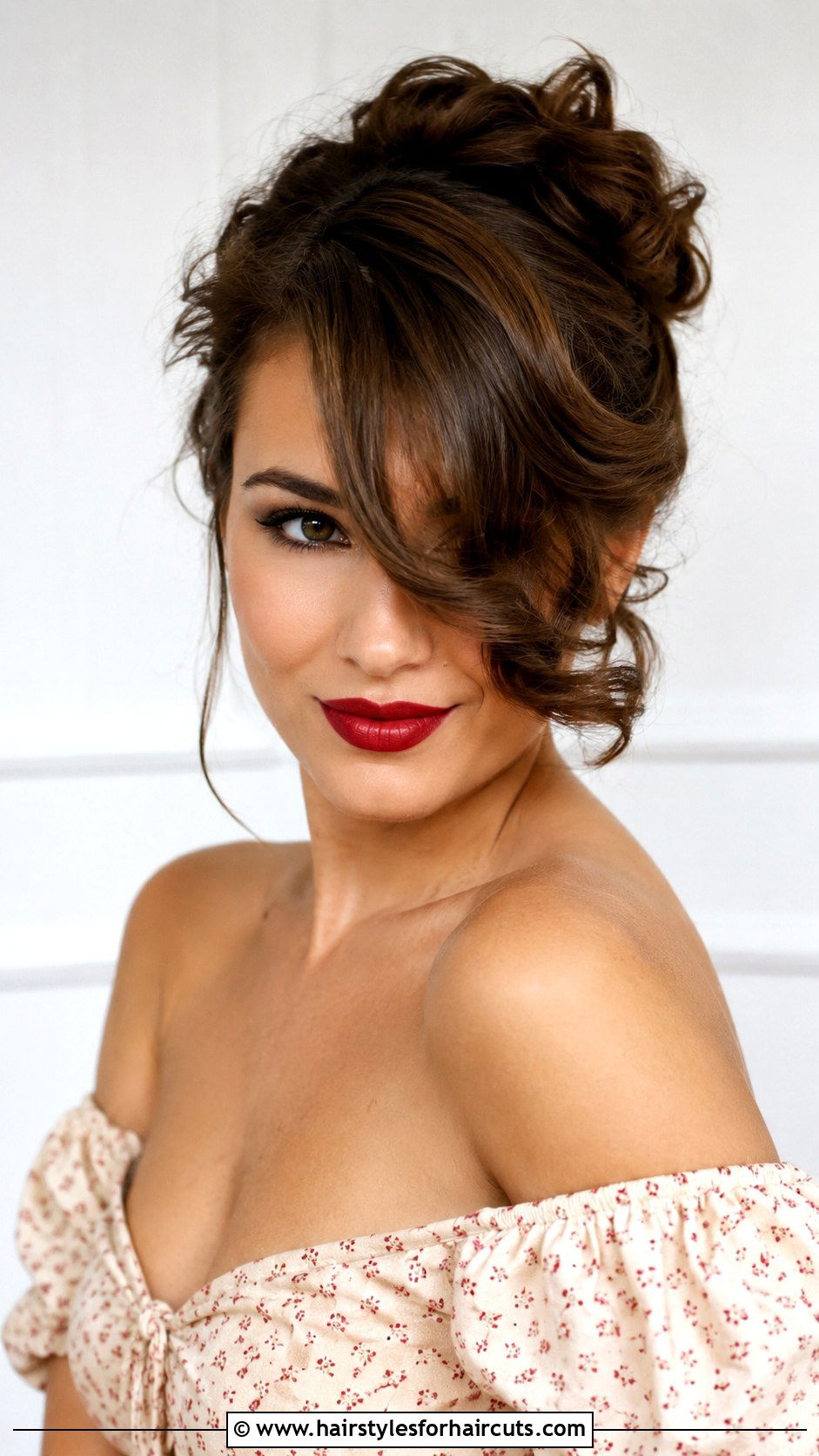
While the 1940s generally favored styles without blunt bangs, the “peek-a-boo” bang was a subtle and sultry exception. This involved a section of hair from a deep side part that fell softly across one eye, often styled into a gentle wave or curl. The rest of the long hair was typically styled into an updo or sleek set. This look added a touch of mystery and allure, famously sported by actresses like Veronica Lake. It demonstrated how even a small, face-framing detail could transform a classic style into something captivating and cinematic 【turn0search3】.
18. Rolls With Waves
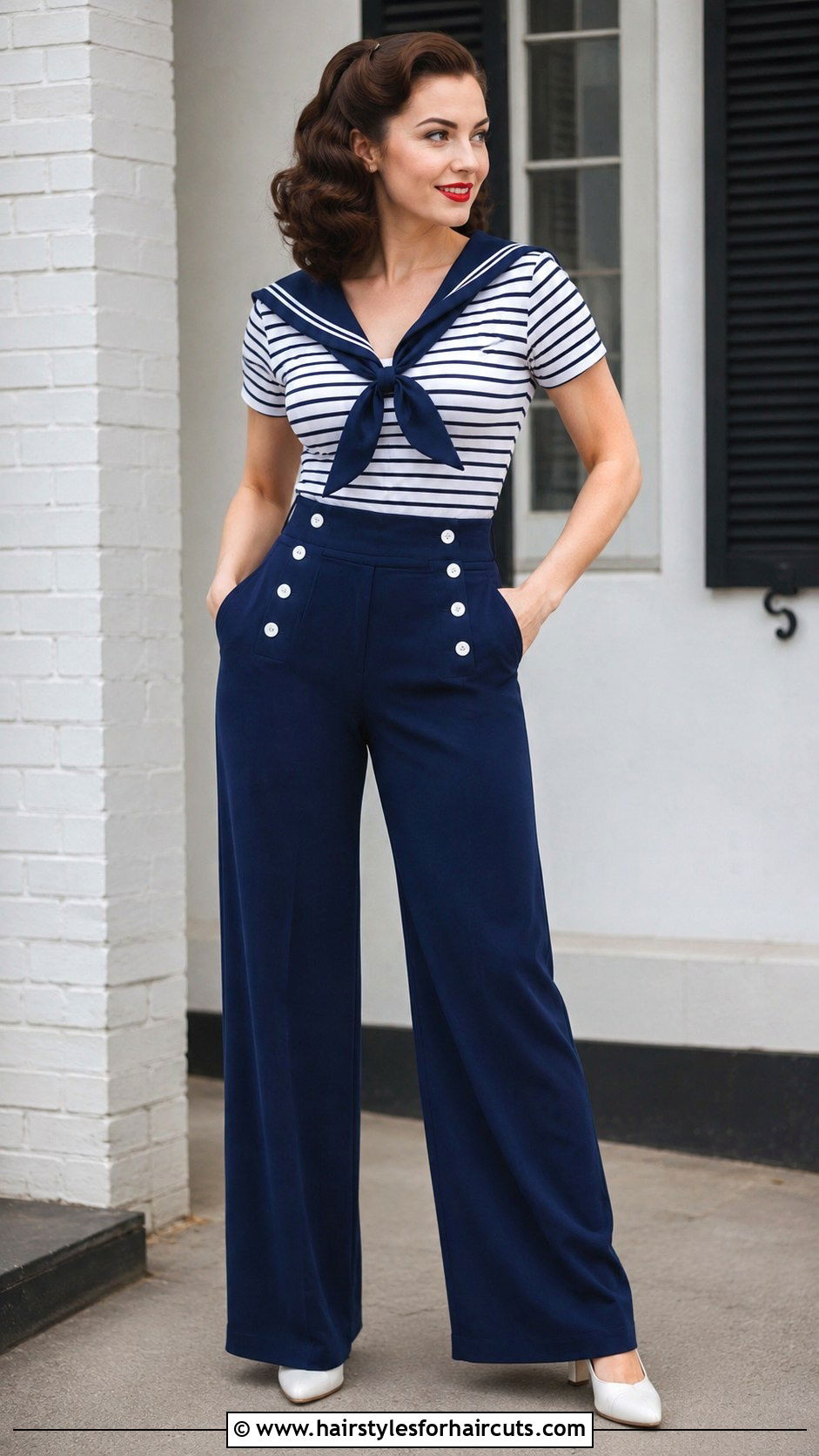
Combining the structured element of rolls with the softness of waves was a popular way to add dimension and interest to long hair. This could involve a single roll placed at the crown or side, with the rest of the hair styled into flowing waves, or multiple smaller rolls integrated into a wavy set. The contrast between the smooth, tubular roll and the undulating waves created a visually dynamic and textured look. It was a sophisticated style that balanced control with movement, perfect for women who wanted a style that was both polished and touchable 【turn0search4】.
19. Updo With Flowers
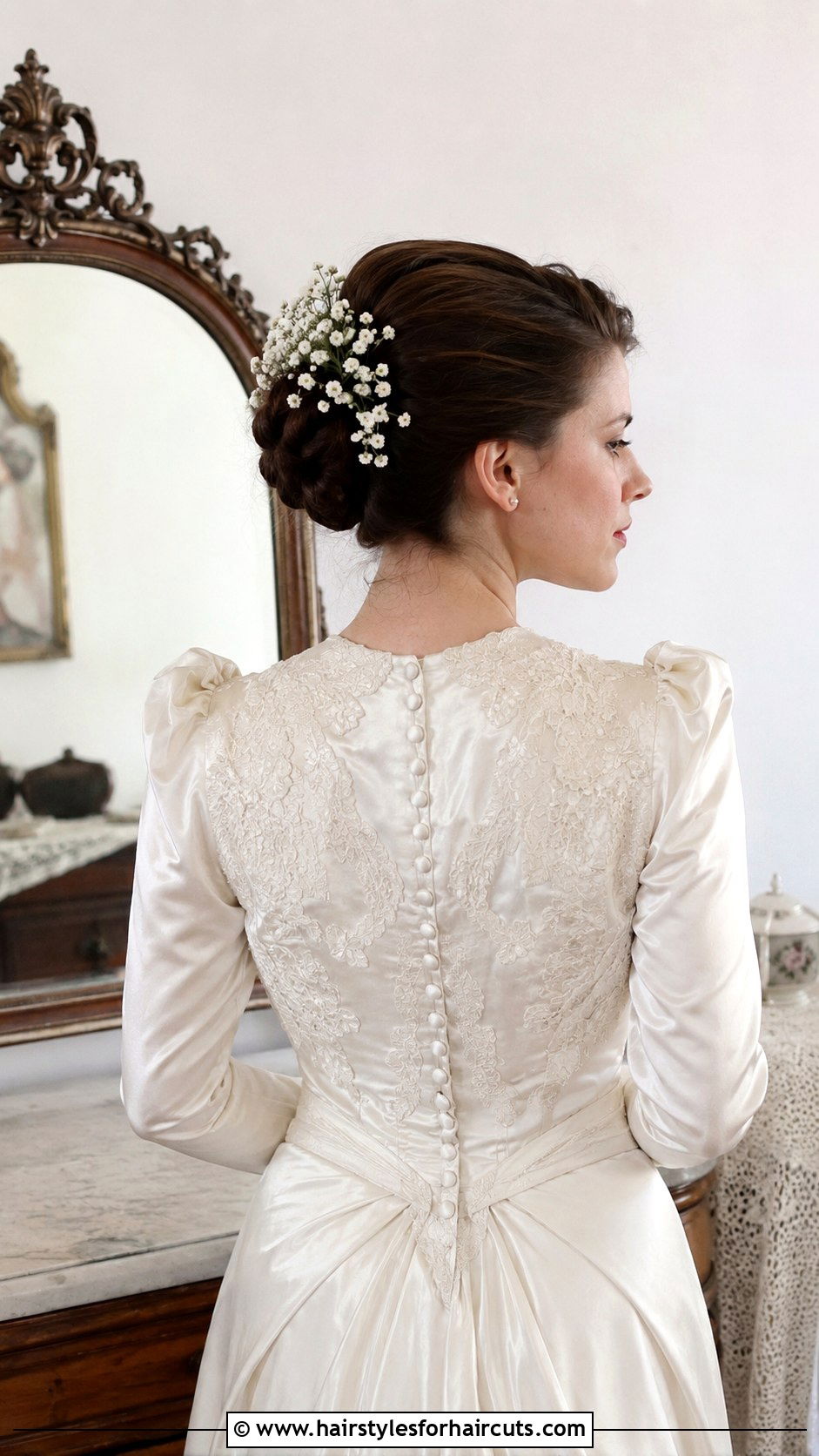
For special occasions such as weddings or formal dances, long hair in the 1940s was often styled into an updo and adorned with fresh flowers. The updo could be a chignon, a roll, or a more elaborate construction, with small flowers like gardenias, roses, or lilies of the valley strategically pinned into the style. This added a touch of natural beauty and romance, perfectly complementing the feminine silhouettes of the era. The combination of a sleek, structured hairdo and delicate, fragrant blooms created a look of timeless elegance and celebration 【turn0search15】.
20. Tiered Rolls
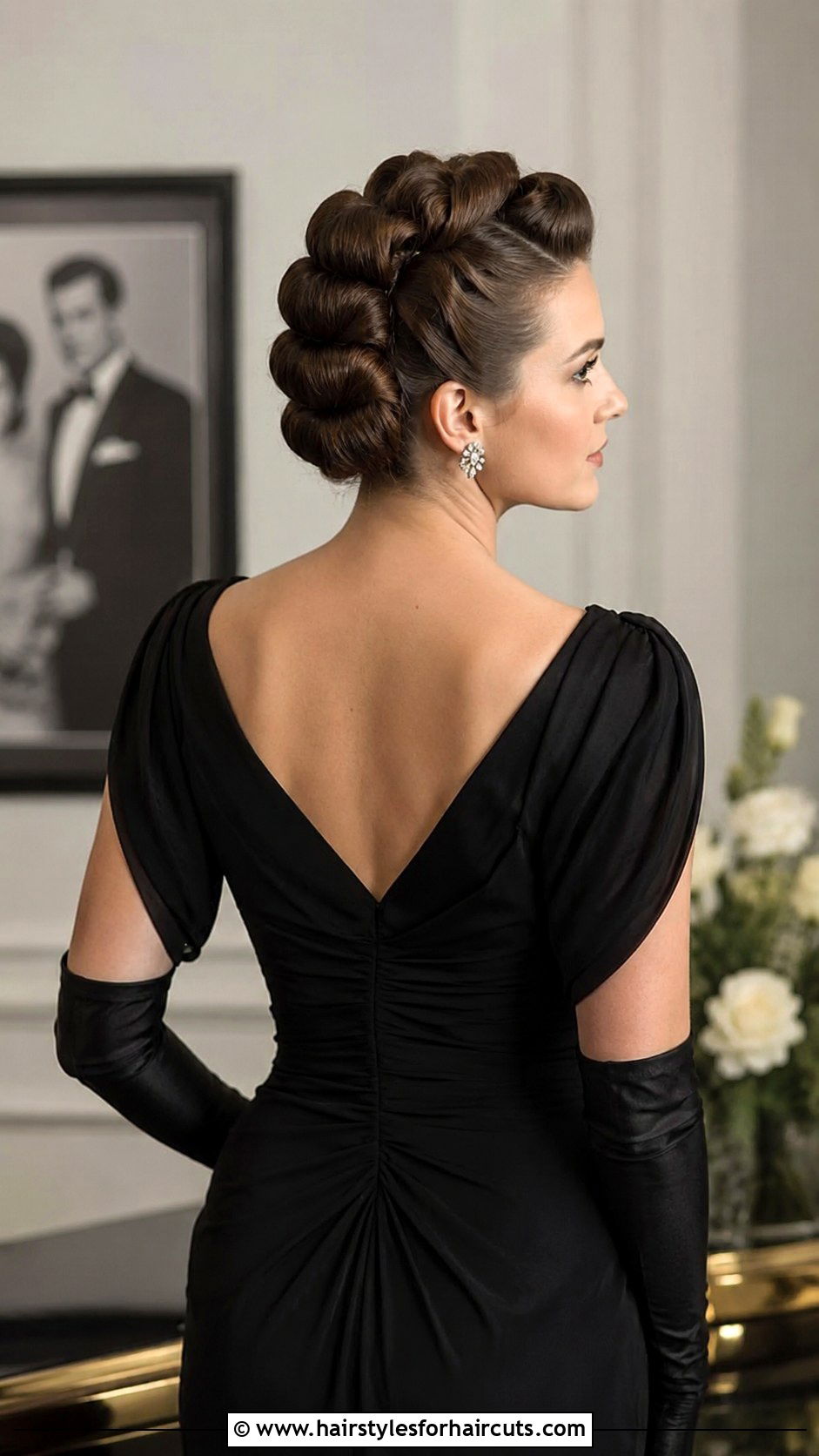
Tiered rolls were an intricate and show-stopping style where multiple rolls were arranged in layers, one above the other, usually from the crown down to the nape. This created a cascading, architectural effect that required skill and precision to execute. Each roll was smooth and well-defined, contributing to an overall sense of height and drama. This style was likely reserved for the most formal events and showcased the era’s flair for elaborate, structured hairdressing, turning long hair into a stunning vertical canvas 【turn0search2】.
21. Side Chignon

A variation of the classic chignon, the side chignon was positioned at the nape of the neck but shifted to one side, often resting just below or behind the ear. This asymmetrical placement added a touch of modernity and romance to the timeless style. The hair could be twisted into a smooth, low knot or a softer, more rolled shape. It was frequently paired with a sleek top or sweeping side part, creating a look that was both elegant and subtly playful, offering a different perspective on the standard updo 【turn0search17】.
22. Curly Updo With Accessories
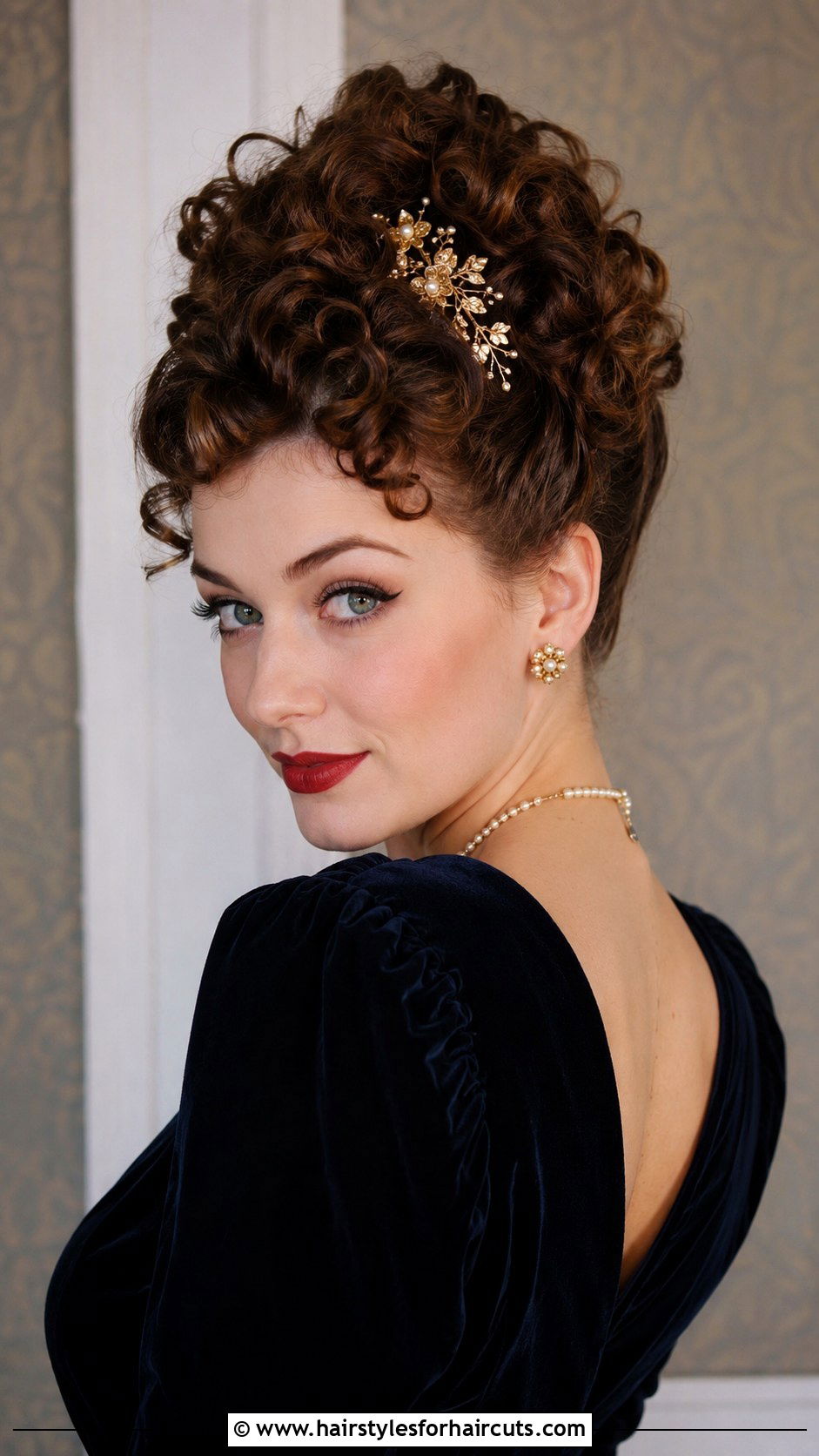
Long hair that was set into tight, bouncy curls could be pinned up into a curly updo, where the curls were arranged into a rounded, textured shape at the back or crown. This style was often accessorized with decorative combs, clips, or even small hats perched on top. The accessories both secured the style and added a focal point, transforming a simple curly updo into a statement piece. This look celebrated the texture and volume of curly long hair, embracing its natural tendency to form spirals and loops within the structured silhouette 【turn0search4】.
23. The S Wave Set
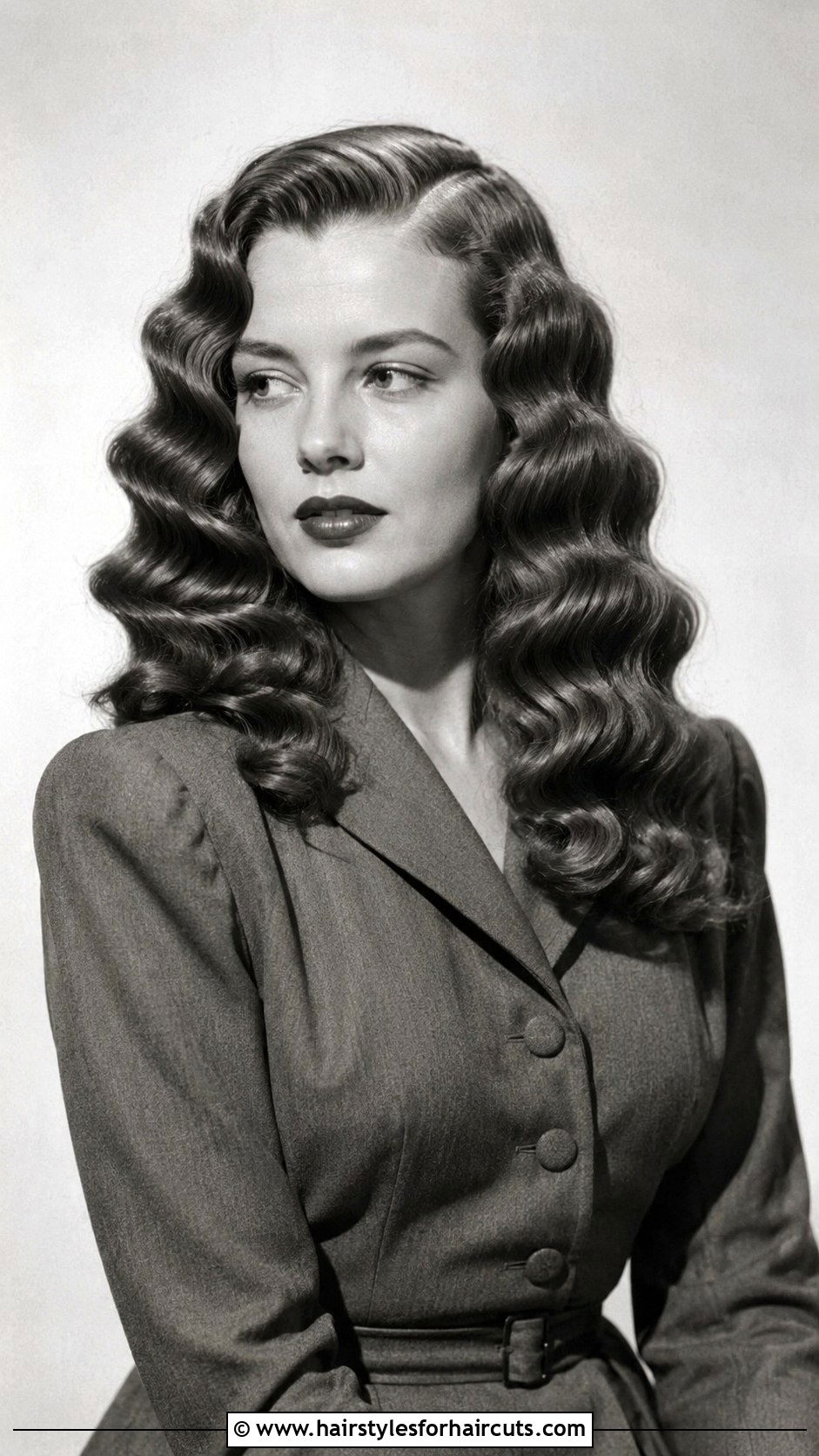
The S wave, or finger wave, was not just a front styling technique but could be used to set the entire head of long hair into a series of connected, S-shaped waves. This full-wave set created a highly structured, uniform pattern of waves that moved like water when the head turned. It was a polished and sophisticated style that required meticulous setting and brushing out. The S wave set demonstrated the 1940s commitment to neatness and control, turning long hair into a sleek, moving work of art that reflected light beautifully 【turn0search3】.
24. Looped Updo
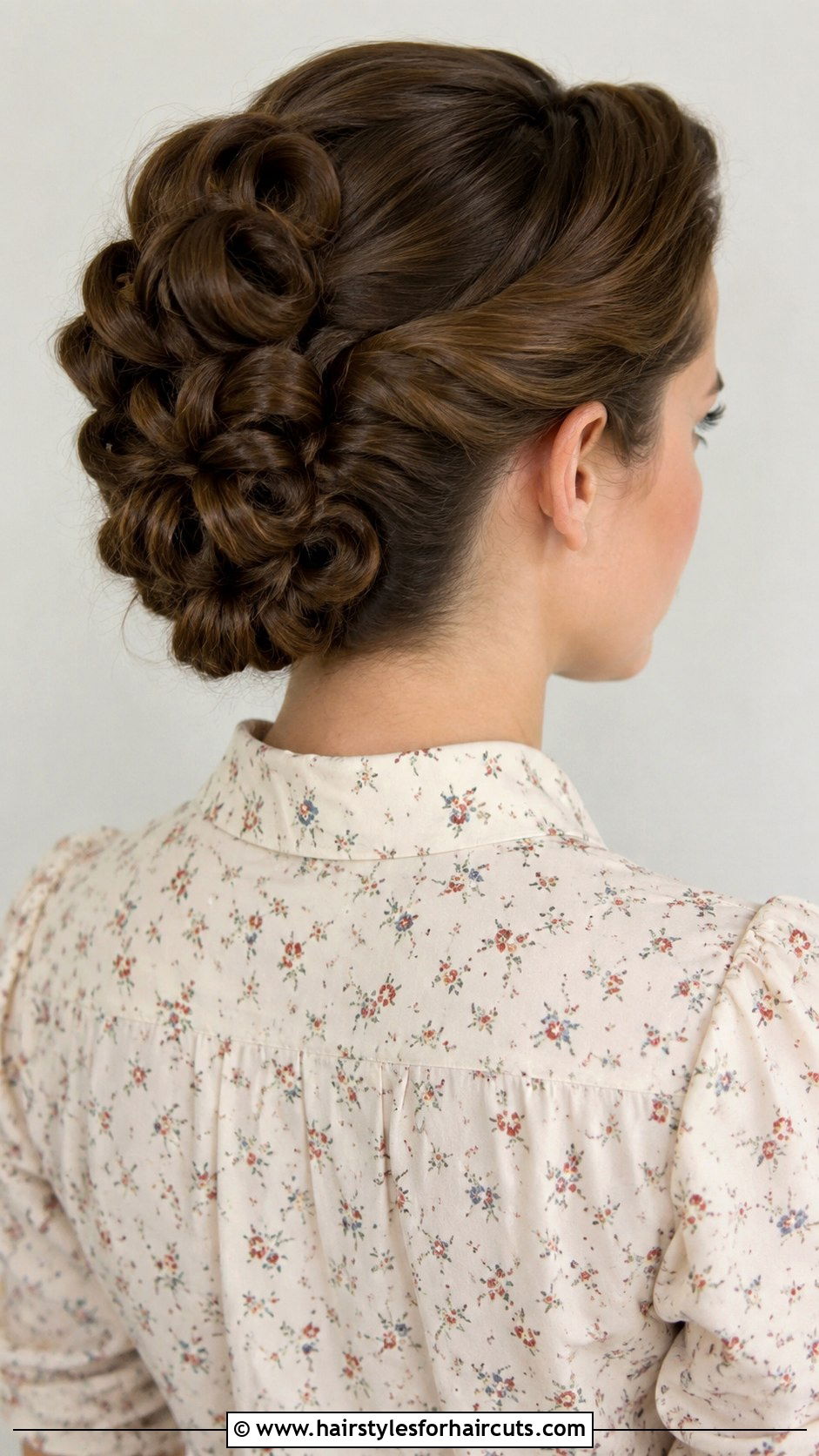
The looped updo was a clever and stylish way to manage long hair without complex rolling techniques. Sections of hair were simply pulled through loops created by other sections, forming a series of interlocking loops that were then pinned into a cohesive shape at the back. This could result in a fuller, more textured updo with a sense of woven intricacy. It was a practical yet attractive method that could be dressed up with accessories or left plain, offering a different construction technique from the standard rolls and chignons 【turn0search6】.
25. Long Hair With Headband

For a more casual or sporty 1940s look, long hair could be styled with a headband. This often involved setting the hair in waves or curls, then pushing a headband—often made of fabric, ribbon, or even a scarf—back into the hairline to create a soft, poufed section at the front. The long hair would flow freely down the back. This style was influenced by the wartime utility trend and was practical for work or leisure activities while still maintaining a neat, feminine appearance. It showed how even simple accessories could define a period look 【turn0search14】.
Conclusion:
The 1940s offered an extraordinary variety of hairstyles for women with long hair, each reflecting the decade’s unique blend of glamour, practicality, and resilience. From the iconic Victory Rolls and sleek Pageboy to the romantic chignon and creative rolls, these styles were defined by their structure, neatness, and elegant use of volume and texture. They were not merely fashion statements but also symbols of an era that valued both beauty and function. Today, these authentic 1940s looks continue to captivate, providing endless inspiration for those seeking a touch of vintage sophistication. Mastering even one of these techniques allows you to step back in time and embrace the enduring allure of 1940s hairdressing.

Leave a Reply