
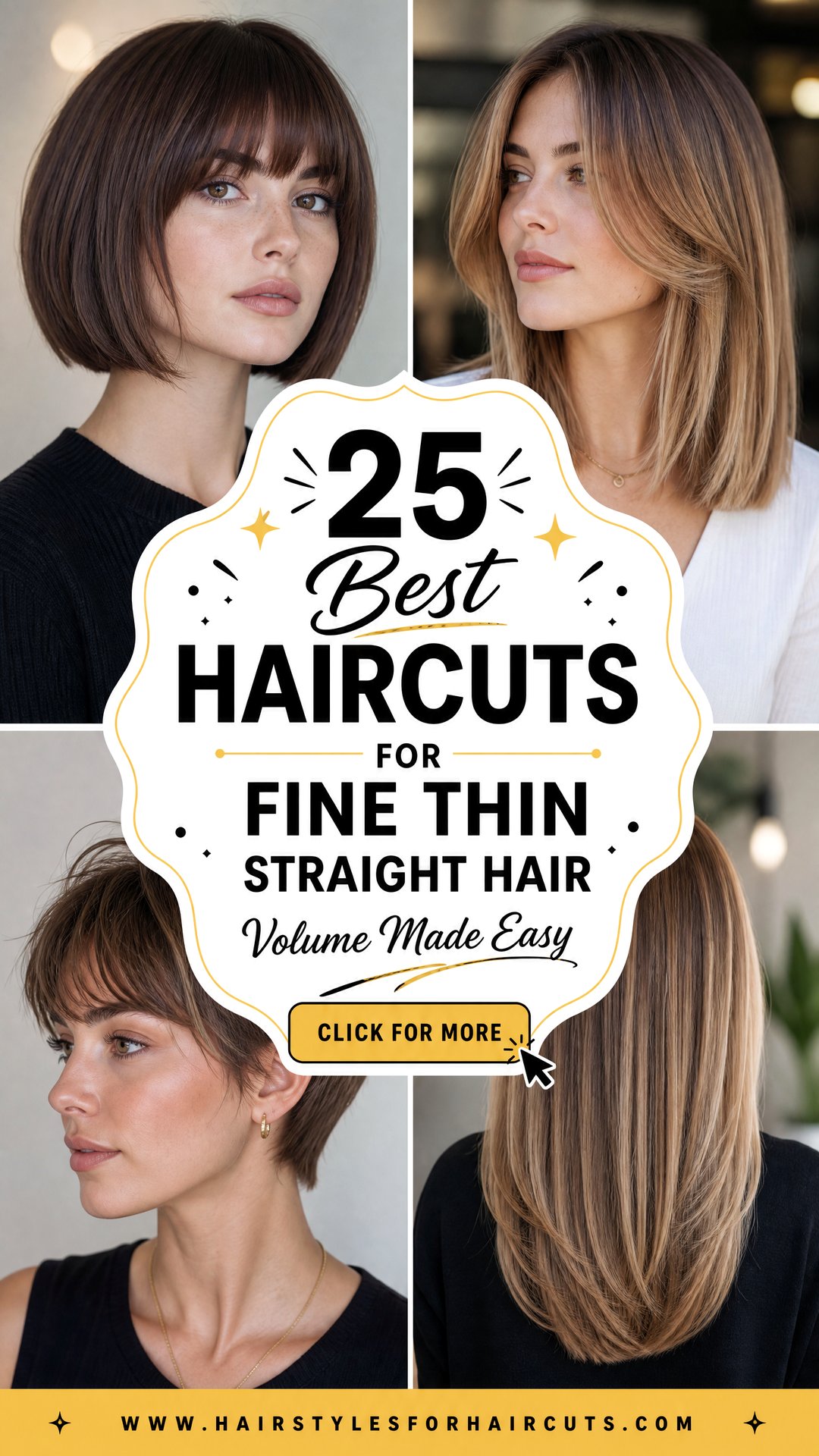
Finding the right haircut when you have fine, thin, straight hair can feel like a constant search for volume and movement. The secret lies in strategic cuts that build body and create the illusion of thickness, turning what some see as a limitation into a sleek, versatile canvas. From classic bobs to textured pixies, the best haircuts for fine thin straight hair are all about smart layering and blunt lines that maximize every strand. This guide dives into 25 expert-approved styles that add lift, shape, and effortless style to your fine, straight locks.
1. Blunt Bob For Fine Hair
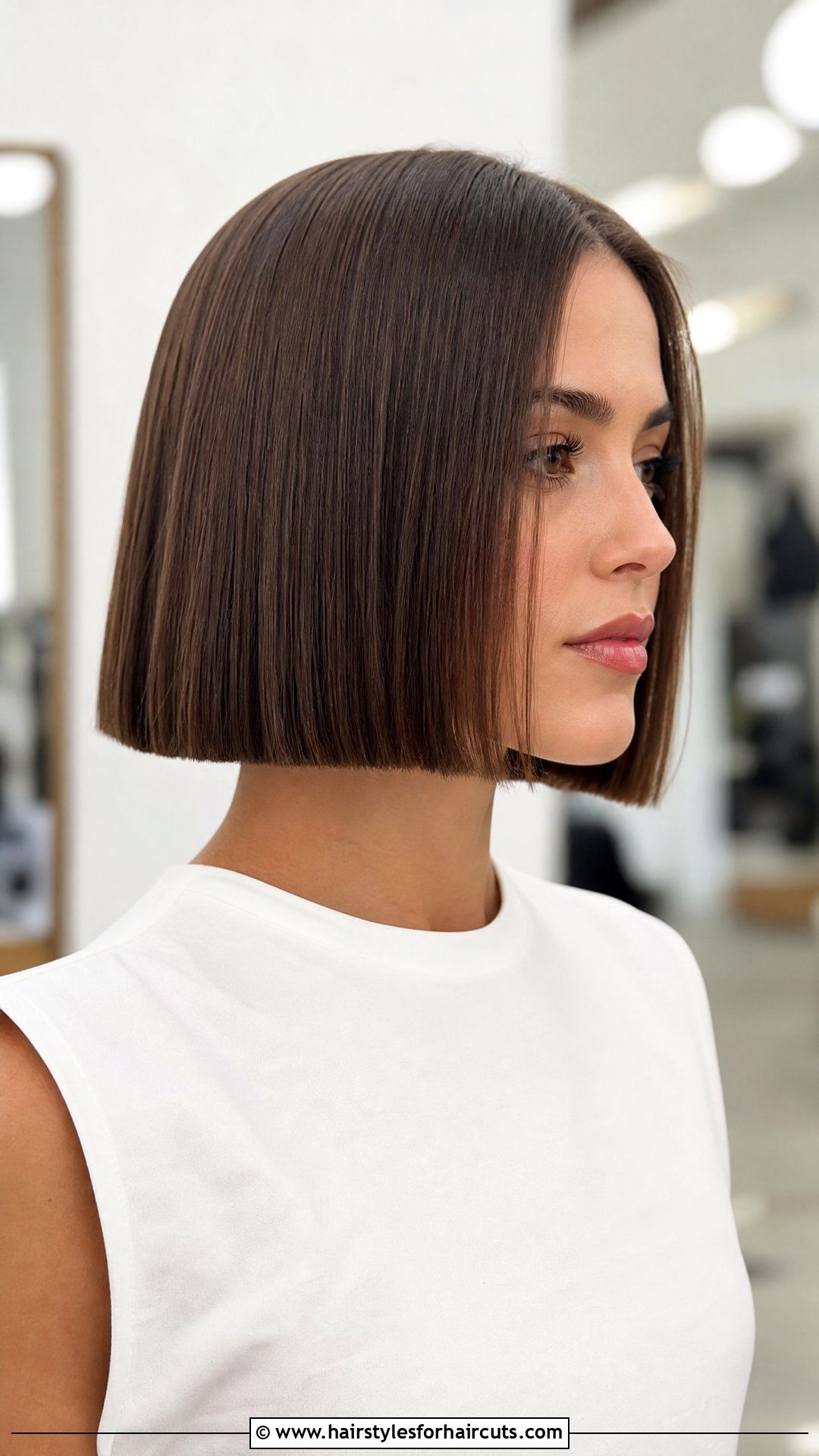
A blunt bob is a timeless champion for fine, thin, straight hair because the single-length cut creates a solid, clean line that makes hair appear denser and thicker 【turn0search14】. Without layers, the ends aren’t thinned out, which maintains weight and structure at the bottom. This style typically falls anywhere from the chin to the collarbone, offering a sleek and polished look that requires minimal styling. The sharp, precise cut enhances hair’s natural shine and provides a sophisticated frame for the face. Whether worn straight with a flat iron for a glass-like finish or with a slight tuck behind the ears, the blunt bob is a low-maintenance, high-impact style that consistently delivers a fuller appearance.
2. Layered Bob For Fine Hair
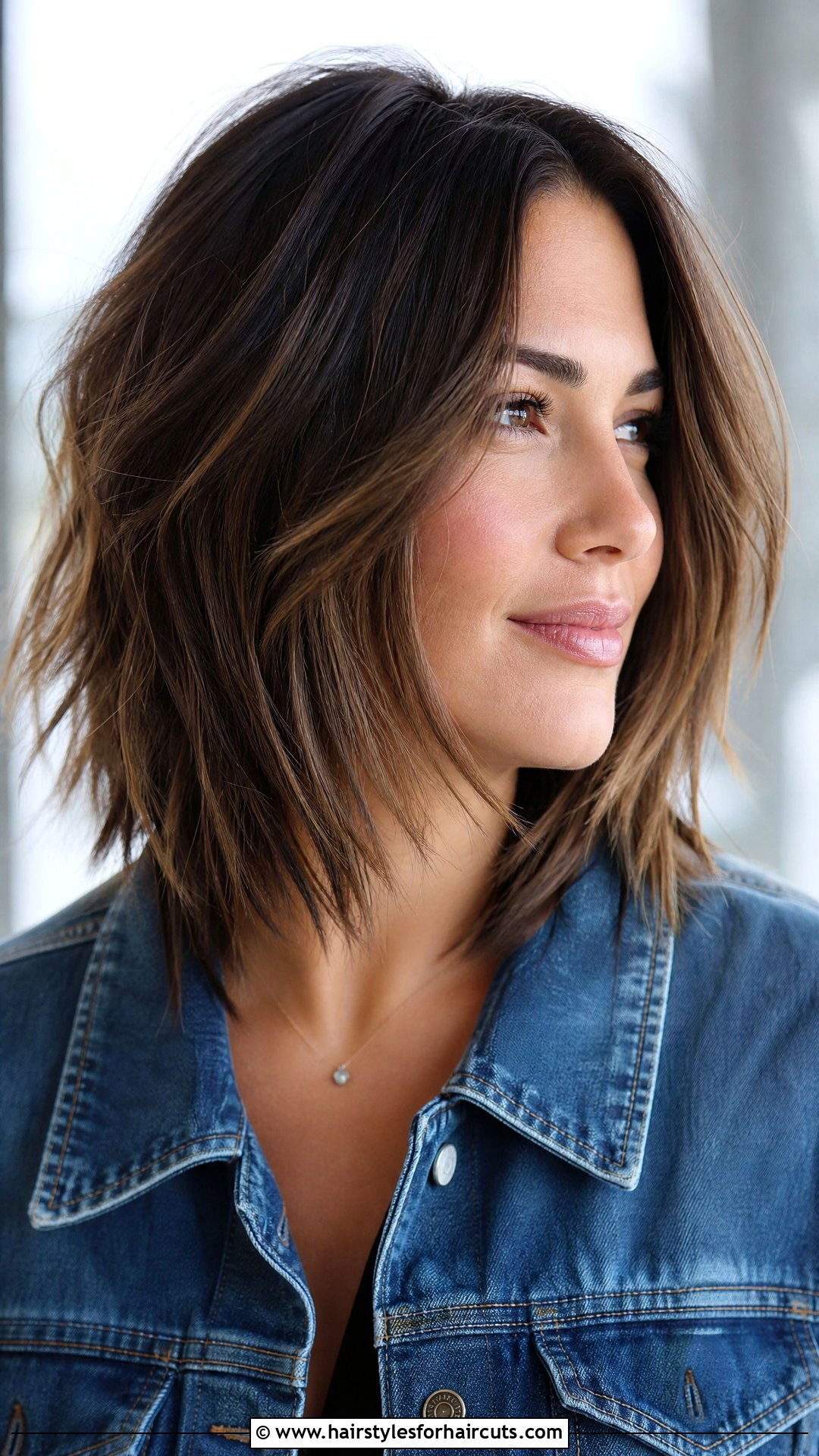
The layered bob introduces gentle, deliberate movement to fine, straight hair without sacrificing the overall density 【turn0search13】. Unlike heavy layering, subtle layers—often just around the face and through the ends—add texture and dimension that can make hair look more dynamic and less one-dimensional 【turn0search13】. This cut retains the fullness at the roots while creating soft curves and curves that catch the light. The key is restraint; asking a stylist for “delicate layers cut with restraint” ensures the cut boosts volume rather than removing it 【turn0search13】. Styling can involve a round brush for a soft bend or air-drying for a natural, lived-in texture. This variation is perfect for those who love the bob shape but want a bit more personality and styling versatility.
3. Asymmetrical Bob For Fine Hair

An asymmetrical bob injects a modern, edgy vibe into fine hair while cleverly playing with angles to enhance the perception of thickness 【turn0search3】. With one side slightly longer than the other, this cut disrupts the uniformity that can make thin hair look flat. The longer side creates a sweeping line that draws the eye horizontally, while the shorter side lifts and opens the face. This imbalance creates visual interest and movement, making the hair appear more substantial. Styling is straightforward, often requiring just a blow-dry to smooth the longer side and a bit of pomade or wax to define the textured edge on the shorter side. It’s a bold choice that stands out and gives fine hair a stylish, architectural lift.
4. Inverted Bob For Fine Hair
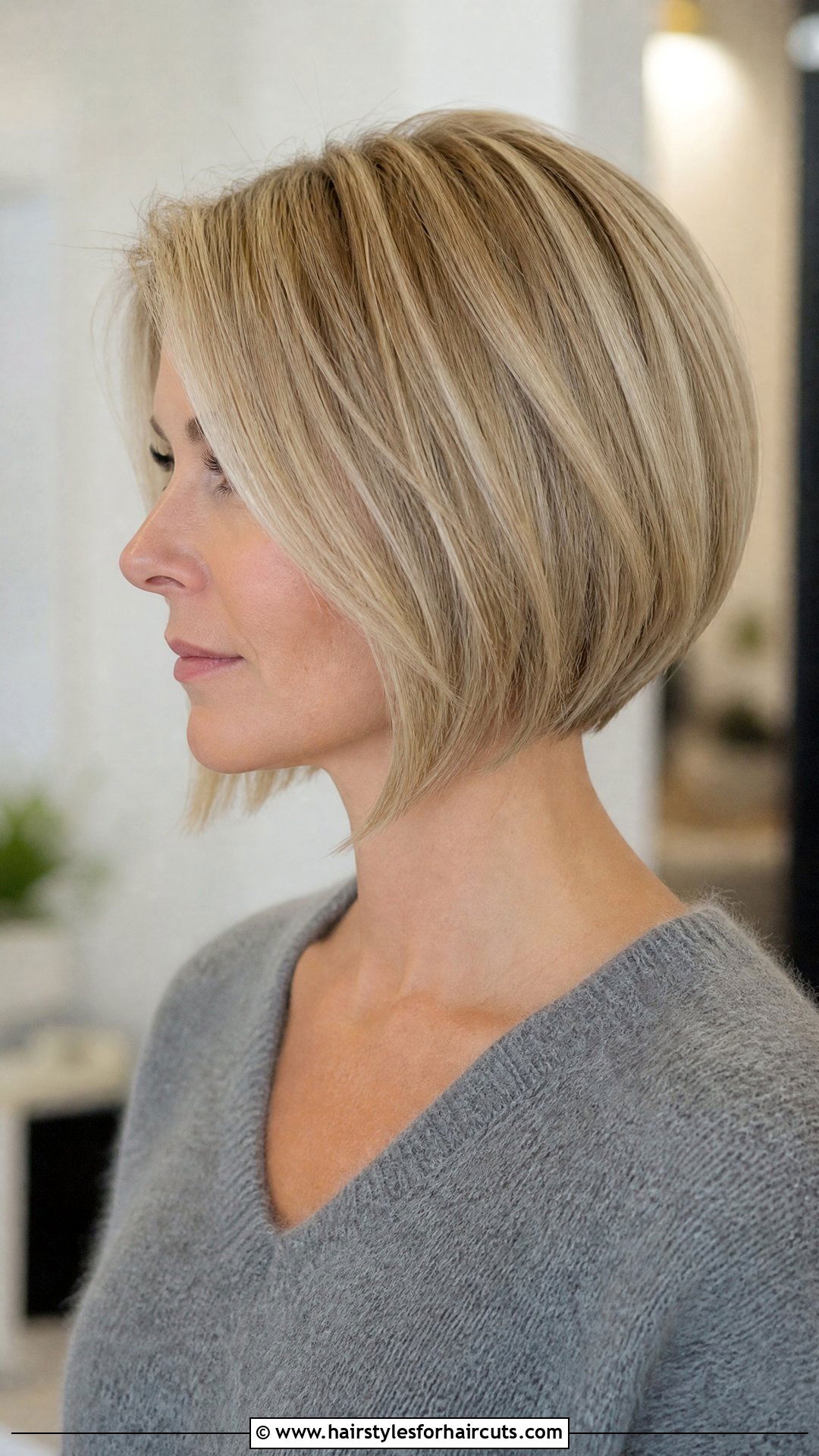
The inverted bob, or A-line bob, is a masterclass in creating volume for fine, straight hair, as it’s shorter in the back and gradually lengthens toward the front 【turn0search4】. This stacked layering in the back automatically lifts the hair at the nape, building crucial body and fullness where fine hair often falls flattest. The longer front pieces frame the face beautifully and create a sweeping, elongated line that balances the volume at the back. This cut is highly effective because the concentration of layers at the rear provides a supportive structure for the longer lengths. Styling often involves a blow-dry with a round brush to emphasize the curved shape and smooth the front, resulting in a polished style that always looks full and bouncy.
5. Long Bob (Lob) For Fine Hair

The lob, or long bob, is a supremely versatile choice for fine, thin, straight hair, offering the styling flexibility of longer hair with the fullness benefits of a shorter cut 【turn0search5】. Falling anywhere from the collarbone to the shoulders, this length is heavy enough to avoid looking sparse but light enough to maintain lift at the roots. To maximize volume, ask for subtle, face-framing layers or a slightly longer front; this creates movement and prevents the style from looking boxy. The lob can be worn straight, wavy, or with tucked-in ends, and it’s an ideal canvas for experimenting with different partings and styling products. Its enduring popularity lies in its ability to make fine hair look effortlessly chic and healthy.
6. Layered Lob For Fine Hair
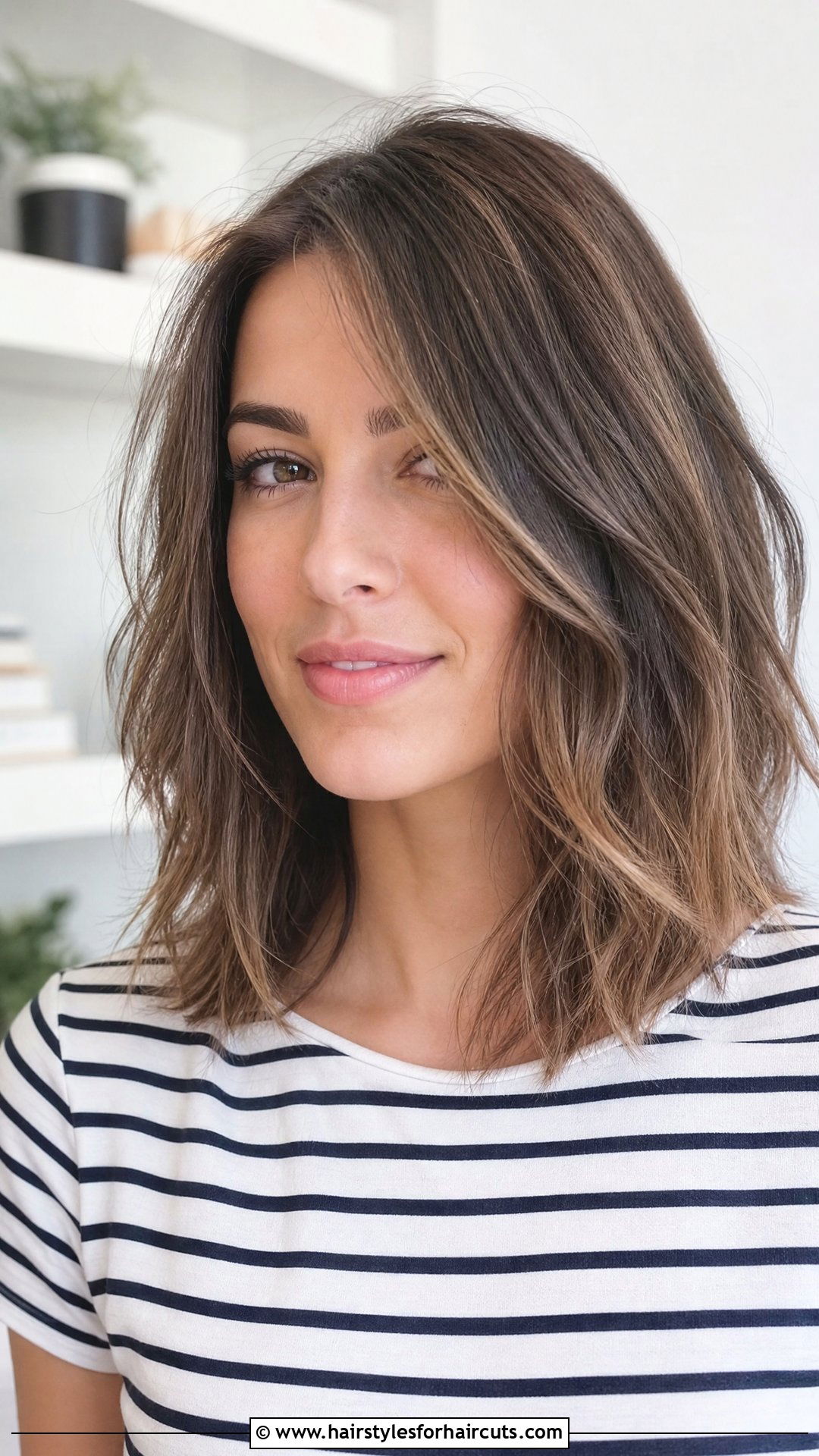
A layered lob takes the foundation of the classic long bob and adds strategic, soft layers to introduce texture and the illusion of more hair 【turn0search5】. The layers should be long and blended, avoiding the short, choppy variety that can thin out fine hair. This technique removes a bit of weight from the interior while keeping the ends solid, which allows the top and sides to swell with natural volume. The result is a style that moves beautifully and doesn’t hang flat. Styling can be as simple as rough-drying with a volumizing mousse and using a large-barrel curling iron to create loose, beachy waves. The layers give those waves a place to live, making the hair look significantly thicker and more dynamic than a one-length lob.
7. Chin-Length Bob With Bangs For Fine Hair

Combining a chin-length blunt bob with bangs is a powerful strategy for fine, straight hair, as it creates two focal points that draw the eye and make the overall style appear more substantial 【turn0search15】. The blunt cut ensures the ends look thick, while the bangs—whether straight across or slightly sideswept—cover the forehead and make the hairline look denser. This style frames the face intensely and can highlight the eyes and cheekbones. The bangs also add instant volume at the crown, an area that can often lie flat. Maintenance involves regular trims to keep the lines sharp and the bangs at the perfect length. Styling is efficient, usually just a blow-dry with a round brush to smooth the bangs and the sides.
8. Collarbone-Length Cut With Face-Framing Layers For Fine Hair

A collarbone-length cut with face-framing layers is designed to add softness and movement to fine, straight hair without compromising its overall density 【turn0search5】. The longest layers graze the collarbone, providing a elongating effect, while shorter, subtle layers around the face create a curtain that draws attention inward and upward. This technique gives the illusion of more hair around the front, which is where people often notice thinness first. The back can be kept slightly more solid to maintain weight and fullness. This style is incredibly adaptable, looking just as good when air-dried with a texturizing spray as it does when blow-dried smooth with a volumizing boost at the roots. It’s a subtle way to enhance what you have.
9. Pixie Cut For Fine Hair

A pixie cut is a fantastic, liberating option for fine, thin, straight hair because the short length eliminates excess weight that pulls hair down, instantly boosting natural lift and volume 【turn0search19】. The key to a successful pixie is texture and layering; choppy layers on top and longer pieces at the crown create height and fullness 【turn0search17】. A longer, side-swept bang can also add a point of interest and volume at the front. This cut is all about creating structure with gentle movement, making the hair look deliberate and styled rather than flat 【turn0search5】. Styling requires minimal product—just a bit of matte paste or pomade to define the layers—and daily effort is low. It’s a bold choice that highlights facial features and makes a stylish statement.
10. Textured Pixie For Fine Hair
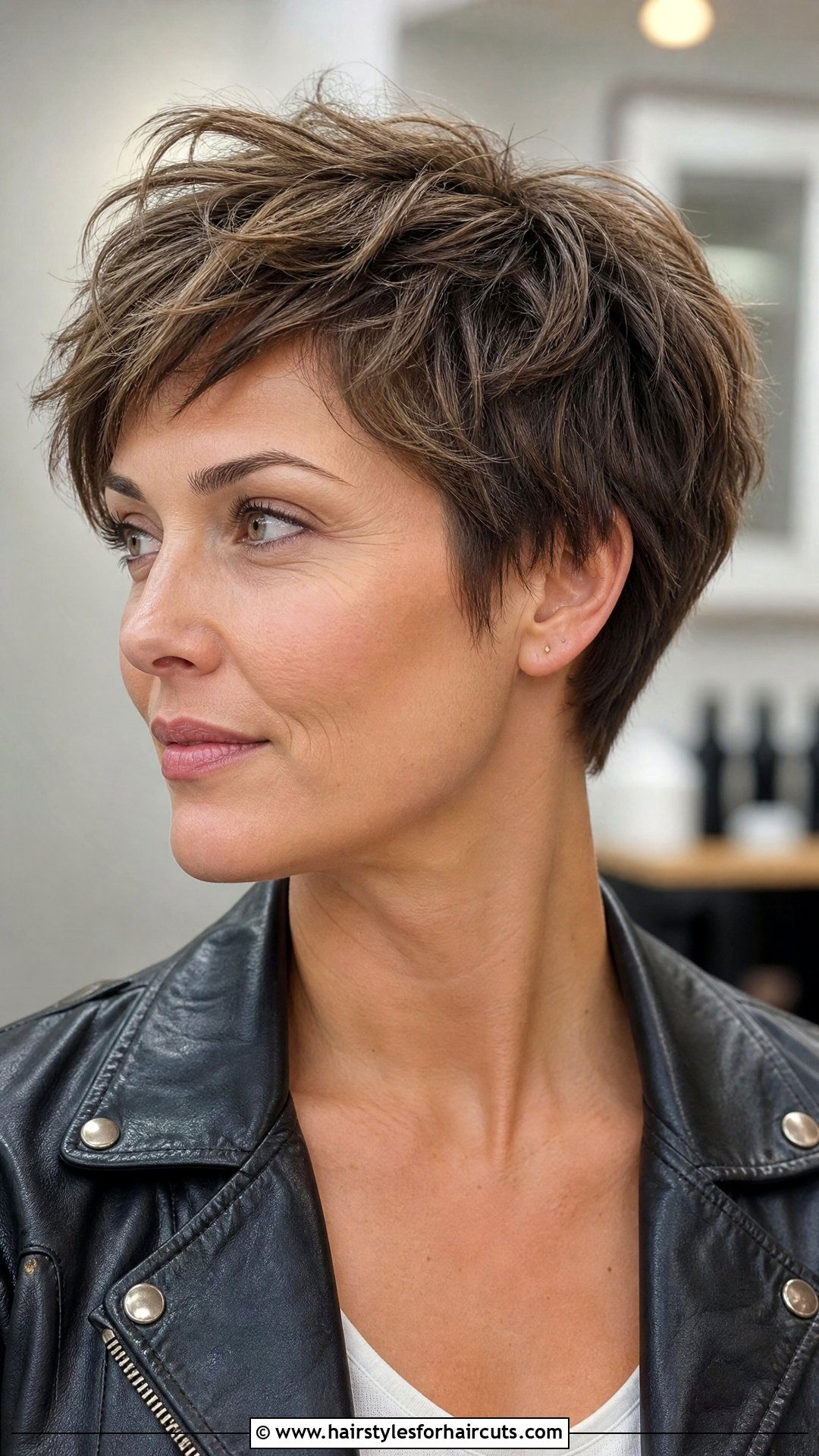
A textured pixie builds upon the classic pixie by incorporating piece-y, disconnected layers that amplify volume and give fine hair a deliberately tousled, modern edge 【turn0search17】. This cut uses varying lengths—shorter at the sides and back, with longer, shaggier pieces on top—to create contrast and depth. The texture prevents the style from looking sparse, as the different lengths overlap and create visual thickness. Styling is playful and low-maintenance; often, just working a styling cream or wax through the top with your fingers is enough to define the texture and create a lively, full look. This style is perfect for those who want a short cut with maximum personality and a lived-in feel that doesn’t fall flat.
11. Side-Parted Pixie For Fine Hair
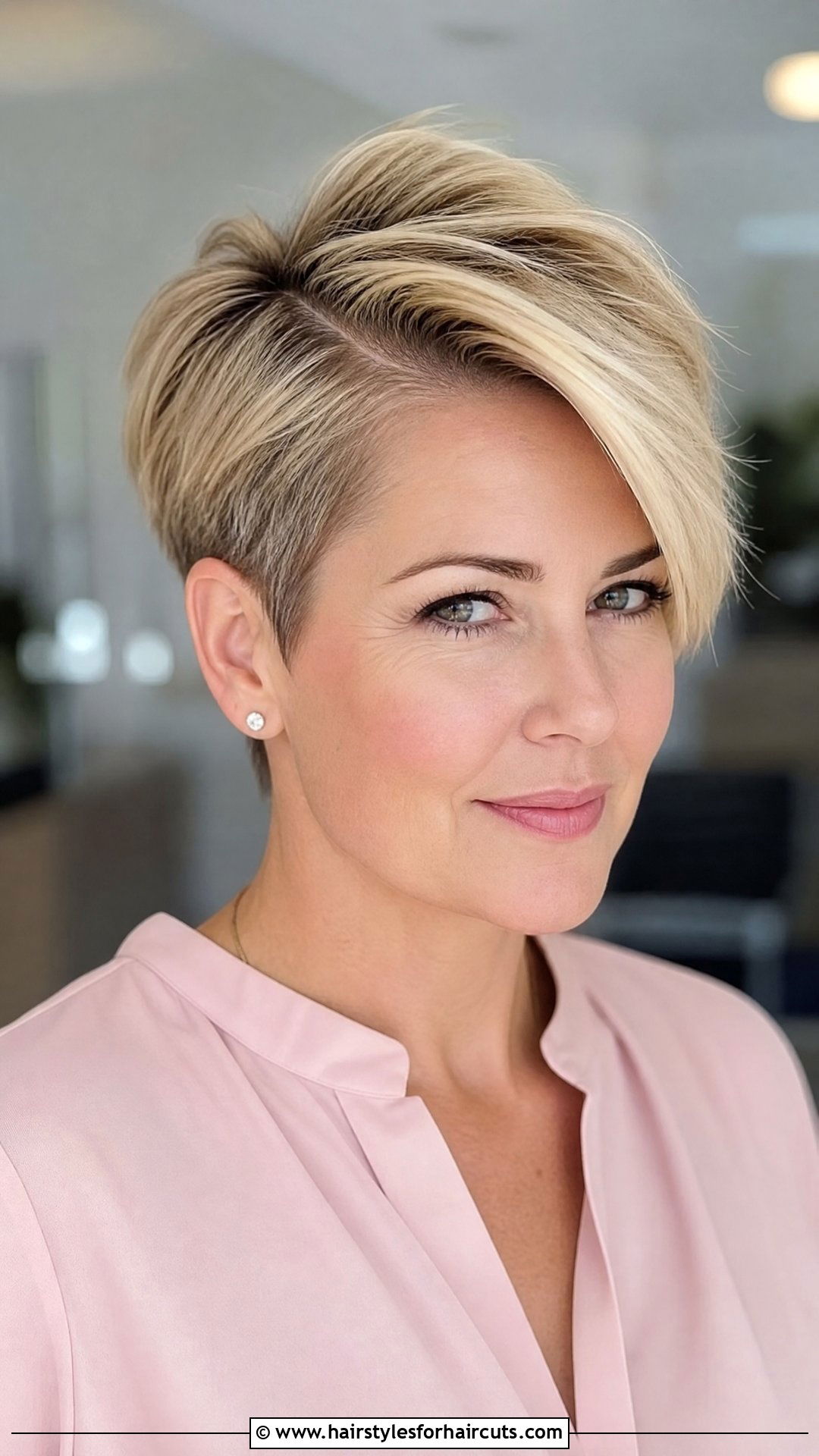
A side-parted pixie is a simple yet effective technique to boost body on fine, thinning hair, as the deep side part creates instant lift at the root on the heavier side 【turn0search21】. The shorter length makes finer hair look fuller overall, while the asymmetrical part adds a dynamic sweep that moves the eye across the head, creating the impression of more volume. The longer top can be styled forward or swept back, and the nape and sides are kept neat and tapered. This parting is particularly flattering for women over 50 with fine hair, as it adds a youthful, energetic boost 【turn0search21】. It’s a versatile style that can be worn sleek and sophisticated or with a bit of textured product for a more casual finish.
12. Short Shag Haircut For Fine Hair

The short shag is a rebellious, volume-boosting hero for fine, straight hair, characterized by its heavy layers, choppy ends, and often a full fringe 【turn0search9】. This cut is all about creating maximum texture and movement, which distracts from lack of density and makes the hair appear incredibly thick and effortless. The layers are cut to different lengths throughout, removing bulk in a way that encourages natural wave and body. The shag works with your hair’s natural tendencies rather than against them, making air-drying a viable styling option. It’s a stylishly messy cut that oozes rock-and-roll attitude and requires only a bit of texturizing spray or paste to define the layers and maintain that perfectly undone, full-bodied look.
13. Long Shag With Curtain Bangs For Fine Hair

For those who prefer length, the long shag with curtain bangs is a strategic choice that combines face-framing volume with all-over texture 【turn0search2】. The curtain bangs—softly parted in the middle and sweeping outward—add immediate fullness around the face, a common area of concern for thin hair. The rest of the cut features long, blended layers that start below the chin, which provides movement and removes just enough weight to encourage natural waves without thinning the ends. This style makes fine hair look abundant and effortlessly cool. Styling is low-key; enhance natural texture with a sea salt spray or use a large-barrel curling iron for loose, relaxed waves. The curtain bangs seamlessly blend into the layers, creating a cohesive, voluminous look.
14. Shoulder-Length Blunt Cut For Fine Hair
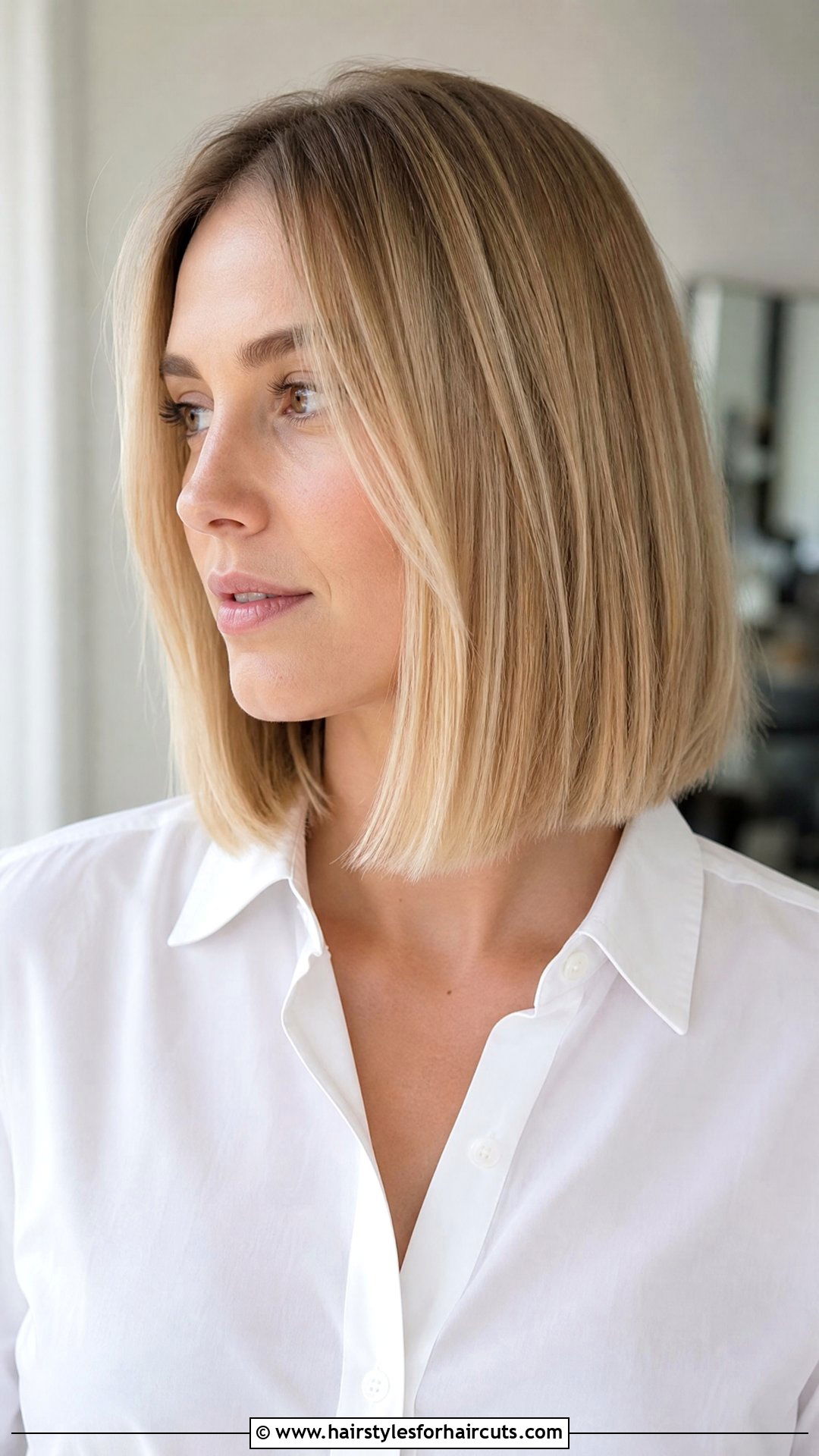
A shoulder-length blunt cut is a sophisticated, no-nonsense style that maximizes the appearance of thickness in fine, straight hair by preserving every strand at the same length 【turn0search16】. Without layers, the hair forms a solid, continuous sheet from root to tip, which prevents the ends from looking stringy and creates a clean, healthy-looking edge. This length is versatile enough to be worn straight, wavy, or in an updo, and it provides enough weight to maintain shape throughout the day. The blunt line draws a sharp, horizontal line across the shoulders, which can make the hair look more substantial. It’s an excellent choice for those who want a polished, low-maintenance style that always looks thick and neat.
15. Collarbone-Length Blunt Cut For Fine Hair
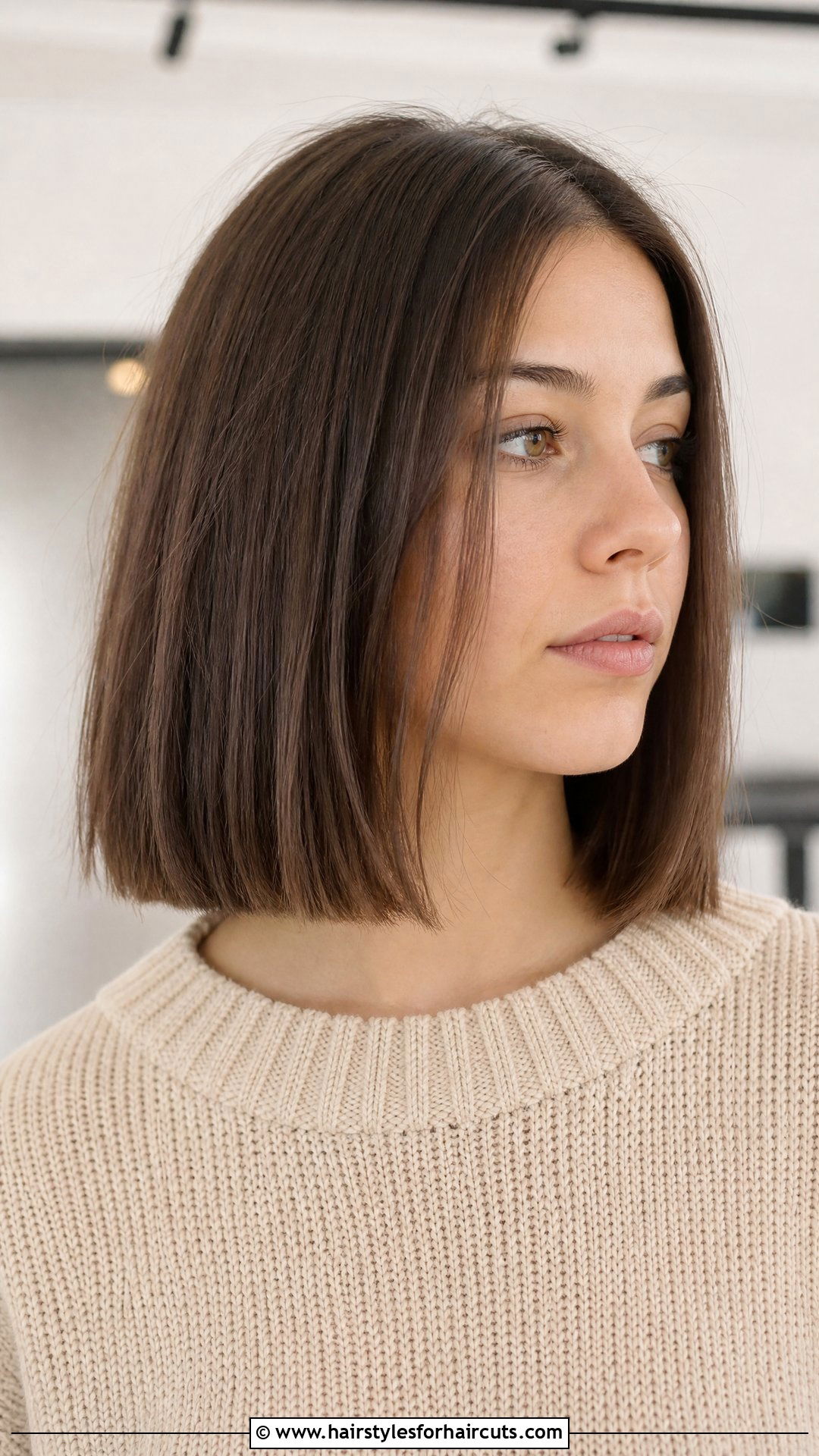
A collarbone-length blunt cut is a modern classic that strikes the perfect balance between manageability and volume for fine, straight hair 【turn0search6】. The precise, one-length cut removes split ends and creates a thick, solid line at the ends, which is crucial for making fine hair look dense and healthy. Falling at the collarbone, this length is long enough to pull back but short enough to avoid the dragging effect that can flatten fine hair. It’s a blank canvas for styling—smooth and sleek for a professional look or with added waves for casual texture. The simplicity of the cut means the focus remains on the hair’s natural shine and the illusion of fullness created by the clean, blunt edge.
16. French Bob For Fine Hair

The French bob is a chic, effortlessly stylish option for fine hair, typically characterized by its chin-length cut with a soft, tapered nape and often accompanied by a fringe 【turn0search0】. What makes it special for fine hair is its slightly textured, layered approach, which is less rigid than a blunt bob and adds a touch of je ne sais quoi. The layers are very subtle, creating movement and volume without removing much hair. The fringe, whether a full set of bangs or a few face-framing pieces, adds density at the front. This style looks intentionally effortless, as if you simply rolled out of bed with perfect, full hair. Styling is minimal, often just a rough-dry with fingers and a bit of light-hold product to define the texture.
17. Graduated Bob For Fine Hair

A graduated bob is a clever, structured cut that builds significant volume in the back for fine, straight hair, making it a close cousin of the inverted bob 【turn0search4】. The graduation refers to the stacked, layered technique at the nape, where the hair is cut shorter at the back and longer toward the front, but the layers are more pronounced and stacked. This creates a “shelf” of hair that lifts the style and gives it a rounded, full shape. The front can be kept at a uniform length or with subtle face-framing. This cut is excellent for adding body to the lower portion of the hair, where it tends to be finest. The structured shape always looks intentional and full, even on the finest hair.
18. Razored Bob For Fine Hair

A razored bob uses a razor tool instead of scissors to cut the hair, creating soft, feathery ends that add incredible texture and movement to fine, straight hair 【turn0search3】. The razor removes less hair with each cut than scissors, resulting in a lighter, more blended layer that doesn’t thin out the hair. Instead, it creates piece-y, separated ends that give the illusion of more hair and make the style look dynamic and full. This technique is particularly effective on straight hair, as it encourages subtle bends and wisps that catch the light. The razored bob can be worn at any length—from chin to shoulder—and offers a more relaxed, lived-in vibe than a blunt cut while still maintaining overall density.
19. Long Layers For Fine Hair
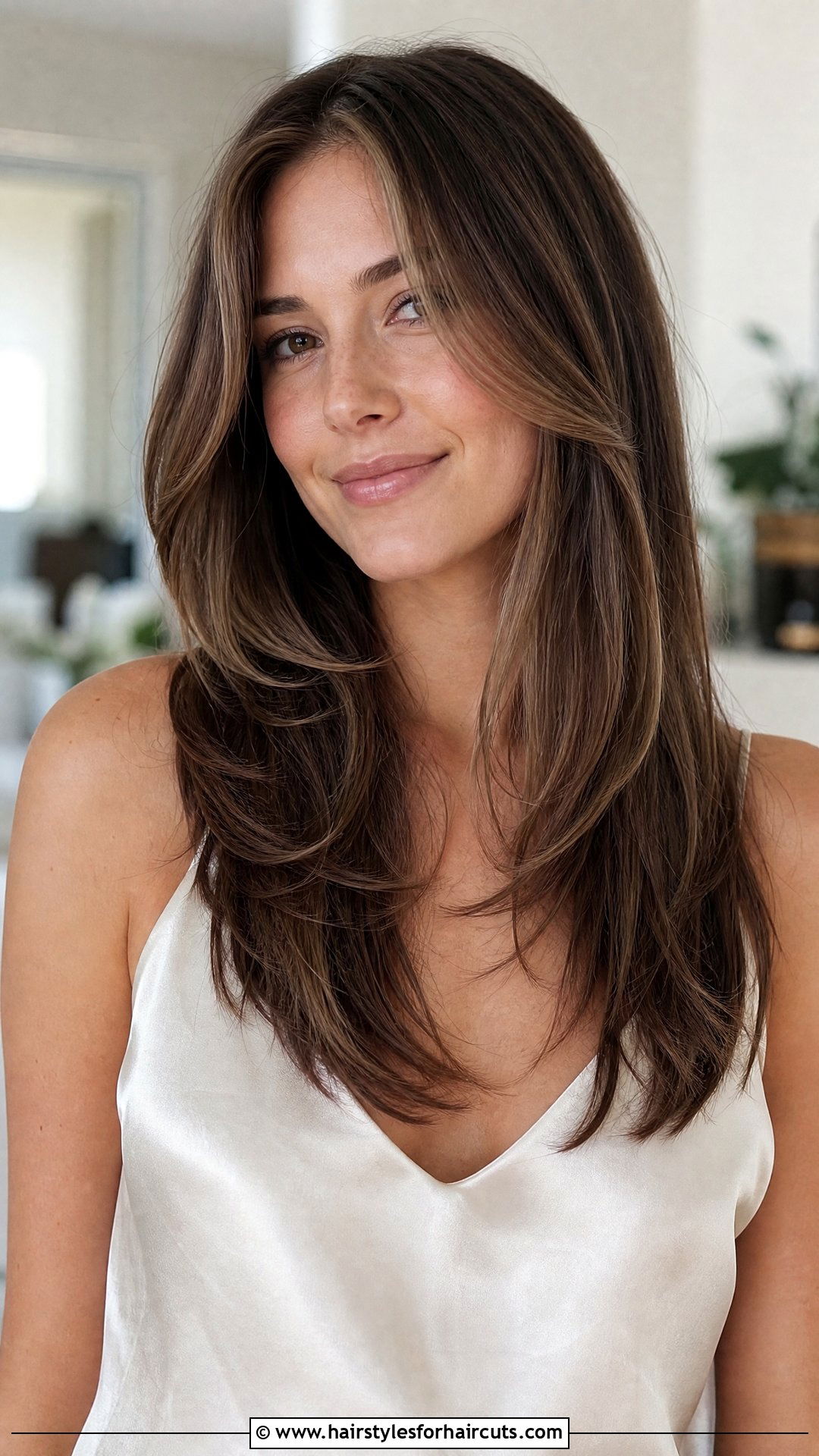
Long layers are a strategic choice for fine, straight hair when the goal is to maintain length while adding volume and movement 【turn0search11】. The key is to request long, blended layers that start below the chin; short, choppy layers can remove too much weight and make hair look stringy. Long layers remove just a small amount of interior weight, allowing the top and sides to swell with natural body and creating soft curves without sacrificing the overall length. This cut is perfect for those who love their long hair but struggle with it looking flat. Styling can involve large hot rollers for root lift or simply blow-drying with a round brush to encourage volume at the crown and smoothness through the lengths.
20. V-Cut For Long Fine Hair
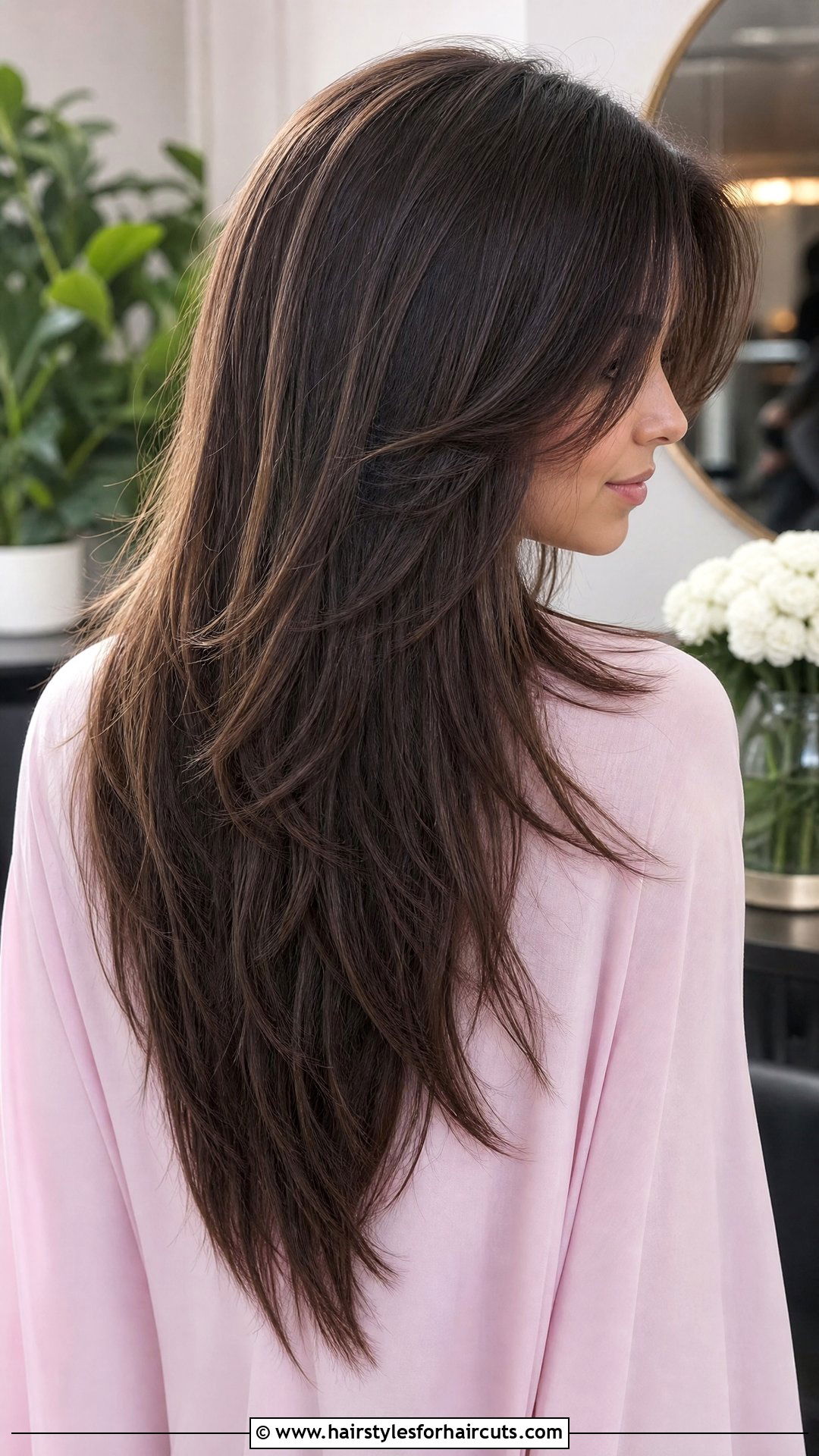
A V-cut is a beautiful, face-framing technique for long, fine, straight hair that creates the illusion of more density and adds subtle movement 【turn0search1】. The cut is named for the V-shape formed by the shorter layers at the front, which gradually lengthen toward the back. This style keeps the length at the back, preserving the overall density, while the shorter front pieces frame the face and add volume where it’s most visible. The V-shape also encourages natural waves or curls to form at the ends, which adds texture and the appearance of more hair. It’s a low-maintenance way to add interest and fullness to long fine hair without committing to a major chop.
21. U-Shaped Cut For Long Fine Hair

A U-shaped cut is another excellent option for long, fine, straight hair, designed to maintain maximum length and density at the back while softening the front 【turn0search1】. Unlike the V-cut, the layers in a U-cut are softer and more gradual, creating a rounded, U-like frame around the face. This technique removes very little hair, focusing instead on creating gentle, face-framing layers that blend seamlessly into the longer lengths. The result is a style that looks incredibly thick and healthy from the back, with softness and movement at the front. It’s an ideal choice for those who want to keep their long hair but need a style that doesn’t look flat or heavy. The U-cut is timeless and universally flattering.
22. Tapered Cut For Fine Hair
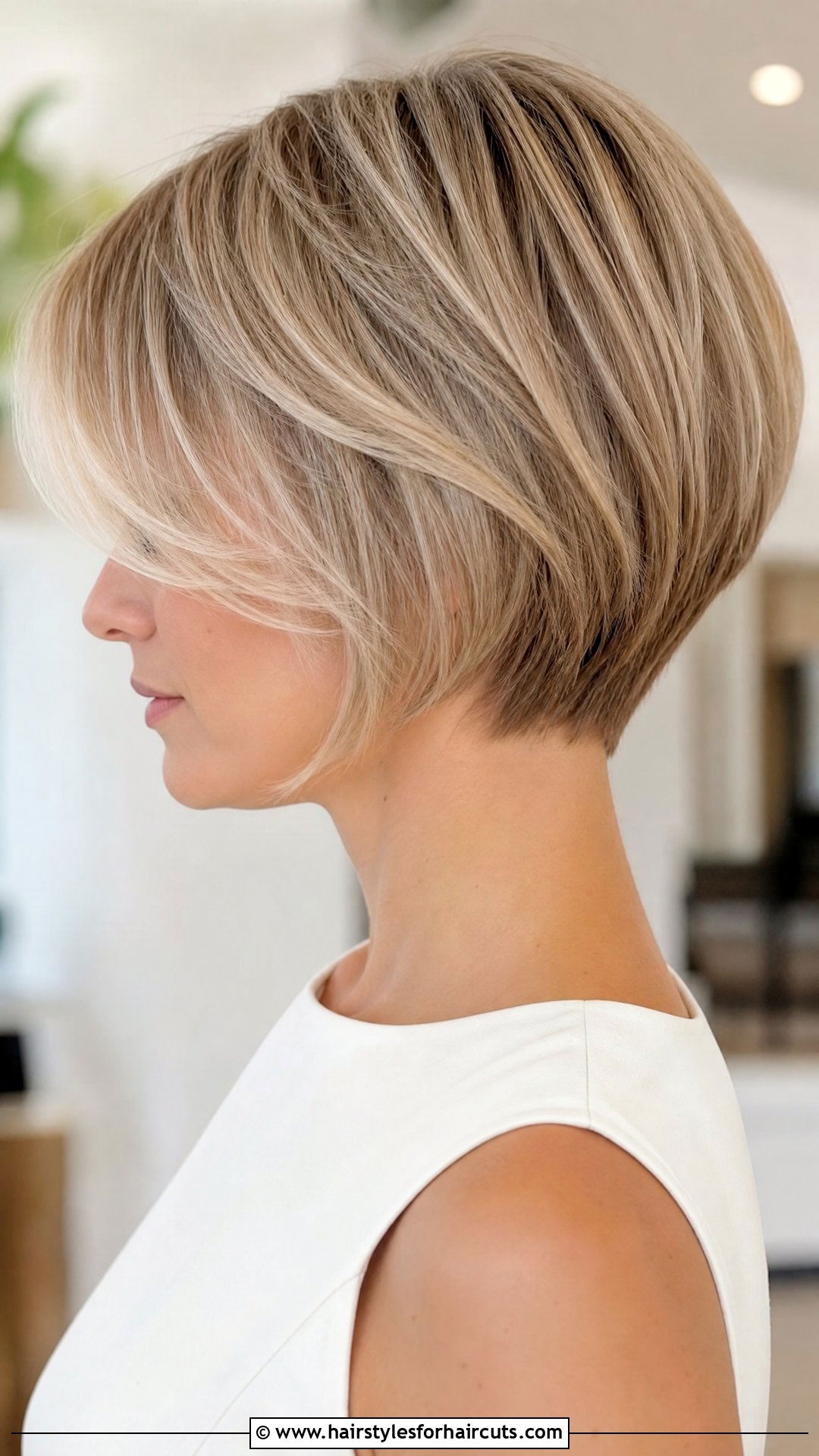
A tapered cut is a precise, technical style that is exceptionally flattering for fine, thin, straight hair, as it gradually reduces the length from the top to the nape 【turn0search4】. This technique removes weight methodically, creating a natural, built-in lift and fullness at the crown while keeping the ends solid. The cut is often shorter at the back and sides, blending into slightly longer lengths on top. This concentration of weight at the top and roots is the secret to its volume-boosting effect. The tapered cut is clean, modern, and always looks intentional. It requires a skilled stylist but results in a style that is easy to maintain and style, often just needing a blow-dry to emphasize the natural lift and shape.
23. Choppy Bob For Fine Hair

A choppy bob is a fun, texturized alternative to the sleek blunt bob, designed to add loads of movement and the illusion of thickness to fine, straight hair 【turn0search3】. This cut features intentionally uneven, layered ends created with a razor or texturizing shears. The choppiness breaks up the solid line of a blunt cut, making the hair appear more dynamic and full. The layers should be subtle and blended to avoid looking sparse. This style has a cool, undone quality and is perfect for those who want a low-maintenance look with personality. Styling is minimal; a texturizing spray or sea salt spray can enhance the piece-y ends, or it can be worn smooth for a contrast between the textured ends and sleek top.
24. Bixie Cut For Fine Hair
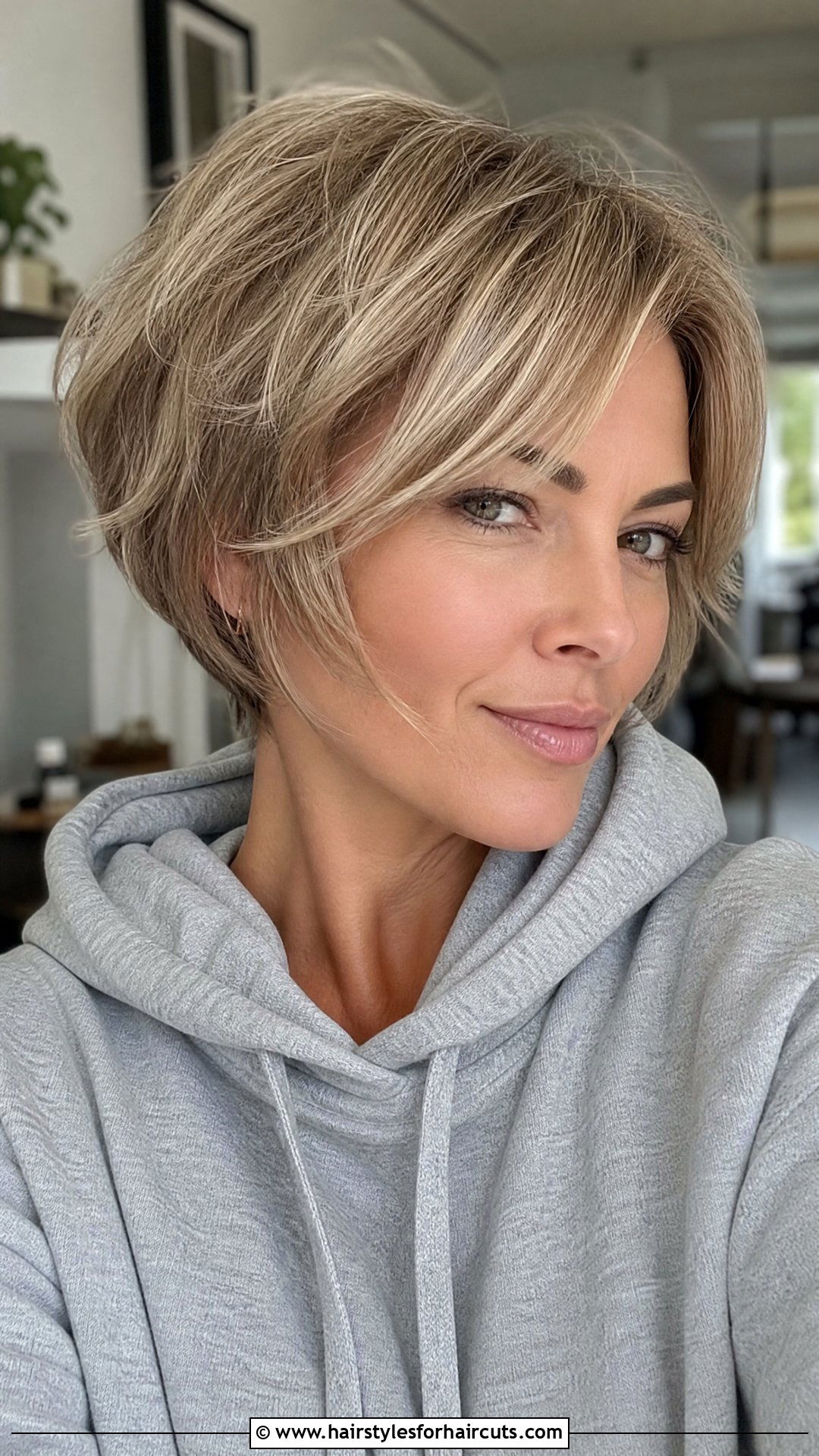
The bixie—a hybrid of a bob and a pixie—is a trendy, volume-rich option for fine, straight hair that combines the best elements of both styles 【turn0search9】. It’s essentially a longer pixie with layers that are longer at the front, framing the face like a bob, and shorter, more textured layers at the back and crown. This combination provides the lift and fullness of a pixie at the roots with the softening, face-framing effect of a bob. The layers are key to creating texture and movement, making the hair look significantly thicker than it is. This cut is versatile, modern, and works well with a variety of styling products, from smoothing creams for a sleek look to styling waxes for a textured, piece-y finish.
25. Undercut For Fine Hair

An undercut is a bold, statement-making choice that can dramatically transform fine, straight hair by removing bulk from the underneath sections, allowing the top layers to lie more fully and with greater lift 【turn0search3】. By shaving or closely trimming the hair at the nape and sides, the weight is removed, which reduces the pull on the top layers. This results in instant volume and a dramatic, edgy contrast. The long top can be styled in numerous ways—slept back, parted to the side, or worn forward as a long fringe. This cut is high-impact and requires confidence, but it’s an effective way to maximize the volume of fine hair while showcasing a unique, modern style.
Conclusion:
Navigating the world of haircuts with fine, thin, straight hair doesn’t have to be a challenge. The 25 styles explored here prove that the right cut can transform your texture, creating volume, movement, and the illusion of density. From the clean, full lines of a blunt bob to the textured lift of a choppy pixie, each style offers a unique way to enhance your natural hair. The key principles remain consistent: embrace strategic layers, maintain solid ends, and consider lengths that eliminate excess weight. Armed with this expert guide, you can visit your stylist with confidence, knowing exactly which cuts will make your fine, straight hair look its absolute fullest and most vibrant.

Leave a Reply