
Ever found yourself sitting in the salon chair, unsure whether to ask for a simple trim or a completely new haircut? You are definitely not alone in this common confusion. Understanding the key differences in the hair trim vs haircuts debate is essential for getting exactly what you want from your salon visit. A trim typically means removing just a small amount of length to clean up split ends and maintain your current style. On the other hand, a haircut involves a more significant transformation, altering your length, shape, or overall style. Knowing how to communicate your desires ensures you walk out thrilled with your hair. Let us explore twenty-five distinct scenarios to help you master this important salon vocabulary.

1. Blunt Bob Haircut Vs Trim
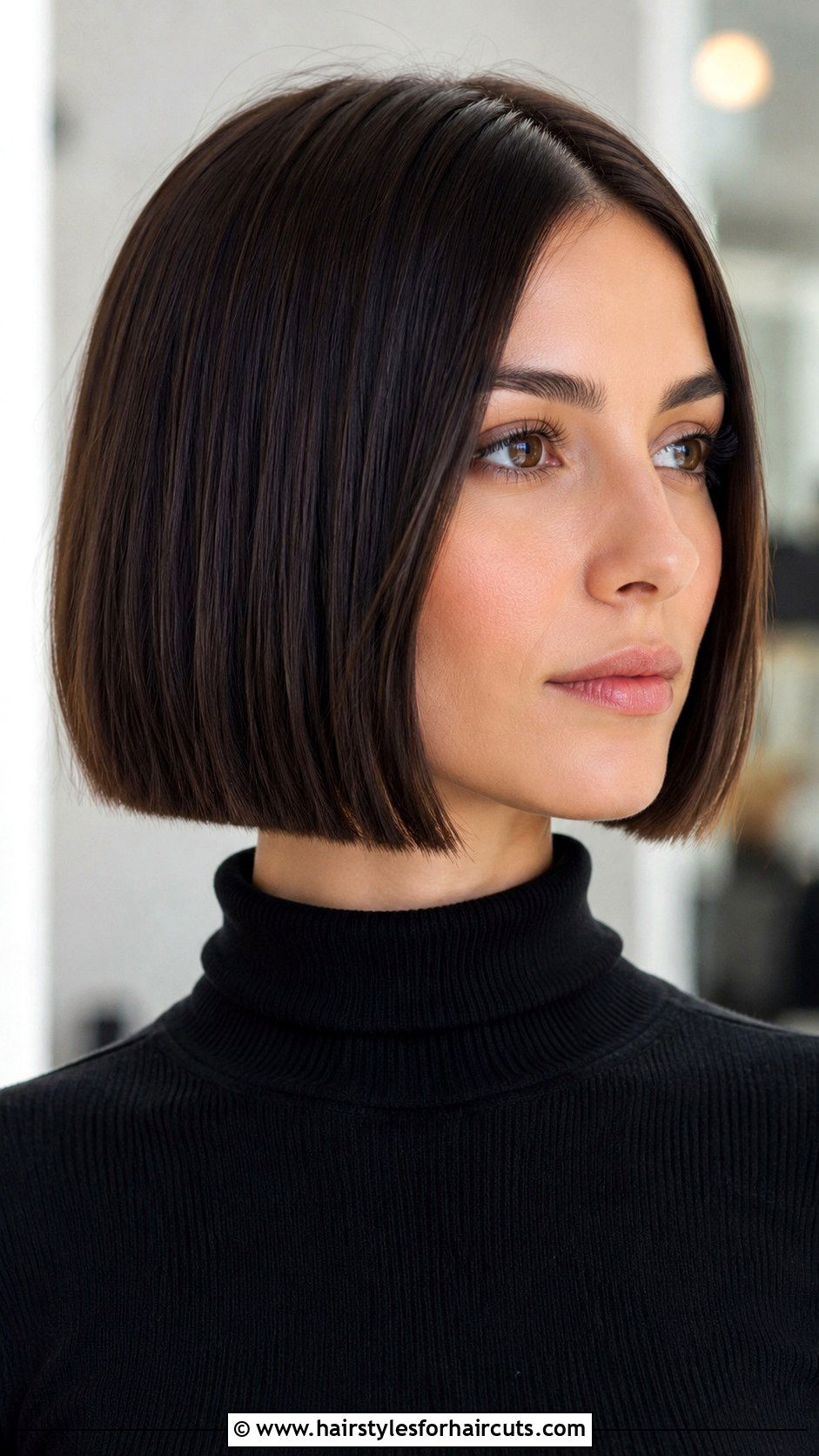
Craving that sharp, precise edge that only a specific style can give? When considering a blunt bob haircut vs trim, the difference is quite striking. A full haircut creates the structured, geometric shape that defines this look, establishing the strong baseline and removing substantial length. It is a transformative service that sets the entire foundation. Conversely, a trim on an existing blunt bob merely dusts the very ends to remove damage while meticulously preserving that original sharp line. You are maintaining the shape rather than creating it from scratch. If your baseline is uneven or grown out, you need a haircut. If the line is perfect but the ends are frayed, a trim keeps it flawless.
2. Long Layers Haircut Vs Trim
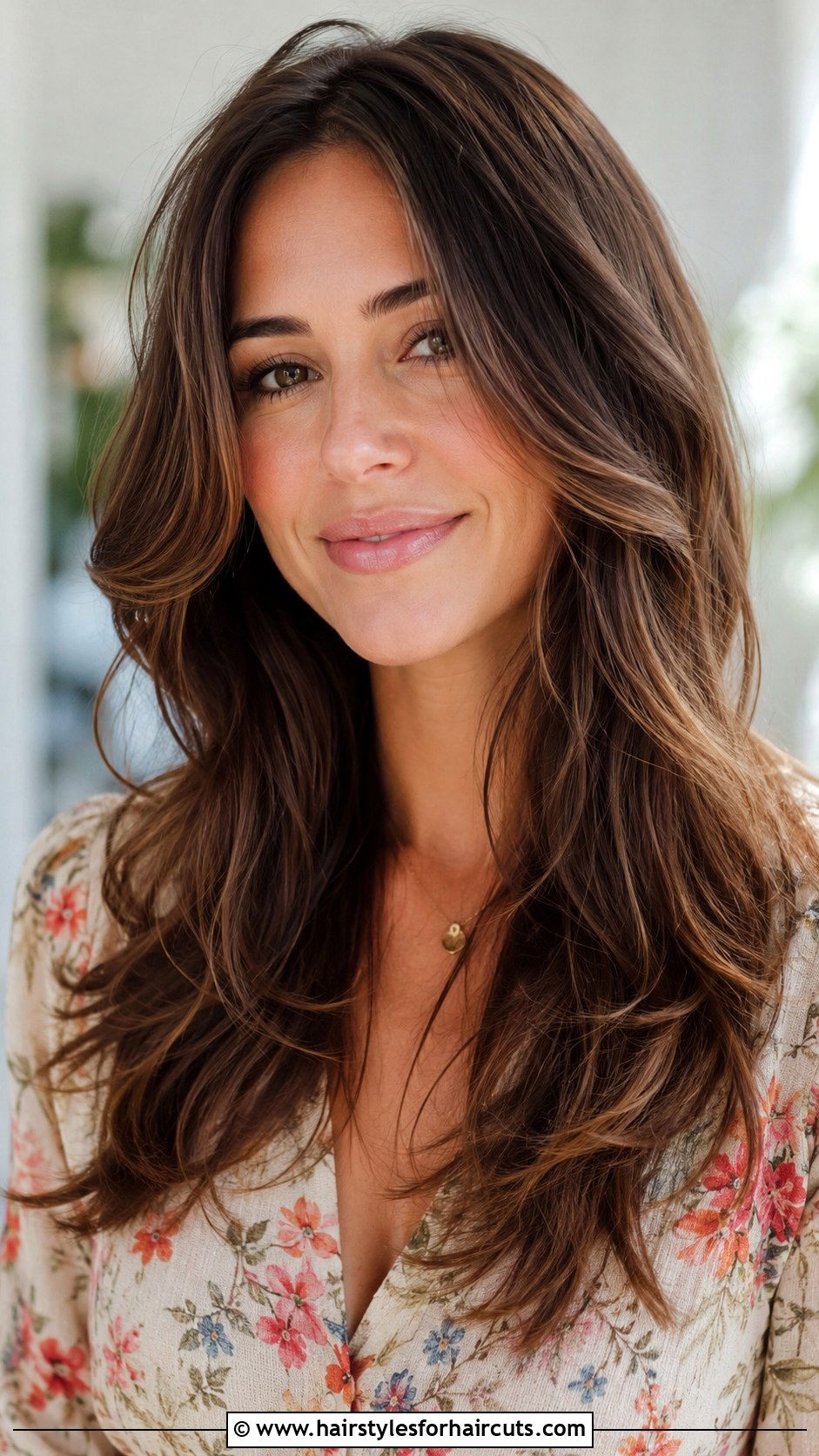
Want to add movement and volume without sacrificing all your length? Looking at long layers haircut vs trim reveals entirely different goals. Cutting long layers involves carving out varying lengths throughout your hair to create dimension, texture, and bounce. It completely changes how your hair falls and moves. A trim, however, just skims the bottom edges to keep the longest parts healthy. It does not alter the internal layering or the overall silhouette. If your hair feels heavy and flat, you need a layered haircut to remove weight. If your layers still fall perfectly but the ends look tired, a simple trim will refresh the entire look without losing the shape you love.
3. Pixie Cut Haircut Vs Trim

Ready for a bold and dramatic change that turns heads everywhere? Examining a pixie cut haircut vs trim shows a massive contrast in salon effort. A pixie haircut is a major transformation, sculpting short layers close to the head and often exposing the neck and ears. It requires intense precision to build the shape from the ground up. A trim on a pixie is simply tidying up the overgrown pieces to maintain that previously carved architectural shape. Because pixies grow out quickly and lose their specific silhouette, regular trims are mandatory. However, if you are starting from long or medium hair, asking for a trim will never give you a pixie.
4. Curtain Bangs Haircut Vs Trim

Dreaming of a face-framing accent that beautifully opens up your features? Delving into curtain bangs haircut vs trim highlights how fringe behaves differently. Getting curtain bangs cut means your stylist carves out a new section of hair at the front, cutting it to blend into your longer lengths. It adds a brand new element to your overall style. Trimming existing curtain bangs means carefully snipping the exact same front section to keep it from falling into your eyes. Fringe requires frequent, tiny trims to maintain the perfect length. If you want to add this framing piece, you need a haircut. If you already have them and just need them shortened, a quick trim works perfectly.
5. Shag Haircut Vs Trim

Love that effortlessly cool, rock-and-roll vibe with plenty of texture? Comparing a shag haircut vs trim proves they serve completely different purposes. A shag haircut is heavily layered and often includes choppy ends and a fringe, creating a messy, lived-in feel from scratch. It relies on specific cutting techniques like point cutting to build that signature texture. A trim on a shag simply removes split ends while following the already established choppy blueprint. Because the shag relies on texture rather than blunt lines, a trim keeps the ends fresh without disrupting the carefully crafted messiness. You need the full haircut to create the texture initially, but only trims to keep the style healthy.
6. Lob Haircut Vs Trim

Looking for the perfect middle ground between short and long hair? Navigating a lob haircut vs trim comes down to creating versus maintaining. A lob haircut involves cutting the hair to a collarbone-length, typically offering a sleek, blunt finish or soft waves. It removes a significant amount of length to establish this highly versatile baseline. A trim on a lob just takes off the bare minimum to keep the ends looking thick and healthy. If your hair is currently long and you want that trendy collarbone skimming length, a haircut is necessary. If you already have the lob and just want to stop the ends from splitting, a simple trim is your best option.
7. Long Straight Hair Trim Vs Haircut

Do you treasure your flowing locks but hate the stubborn, dry ends? Understanding long straight hair trim vs haircut is crucial for length lovers. A trim on long straight hair removes only a quarter to half an inch, eliminating damage while preserving every possible inch of length. It keeps the baseline clean and prevents breakage from traveling up the shaft. A haircut implies taking off several inches or adding long layers to change the overall shape and weight distribution. If you want to keep all your length, always specify a trim. If you are ready to lose a few inches for a thicker, healthier appearance, then you are asking for a haircut.
8. Textured Bob Haircut Vs Trim

Prefer a softer, more relaxed finish rather than a sharp geometric line? Exploring a textured bob haircut vs trim highlights the importance of cutting techniques. A textured bob haircut involves cutting the hair to the desired length and then using a razor or shears to thin out the ends, creating a piece-y, disconnected finish. It completely transforms a blunt cut into something airy and light. A trim on a textured bob simply removes the damaged tips while keeping the existing piece-y layers intact. You cannot create that airy texture with a basic trim. You need the haircut to establish the wispy ends, and then regular trims to keep those textured tips from looking stringy.
9. Wispy Bangs Haircut Vs Trim

Want a subtle fringe that skims your eyebrows without the heavy bulk? Considering wispy bangs haircut vs trim requires understanding the weight removal process. Cutting wispy bangs means sectioning off the front hair and using thinning techniques to create a light, feathery fringe that blends softly into the rest of your hair. It adds a brand new focal point to your face. Trimming wispy bangs means taking off a tiny fraction of an inch so they do not obscure your vision. Because they are cut so thin, they grow out fast and require constant upkeep. You must get a haircut to create them initially, followed by frequent mini trims to maintain that perfect, soft length.
10. Layered Haircut Vs Trim
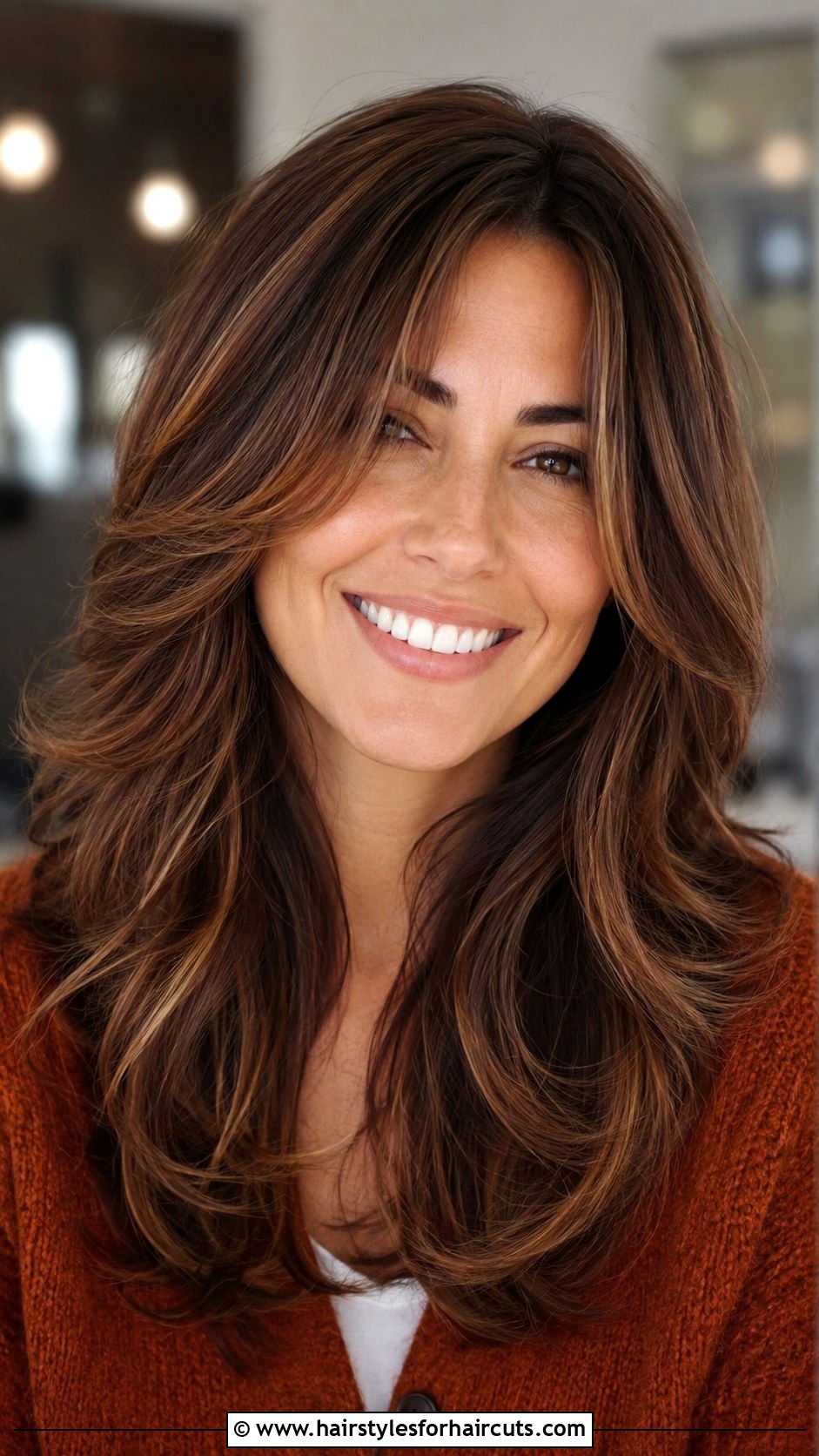
Need to remove excess bulk and give your hair some much needed bounce? Looking at layered haircut vs trim shows how shape evolves. A layered haircut involves cutting different lengths throughout your hair to build volume, movement, and structure. It is a complete reshaping service that changes how your hair interacts. A trim simply cleans up the bottom edge of those existing layers without altering the internal architecture. If your hair is one length and feels heavy, you need a full layered haircut to distribute the weight. If you already have beautiful layers but the ends are getting stringy, a trim refreshes the whole look without changing the fundamental shape your stylist built.
11. Short Layered Haircut Vs Trim

Craving volume at the crown with tapered ends at the nape? Breaking down a short layered haircut vs trim reveals a big difference in styling. A short layered haircut stacks the hair to create lift at the top while keeping the neckline tight and clean. It is a structural change that defines how your hair sits on your head. A trim on short layers just tidies up the perimeter and removes split ends from the shortest pieces, maintaining the original shape. Short styles lose their silhouette rapidly as they grow out. You need the full haircut to carve out those stacked layers, but routine trims are essential to stop the style from becoming a mullet.
12. Buzz Cut Haircut Vs Trim
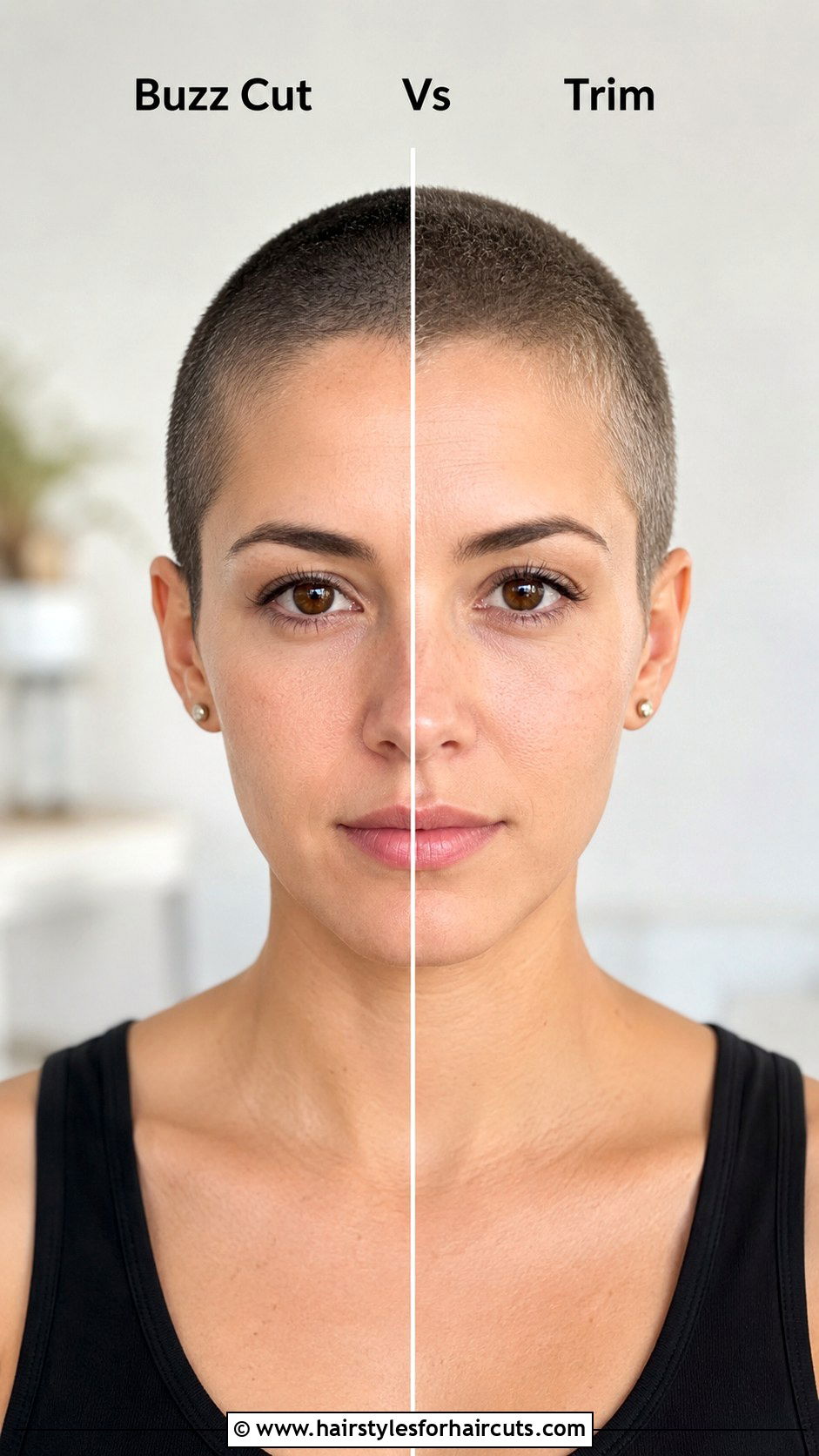
Ready to embrace an extremely low-maintenance and striking look? Evaluating a buzz cut haircut vs trim is actually quite straightforward. A buzz cut haircut involves using clippers without guards to remove all significant length, leaving hair uniformly short against the scalp. It is the ultimate fresh start and a dramatic transformation. A trim on a buzz cut is virtually nonexistent, though some people ask for a slight fade cleanup at the sides. Because the hair is so short, maintaining it usually requires the same clipping process rather than a scissor trim. If you are transitioning from any length, you need a haircut. To keep it tight, you just get it buzzed again.
13. Asymmetrical Bob Haircut Vs Trim
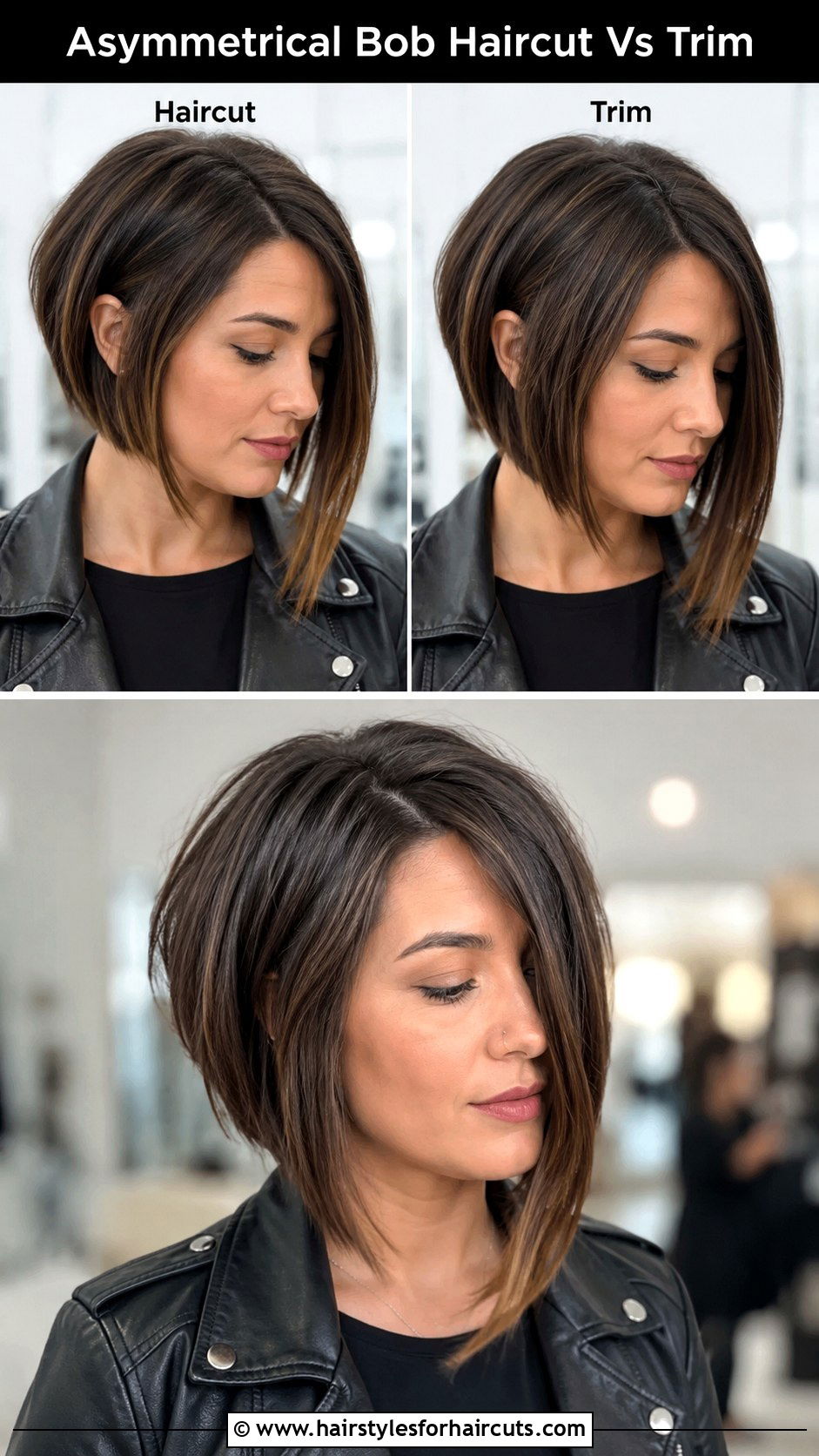
Fascinated by an edgy, angled look that commands attention? Analyzing an asymmetrical bob haircut vs trim showcases the importance of geometry. An asymmetrical bob haircut creates a dramatic difference in length from one side to the other, requiring a precision cut to establish the steep angle and clean lines. It is a bold structural statement. A trim on this style carefully follows that existing angle, removing minimal length to keep the longer side healthy and the shorter side sharp. If the angle starts growing out evenly, you lose the asymmetry completely. You need a haircut to carve out that striking angle, but you need regular trims to keep the two sides distinctly different.
14. Feathered Haircut Vs Trim

Longing for that retro, voluminous flip that screams vintage glamour? Comparing a feathered haircut vs trim is all about texturizing versus tidying. A feathered haircut uses specific layering and cutting techniques to make the ends curve outward, creating a soft, wing-like effect around the face. It relies heavily on removing weight from the bottom to encourage the hair to flip. A trim on feathered hair just snips the very tips to remove damage while preserving the outward curve. You cannot force hair to flip with a simple trim; it requires the haircut technique to remove the weight. Once the flip is established, trims keep the feathery ends intact and free from split ends.
15. Face Framing Layers Haircut Vs Trim

Want to highlight your cheekbones and soften your facial features? Reviewing face framing layers haircut vs trim clarifies the addition of new elements. Cutting face framing layers means carving out shorter pieces at the front that gradually blend into longer hair at the back. It changes the entire focal point of your style and highlights your bone structure. A trim on face framing layers means taking a tiny bit off those front pieces to keep them from getting too long and losing their framing effect. Adding these layers is definitely a haircut because you are altering the front structure. Keeping those specific front pieces at the perfect length requires regular, careful trims.
16. Curly Hair Trim Vs Haircut

Struggling to manage your coils without losing their natural bounce? Understanding curly hair trim vs haircut is absolutely vital for textured hair. A trim on curly hair often involves hunting for individual split ends or taking off a minimal amount to keep the curl pattern tight and healthy. Curly hair shrinks, so a small trim looks like a lot. A curly haircut involves cutting while dry and curl by curl to establish a distinct shape, like a curly bob or a tapered cut. If you just want to stop the frizz at the bottom, ask for a trim. If you want to reshape how your curls cluster, you need a specialized curly haircut.
17. Short Curly Haircut Vs Trim

Looking to let your natural texture shine in a cropped style? Decoding a short curly haircut vs trim shows how shape dictates the curls. A short curly haircut sculpts the hair close to the head, adjusting the bulk and weight distribution so the curls form perfectly without poofing out. It creates the entire silhouette. A trim on short curly hair just removes the frayed ends to keep the curls looking defined and fresh. Because curly hair expands, losing the shape is obvious. You must get a haircut to establish the shape and remove the bulk, but routine trims will keep the curls springy and prevent the bottom from getting that dreaded triangular look.
18. Inverted Bob Haircut Vs Trim
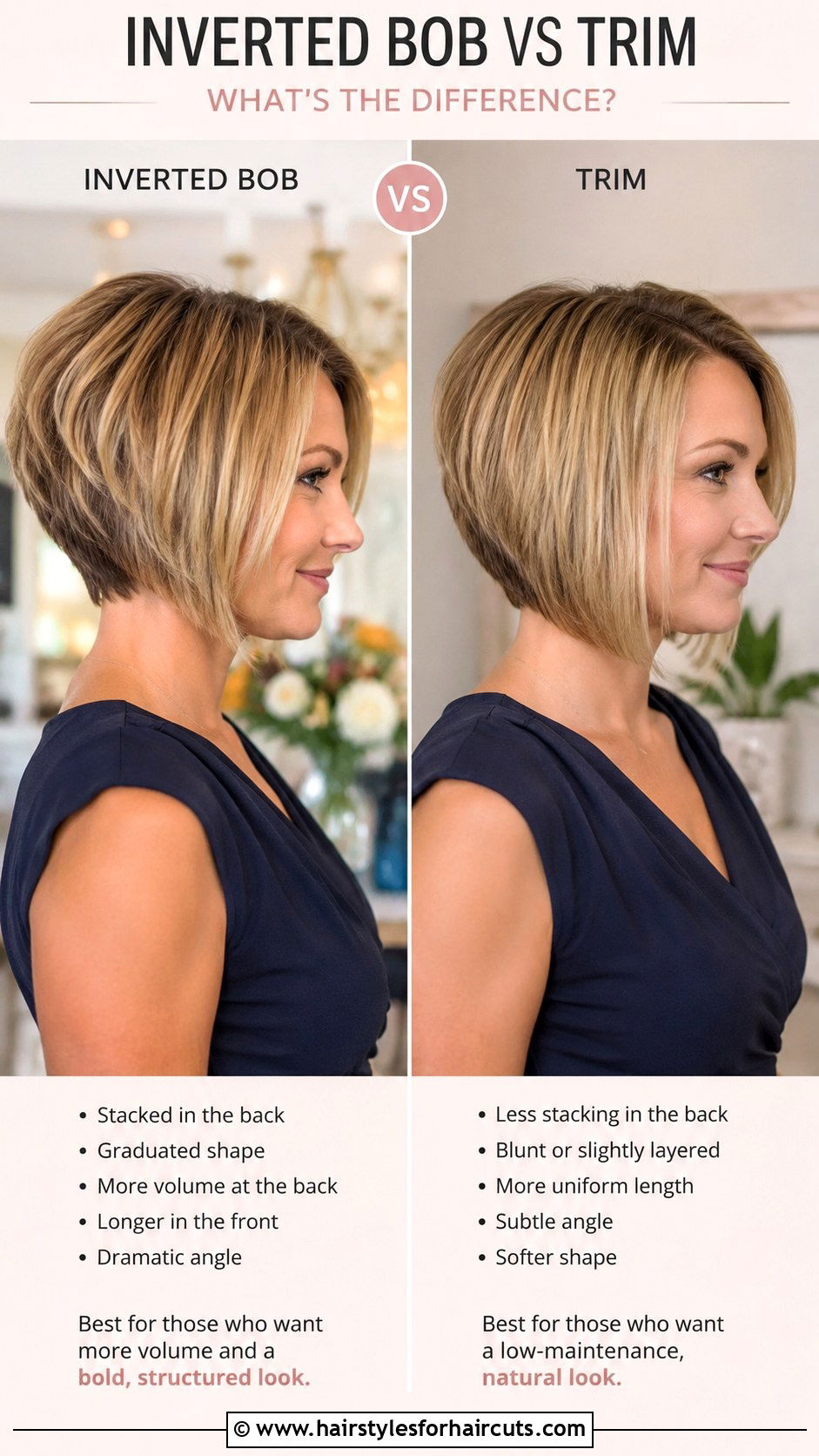
Obsessed with that stacked, angled look that shows off your neck? Distinguishing an inverted bob haircut vs trim comes down to the stacked back. An inverted bob haircut builds graduated layers at the back to create volume and a dramatic forward angle toward the chin. It requires intense precision to create that stacked weight line. A trim on an inverted bob means cleaning up the nape area and dusting the longer front pieces to maintain that dramatic slope. If the stacked back grows out, it loses all its volume and becomes shapeless. You need the full haircut to carve the stack, and regular trims to keep the back tight and the front long.
19. Choppy Layers Haircut Vs Trim

Desiring an edgy, heavily textured look with tons of separation? Looking at choppy layers haircut vs trim is about creating dimension versus maintaining it. A choppy layers haircut uses aggressive cutting techniques like notching to remove weight and create severe texture throughout the hair. It gives a deliberately undone, rebellious finish. A trim on choppy layers simply follows the existing textured lines, taking off the bare minimum to keep the ends healthy without softening the choppiness. If you want that aggressive, piece-y look, you need the haircut to remove the weight. Once you have it, a careful trim ensures the ends stay piece-y rather than just looking damaged and stringy.
20. Micro Bangs Haircut Vs Trim
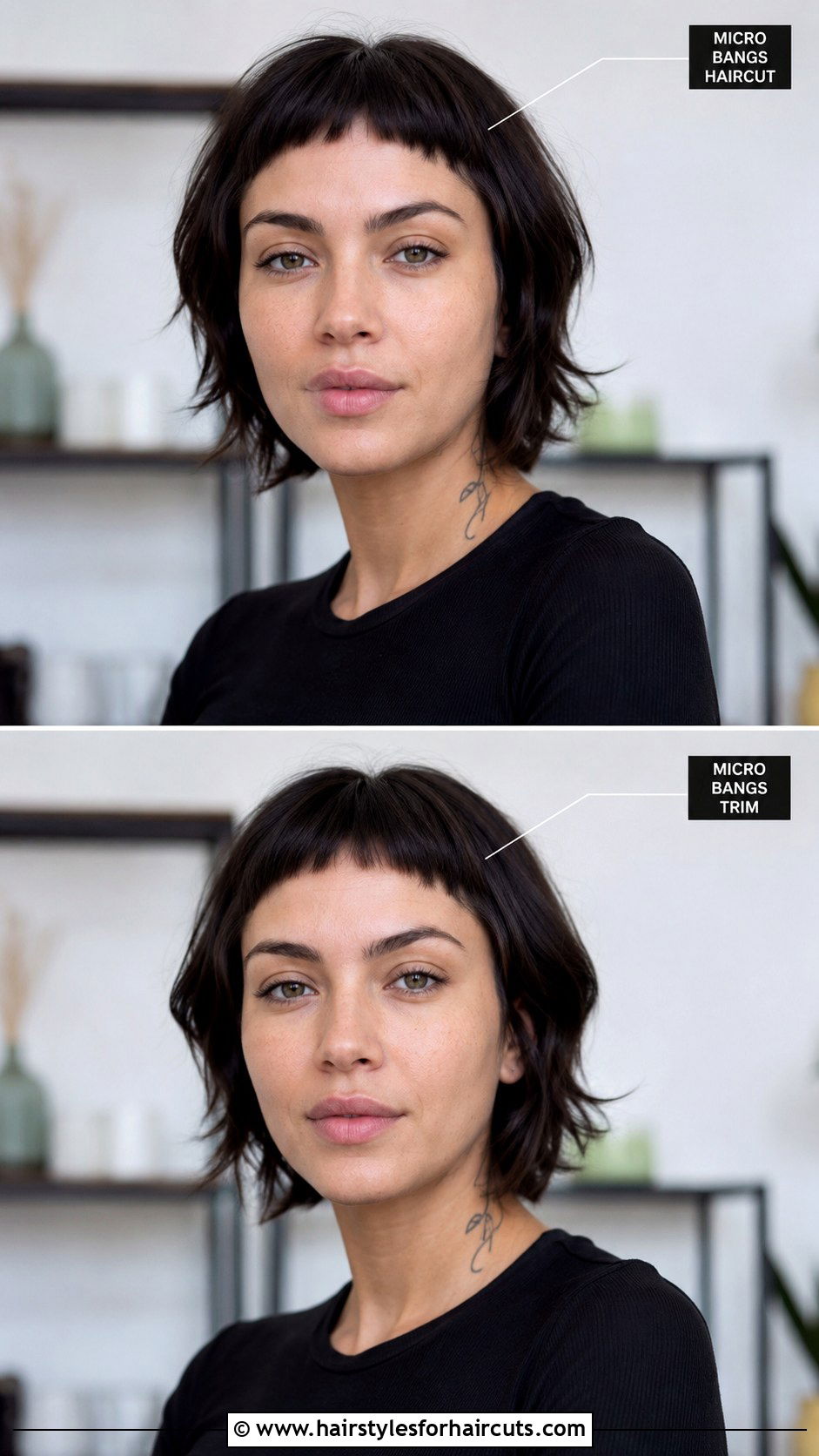
Brave enough for a super short, striking fringe that exposes your forehead? Comparing micro bangs haircut vs trim shows how tiny changes make a huge impact. A micro bangs haircut involves cutting the front fringe down to an inch or less above the hairline, creating a bold, punk-inspired focal point. It is a definite commitment and a style shift. A trim on micro bangs is just snipping a millimeter or two to keep them from growing into standard bangs. Because they are so short, any growth is immediately obvious. You need the haircut to chop them down initially, and you will need very frequent trims to stop them from becoming awkward length bangs.
21. One Length Haircut Vs Trim
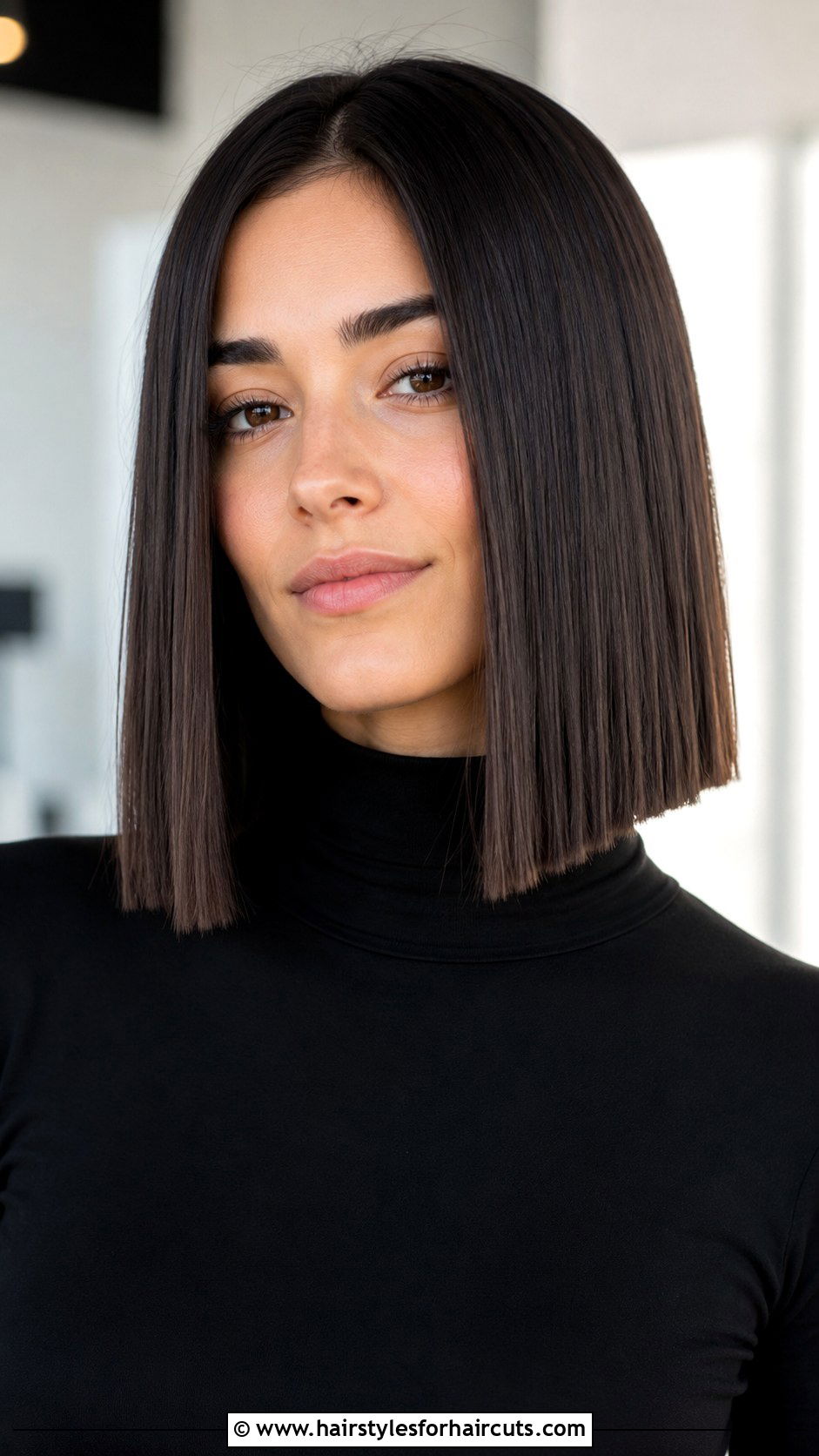
Craving a sleek, classic look with zero layers whatsoever? Evaluating a one length haircut vs trim emphasizes precision and baseline maintenance. A one length haircut involves cutting all the hair to the exact same length, creating a heavy, solid line at the bottom. It removes any previous layers to build maximum density at the ends. A trim on one length hair just skims the bottom edge to keep that solid line crisp and free of split ends. If you have layers and want that solid hemline, you need a haircut to even everything out. If your hair is already one length and just looking thin at the bottom, a trim restores the thickness.
22. Split End Dusting Trim Vs Haircut

Desperate to save your length but absolutely must remove the damage? Exploring a split end dusting trim vs haircut highlights a highly specialized service. A dusting trim is an extremely minimal trim where the stylist barely nips the very tips of the hair, focusing solely on severing split ends while preserving maximum length. It is the ultimate preservation technique. A haircut involves taking off enough length to remove all the damage, which might mean losing several inches if the breakage is high. If your ends are just lightly frayed, a dusting is perfect. If the damage extends far up the shaft, only a haircut will give you a healthy, fresh start.
23. French Bob Haircut Vs Trim

Drawn to that chic, jaw-length Parisian style with effortless charm? Understanding a French bob haircut vs trim is all about shape and proportion. A French bob haircut cuts the hair to jaw-length, often paired with a textured fringe and soft, piece-y ends. It is a very specific, high-maintenance shape that requires the right length to frame the face perfectly. A trim on a French bob just removes the bare minimum to keep it at that perfect jaw-skimming length without losing the intentional messiness. If you want that effortless chic look, you need the haircut to set the length and texture. Regular trims are mandatory to stop it from hitting the awkward shoulder length.
24. Wolf Cut Haircut Vs Trim

Want to channel your inner rockstar with heavy layers and wild volume? Breaking down a wolf cut haircut vs trim reveals a heavily textured contrast. A wolf cut haircut features short, heavy layers on top that blend into longer, wispy ends at the bottom, creating a shaggy, fierce silhouette. It is a completely transformative process that removes significant weight from the top. A trim on a wolf cut just cleans up the wispy bottom ends without touching the heavy top layers. You absolutely need a haircut to carve out that intense top layering and face-framing fringe. After that, a trim keeps the wild ends from looking damaged and keeps the style fresh.
25. Wavy Hair Trim Vs Haircut

Looking to enhance your natural beachy texture without going too short? Analyzing wavy hair trim vs haircut is about encouraging the natural pattern. A trim on wavy hair removes just the frayed ends, which actually helps the waves lay better and clump together more uniformly. It maintains the status quo. A wavy haircut might involve adding specific layers to enhance the wave pattern, or cutting in a shape that removes bulk from the bottom to stop the triangle effect. If your waves are just looking a bit stringy at the ends, a trim will revive them. If you want to reshape how your waves fall, you need a haircut for better distribution.
Conclusion:
Navigating the world of salon terminology does not have to be stressful or confusing anymore. By understanding the clear distinctions in the hair trim vs haircuts discussion, you hold the power to communicate exactly what you need. Remember that a trim is your best friend for maintaining a beloved shape and removing minor damage, while a haircut is the key to transformation, weight removal, and structural changes. Always be specific with your stylist about your goals, whether you want to preserve every millimeter of length or completely reinvent your silhouette. With these twenty-five comparisons in mind, you can confidently book your next appointment, knowing precisely how to ask for the hair of your dreams.

Leave a Reply