
Hair has always been a powerful form of self-expression, reflecting the culture, status, and trends of its time. When we look back at 25 historical hairstyles, we see a fascinating timeline of human creativity and social evolution. From the intricate braids of ancient civilizations to the bold statements of the modern era, each look tells a unique story about the people who wore it. Understanding these iconic looks gives us a deeper appreciation for the art of hairdressing and its roots. Whether you are searching for vintage inspiration or just love the history of beauty, exploring these memorable cuts and styles reveals how history repeats itself in the world of fashion. Let us take a journey through time and revisit the most unforgettable hair trends ever created.

1. Ancient Egyptian Bob

Have you ever wondered how ancient royalty kept cool in the desert heat? The ancient Egyptian bob was the ultimate solution for both comfort and status. This striking look featured a blunt, jaw-length cut with perfectly straight edges, often framed by sharp, heavy bangs. Both men and women wore this style, using flat ironing techniques with heated metal rods to achieve that sleek, shiny finish. Wigs were also highly popular, allowing people to switch between short bobs and longer styles instantly. Adorned with gold beads or hair rings, this haircut was a symbol of wealth and cleanliness. The geometric precision of the cut remains a timeless inspiration for modern bobs today.
2. Ancient Greek Chignon
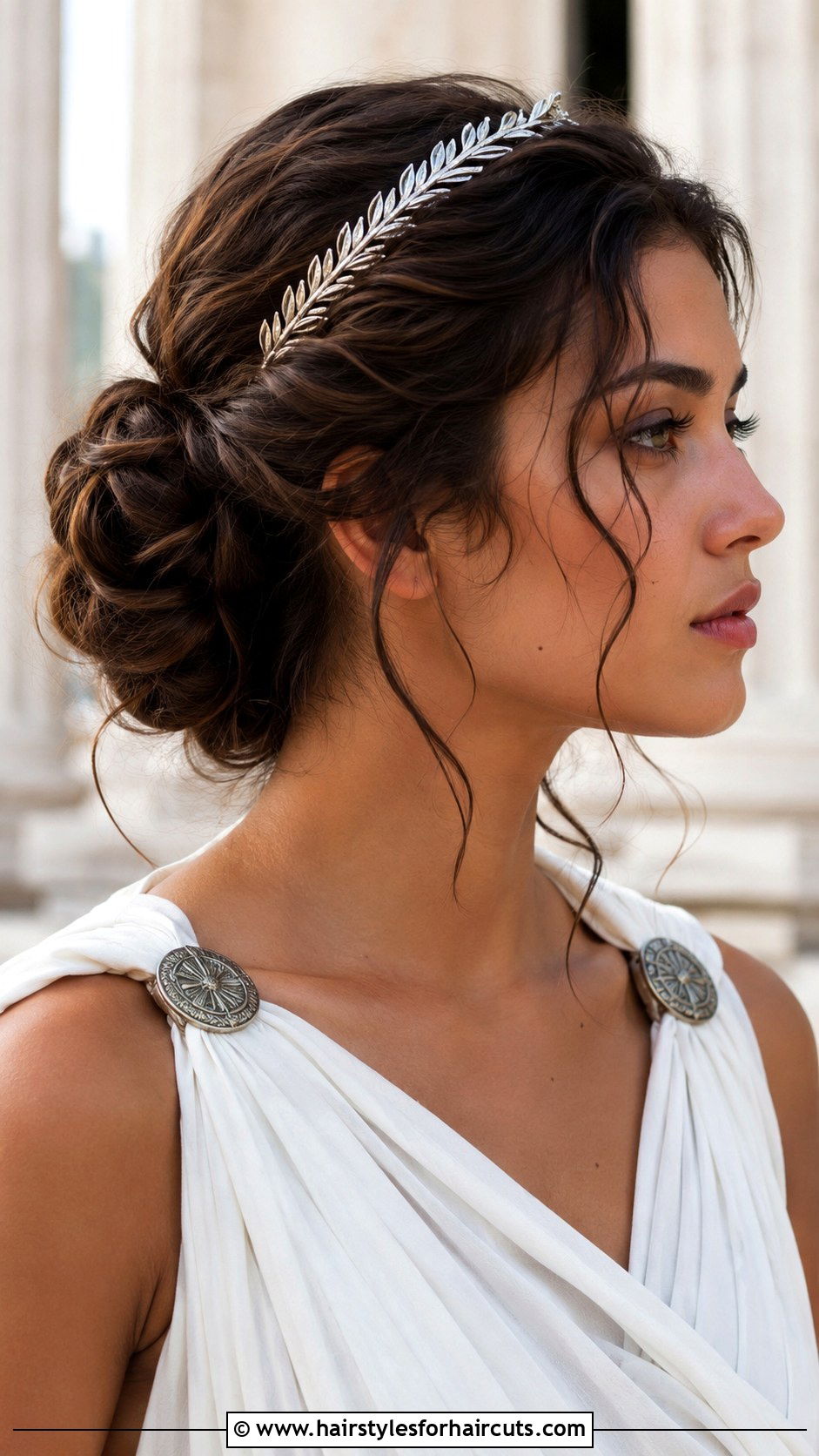
Grace and simplicity defined the aesthetic of classical antiquity. The ancient Greek chignon was a sophisticated low bun positioned at the nape of the neck. Women often left a few soft, face-framing tendrils loose to create a gentle, ethereal appearance. This style was frequently secured with handmade pins and decorated with ribbons, silver headbands, or fresh foliage. Hair was meticulously parted in the center, emphasizing symmetry and natural beauty. The chignon was not just for the elite; it was a practical choice for everyday life while still looking elegant. Today, this classic low bun remains a go-to for formal events, proving that ancient elegance never truly fades away.
3. Roman Empress Braids

Nothing screamed power and prestige in ancient Rome quite like an elaborate braided updo. Roman empress braids were a stunning display of wealth and social standing. Noblewomen wore their hair in intricate, multi-strand braids woven high on the head, often creating a crown-like effect. These massive styles required the help of skilled slaves called ornatrix who used ivory pins and gold thread to hold the heavy structures together. Sometimes, they even incorporated false hair pieces to add extra volume and height. The curled front pieces framed the face softly, contrasting with the strict architecture of the braids. This majestic look continues to inspire modern bridal and red carpet hair designs.
4. Viking Shieldmaiden Undercut

Long before modern edgy cuts became trendy, Norse warriors were rocking a fierce look. The Viking shieldmaiden undercut combined practicality with undeniable intimidation. This look featured shaved or closely cropped sides and back, leaving a long, thick section of hair on top. The longer top portion was often braided tightly to keep it out of the face during battle or daily chores. This style was highly functional, preventing enemies from grabbing hair in combat while maintaining the cultural importance of long hair. Decorative beads and metal rings were woven into the braids as symbols of achievements and status. It is a powerful precursor to today’s popular undercut variations.
5. Medieval Braided Updo
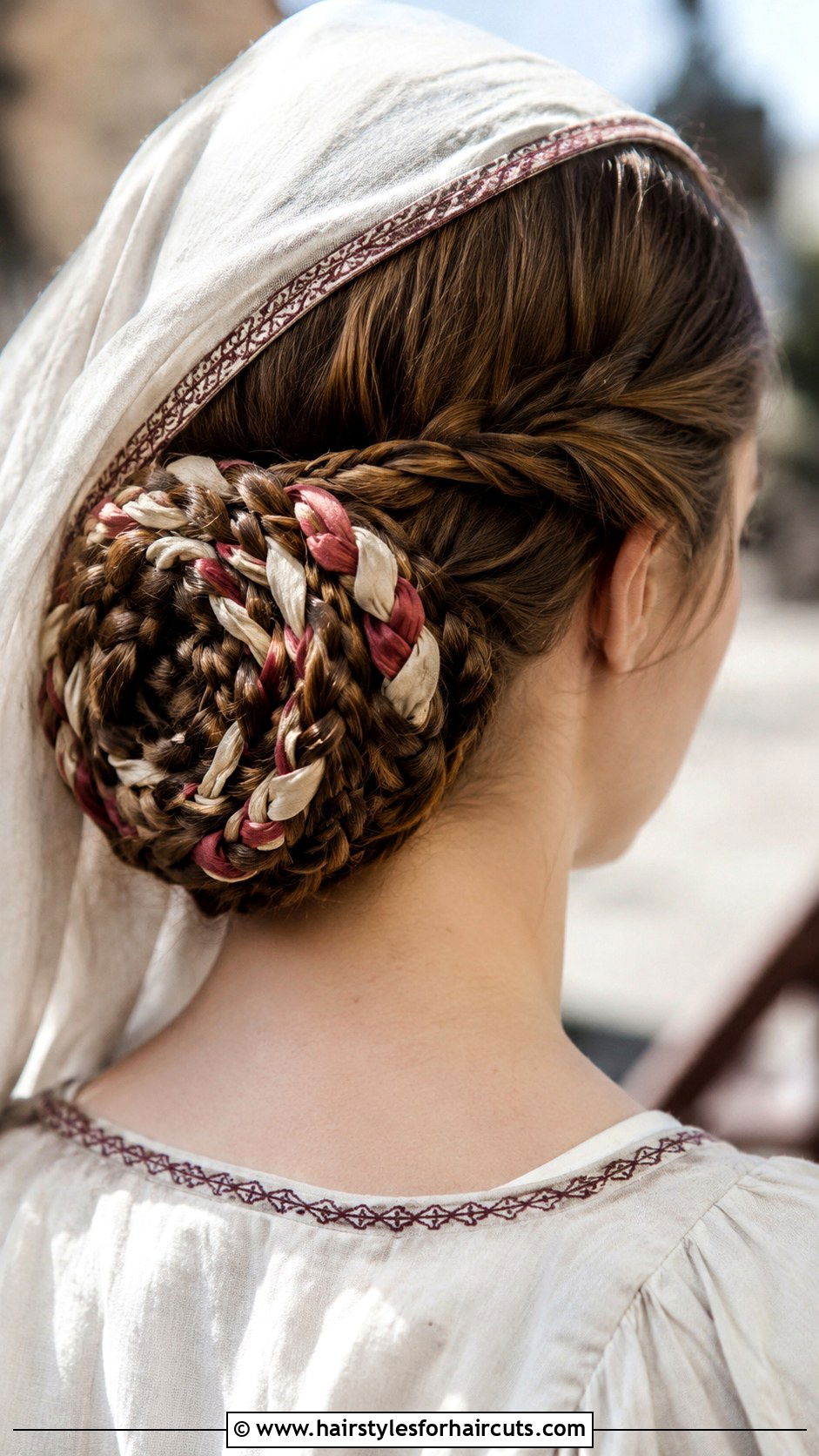
Modesty and piety heavily influenced the beauty standards of the Middle Ages. The medieval braided updo was a beautiful, concealed style that kept hair hidden under veils and headdresses. When uncovered, women wore their hair in two long braids that were coiled around the ears or pinned up at the back of the head. These tight braids symbolized virtue and respectability. Sometimes, metallic casings or ribbon wraps covered the braids entirely for a polished finish. Unmarried women were the only ones allowed to wear their hair completely loose. The intricate twisting and pinning laid the groundwork for many modern braided updos and festival hair trends we see today.
6. Renaissance Loose Curls

The rebirth of art and culture brought a return to romantic, natural beauty. Renaissance loose curls celebrated flowing movement and soft volume. Women abandoned the tight, concealed styles of the medieval period, opting instead to showcase their hair with deep side parts and cascading waves. These lush curls were often achieved by wrapping damp hair around cloth rags or using hot clay curling tongs. Ribbons, pearls, and delicate nets were woven throughout the hair to add a touch of luxury without restricting the free-flowing shape. The focus was on framing the face with gentle, bouncing texture. This luxurious approach to curling remains a staple for romantic styling.
7. Elizabethan High Forehead Style

In the court of Queen Elizabeth I, a high forehead was the ultimate sign of nobility and intelligence. The Elizabethan high forehead style required women to aggressively pluck their hairlines back by several inches, creating a dramatic, egg-shaped silhouette. The remaining hair was tightly pulled back and adorned with elaborate jeweled headpieces or sheer veils. Red hair became highly fashionable after the queen’s own auburn locks, leading many women to use dangerous lead-based dyes or saffron to achieve the hue. Pale skin combined with the stark, high hairline created a striking, regal look. This extreme modification shows how far people will go for beauty standards.
8. Baroque Long Curls
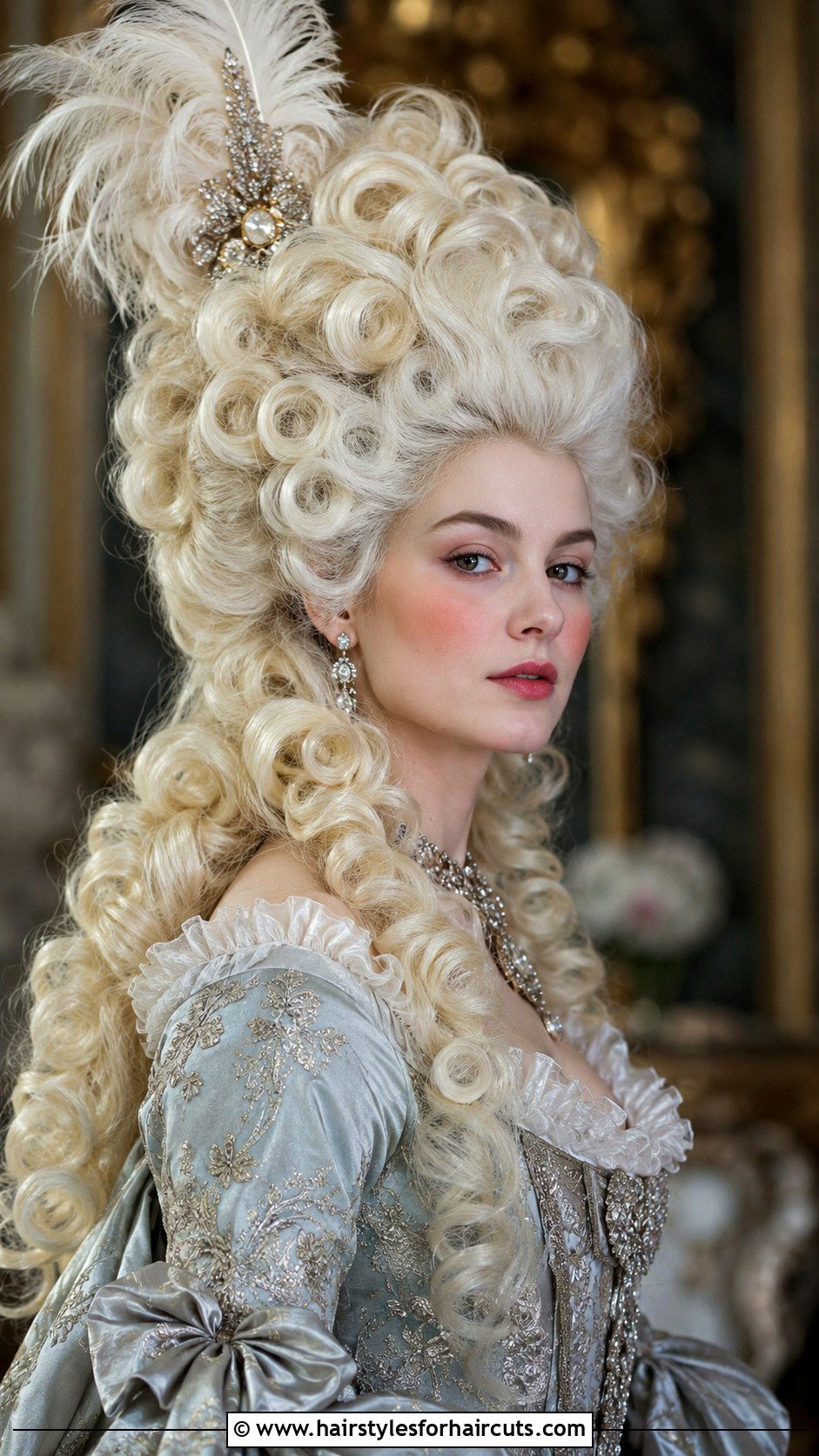
Opulence and drama were the name of the game during the Baroque period. Baroque long curls were all about volume, length, and excessive ornamentation. Men and women alike sported massive, cascading curls that framed the face and tumbled down the shoulders. Women often styled their hair in a high, central bun with long, thick ringlets hanging down the sides. These curls were heavily maintained using sugar water and animal fat to hold the shape for days. White powder was heavily applied to give the hair a dusty, mature appearance. Ribbons, feathers, and pearls were piled high on top, reflecting the era’s love for extravagance and theatrical presentation.
9. Marie Antoinette Pouf

Excess reached its absolute peak in the French court before the revolution. The Marie Antoinette pouf was a towering, sculpted hairstyle that reached unbelievable heights. Hair was padded with wool, horsehair, and cushions to create a massive mountain on top of the head. The pouf was then extravagantly decorated with items like model ships, birdcages, and fresh fruit, turning the hair into a literal canvas for current events and personal expression. Achieving this look took hours and required the wearer to sleep sitting up for weeks without washing. Though beautiful, it attracted pests and was heavily criticized by the public for its ridiculous extravagance and sheer wastefulness.
10. Georgian High Roll
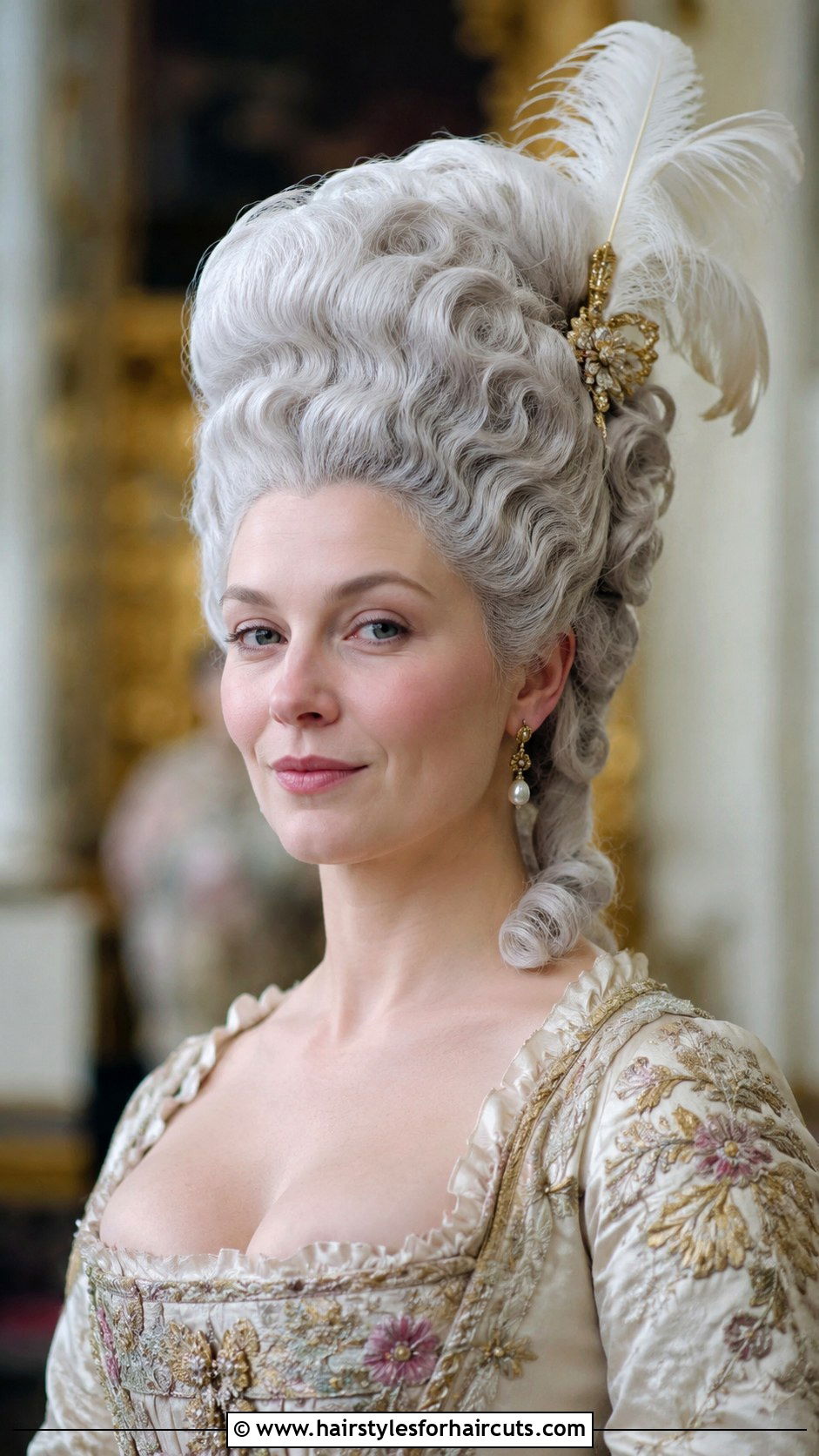
Elegance took a slightly more structured turn in the Georgian era. The Georgian high roll was a smoother, more vertical version of the towering French styles. Hair was pulled up and over a cushion or wire frame, creating a tall, rounded shape at the front of the head. The rest of the hair fell in long, structured curls down the back. Thick white powder was mandatory, giving the hair a matte, silvery finish that reflected candlelight beautifully. Women spent hours at the hairdresser securing the rolls with dozens of iron pins. The look was finished with lace caps, silk ribbons, and ostrich feathers for formal occasions.
11. Regency Updo

Inspired by ancient Greek and Roman statues, the Regency updo brought a refreshing return to classical simplicity. Gone were the massive wigs and heavy powders of the previous century. Women embraced their natural hair color, styling it into soft, loose braids and twisted knots at the back of the head. Short, wispy curls framed the face and forehead, creating a delicate, romantic silhouette. This style was often held in place with decorative hair combs, bandeaus, or silk ribbons. The look felt much more natural and approachable, reflecting the era’s focus on rationality and grace. It perfectly mirrors the effortless updos favored for summer weddings today.
12. Victorian Gibson Girl

The late nineteenth century introduced the first true feminine ideal of the modern age. The Victorian Gibson Girl updo was a soft, voluminous style featuring a tall, sweeping bouffant at the front and a heavy, loose chignon at the back. Created by illustrator Charles Dana Gibson, this look was achieved using a tool called a rat, which was a stuffed pouch made from collected fallen hair. The front hair was puffed over the rat to create impressive height, while the back was pinned loosely. It represented a confident, active, and beautiful woman. This iconic puff and tuck style became a symbol of independence and enduring elegance for generations.
13. Edwardian Pompadour
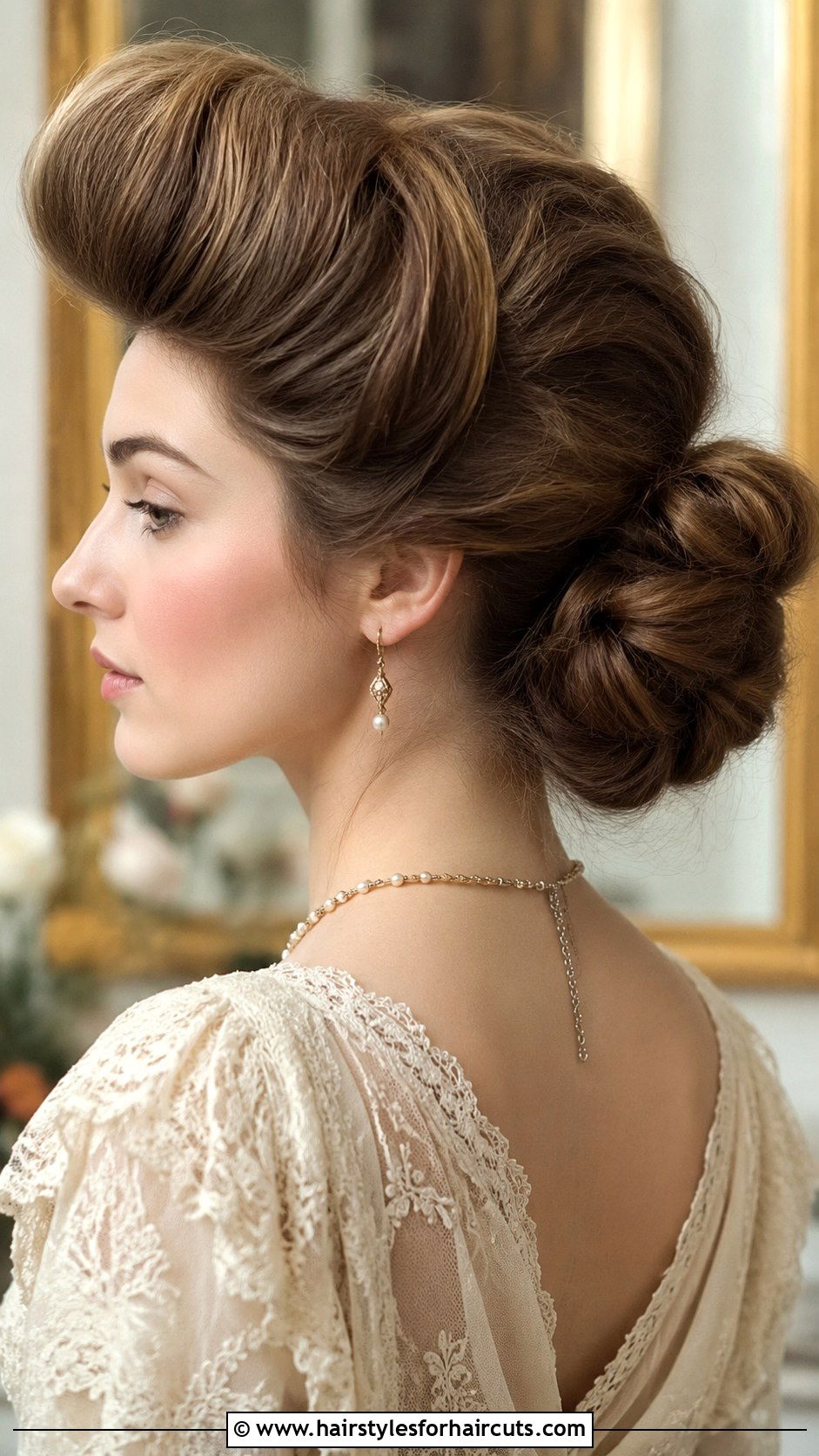
Entering the new century required a bolder, more dramatic silhouette. The Edwardian pompadour took the volume of the Gibson Girl and amplified it significantly. Hair was aggressively rolled and swept upwards from the forehead, creating a massive, rounded front that often extended far past the natural hairline. Women used padding, hairpieces, and heavy pins to secure this gravity-defying shape. The sides were puffed out to frame the face, while the back was styled into a large, low knot or fancy curls. This look required daily maintenance and a lot of nerve to wear. It paved the way for the daring, rebellious styles of the coming decades.
14. 1920s Flapper Bob

The roaring twenties brought a cultural explosion that shattered all the old rules. The 1920s flapper bob was a radical declaration of independence and rebellion. Women chopped off their long, heavy locks in favor of a blunt, chin-length cut that swung freely as they danced the Charleston. This sleek, straight style was often paired with a cloche hat and featured flat, side-swept bangs. It was a practical choice for the active, working woman who no longer wanted to spend hours styling complicated updos. The sharp, boyish look shocked older generations but became the ultimate symbol of youthful freedom. Today, this classic cut remains eternally chic and effortlessly cool.
15. 1920s Finger Waves

For those who wanted glamour alongside their short hair, this sculpted look delivered perfectly. The 1920s finger waves transformed a simple bob into a sleek, geometric work of art. Stylists used their fingers, a comb, and lots of heavy setting lotion to mold the hair into a series of connected, S-shaped waves. The hair laid completely flat against the head, creating a highly polished and shiny finish that reflected light beautifully. This technique was incredibly popular for evening events, adding a touch of sophisticated luxury to the daring short cuts. It remains a gold standard for vintage glamour and continues to inspire modern red carpet styling.
16. 1930s Hollywood Waves

As the Great Depression loomed, people sought escapism through the silver screen. The 1930s Hollywood waves offered a softer, more romantic alternative to the rigid styles of the previous decade. Hair grew slightly longer, brushing the shoulders with deep, sweeping waves that framed the face elegantly. These smooth, glossy waves were created using heated curling irons and carefully brushed out into a seamless, flowing pattern. The deep side part added dramatic asymmetry, making the hair look incredibly luxurious and healthy. This sultry, feminine look became the signature of movie stars and continues to be the most requested style for modern vintage weddings and glamorous events.
17. 1940s Victory Rolls

During World War II, practicality met patriotism in a stunning display of female strength. The 1940s victory rolls were an iconic updo where sections of hair were rolled up and pinned securely on top of the head, creating hollow, tube-like shapes. This style kept hair out of the face while women worked in factories, yet still looked incredibly glamorous for evening dances. The rolls resembled the clouds of smoke trailing from fighter planes, giving the style its patriotic name. Paired with bright red lipstick and a polka dot dress, this look became a symbol of resilience and hope. It remains an iconic staple of the rockabilly subculture.
18. 1950s Poodle Cut

Post-war prosperity brought a return to ultra-feminine, high-maintenance beauty. The 1950s poodle cut was a tight, curly, and extremely voluminous short hairstyle. Popularized by actress Lucille Ball, this look featured a mass of tight curls cropped close to the head, often with slightly longer, curlier sections on top. Achieving this look required a strong permanent wave, which left the hair tightly coiled and bouncy. The cut was playful and attention-grabbing, perfectly matching the bubbly, optimistic mood of the decade. It framed the face with a halo of soft texture, making the eyes and cheekbones pop. This fun, energetic style is a beloved classic for naturally curly hair.
19. 1950s Pompadour
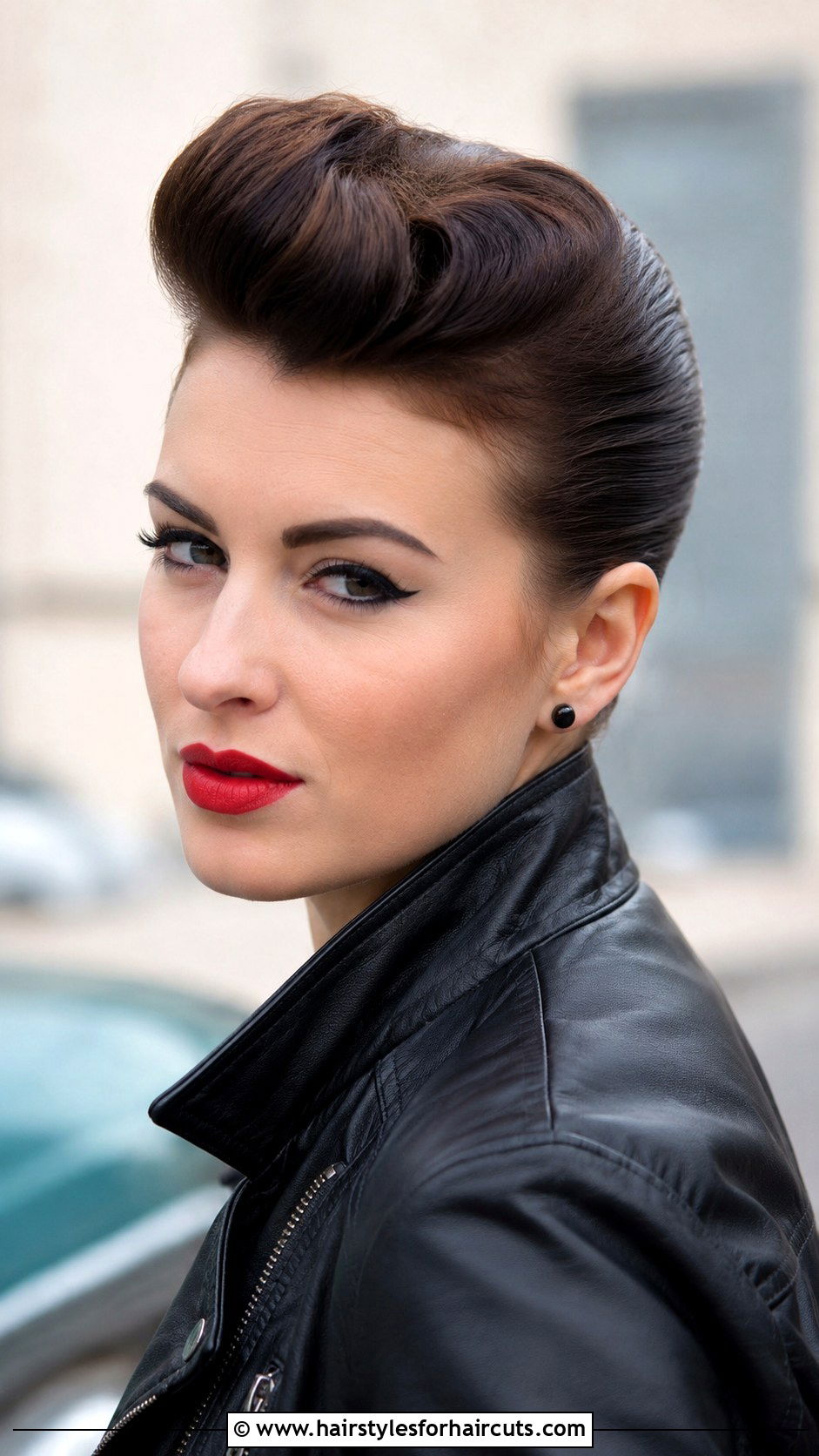
Rock and roll changed music forever, and it completely changed hair too. The 1950s pompadour was a rebellious, high-volume look worn by both men and women. The front hair was swept upwards and back over the forehead, creating a tall, rounded wave that defied gravity. The sides were kept slicked back with heavy pomade, contrasting sharply with the massive front height. This style required constant upkeep and a lot of product to maintain its shape throughout a night of dancing. It was the signature of rockabilly culture and represented a major break from traditional, tidy hair. The edgy cut still commands respect in alternative fashion circles.
20. 1960s Beehive
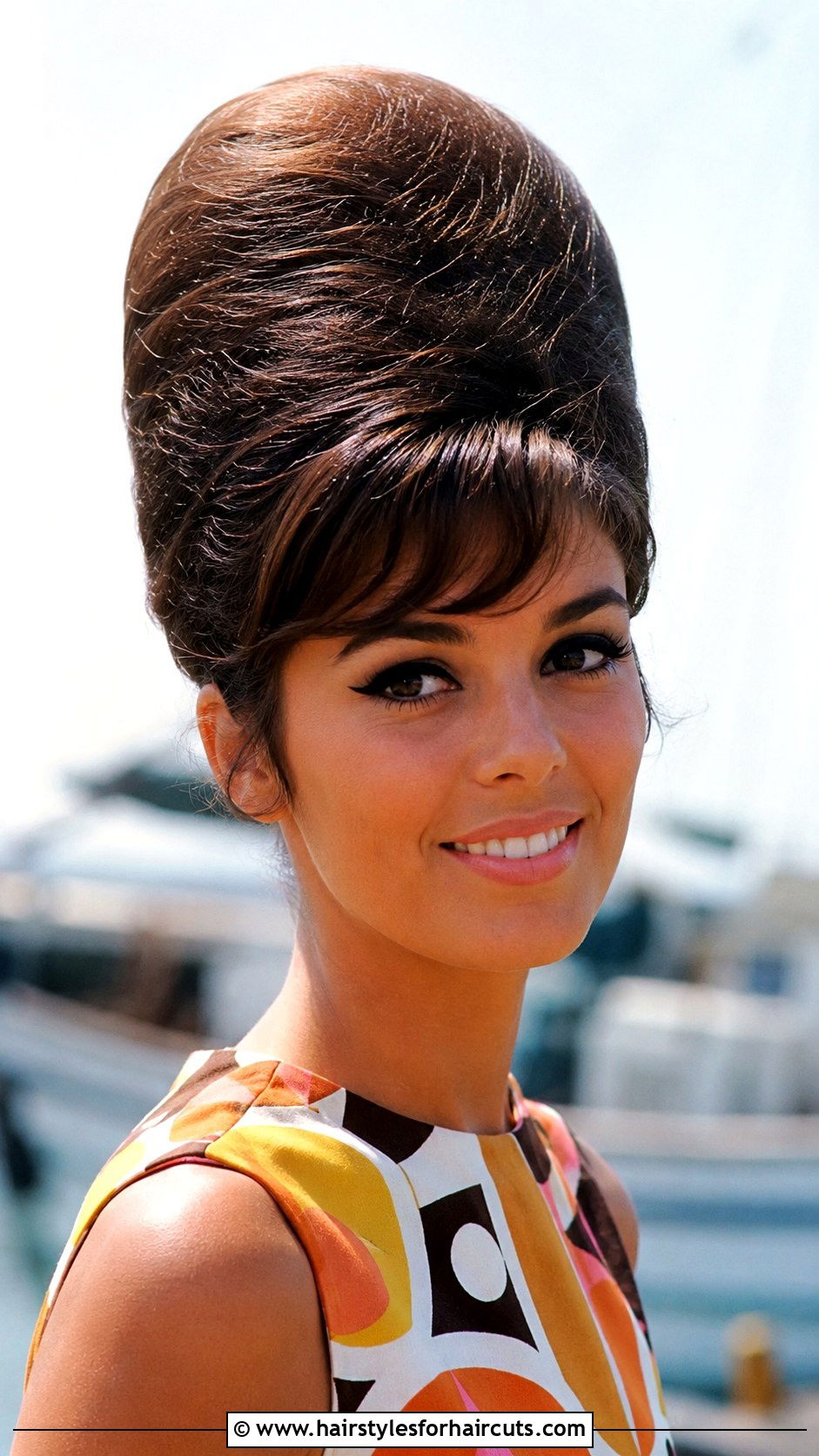
The bigger the hair, the closer to heaven. The 1960s beehive was a towering, conical updo that required immense backcombing and clouds of hairspray to maintain. Hair was piled high on the crown and tapered down the sides, literally resembling a cylindrical beehive. Women used padding and huge amounts of teasing to achieve this vertical growth, sometimes sleeping with their heads elevated on special pillows to preserve the shape. It was a fun, dramatic statement that reflected the bold, experimental spirit of the decade. The sheer volume and architectural shape of this style made it an unforgettable pop culture moment that still turns heads today.
21. 1960s Pixie Cut

Sometimes the most powerful statement is cutting it all off. The 1960s pixie cut was a revolutionary, gamine look popularized by actress Jean Seberg and later Mia Farrow. This ultra-short, boyish haircut featured cropped sides and back with slightly longer, textured layers on top. The cut exposed the neck and facial features completely, making the eyes and cheekbones the focal point. It was a stark, minimalist rejection of the massive, high-maintenance styles that dominated the era. Maintaining this cut required regular trims and a tiny bit of styling wax for texture. It remains the ultimate symbol of daring confidence and effortless, low-maintenance beauty for modern women.
22. 1970s Farrah Fawcett Layers

The disco era was all about movement, shine, and unapologetic volume. The 1970s Farrah Fawcett layers became the most requested haircut of the decade. This feathery, long style featured heavy, sweeping layers that curled beautifully away from the face. The voluminous crown and bouncy, flipped-out ends created a stunning halo of golden hair that moved perfectly under the dance floor lights. Achieving this look required a large-barrel curling iron and a massive round brush. It felt free, athletic, and incredibly sexy, perfectly capturing the carefree spirit of the seventies. This iconic layered look continues to inspire modern blowout styles and soft, face-framing haircuts.
23. 1980s Permed Mullet

Excess and edge defined the wild aesthetic of the eighties. The 1980s permed mullet was a bold, unapologetic style that famously featured short hair on the top and sides, with long, heavily permed hair flowing down the back. The tight, springy curls added massive volume to the rear, while the top was often spiked or teased to unbelievable heights. This style was loved by both men and women in the rock and roll and working-class scenes. It was a low-maintenance party look that projected a tough, rebellious attitude. While heavily mocked in later decades, this daring cut has recently made a high-fashion comeback with a modern twist.
24. 1990s Rachel Haircut

Sitcom culture created an absolute frenzy in salons worldwide. The 1990s Rachel haircut was a layered, bouncy, square-shaped style popularized by Jennifer Aniston on the hit show Friends. This highly structured cut featured chunky, face-framing layers, flipped-out ends, and incredible volume at the crown. The highlights were chunky and strategically placed to emphasize the choppy, textured movement of the hair. Styling it required a round brush, a blow dryer, and a lot of flipping techniques. It became the ultimate symbol of cool-girl chic in the nineties. Though the actress herself hated the cut, it remains one of the most famous and requested hairstyles in modern history.
25. 2000s Y2K Crimped Hair

The turn of the millennium brought a futuristic, playful energy to fashion. The 2000s Y2K crimped hair was a fun, textured look that used a specialized hot tool to create tight, zigzag waves all over the head. This style was often worn with tiny butterfly clips, glittery gel, and spiky buns for a maximum pop-star vibe. Crimping added instant volume and a wild, unconventional texture that stood out in a crowd. Girls would crimp their entire head or just small underneath sections for a subtle pop of texture. It perfectly captured the experimental, anything-goes attitude of the early 2000s. Today, crimping is back, offering nostalgic texture for modern festival looks.
Conclusion:
Exploring these iconic looks reminds us that hair is so much more than just keratin and skin. It is a profound reflection of our shifting values, struggles, and triumphs throughout history. From the towering heights of the Georgian era to the rebellious chops of the flappers, each generation used styling to declare its identity to the world. By studying these 25 historical hairstyles, we gain a deeper appreciation for the artistry and cultural significance behind every cut and curl. Whether you are seeking inspiration for your next salon visit or simply love the rich tapestry of fashion history, these timeless looks prove that true style always comes back around. What historical era matches your personality?

Leave a Reply