
Have you ever admired the breathtaking elegance of historical Japanese culture and wondered how to achieve that timeless beauty? Exploring 25 long hair traditional japanese hairstyles opens a fascinating window into the art of Nihongami. These iconic looks are deeply rooted in history, representing everything from social status to regional heritage. For anyone with long locks, mastering these intricate updos offers a unique way to celebrate classic aesthetics. From the sweeping loops of the Shimada to the delicate splits of the Momoware, each style tells a story of precision and artistry. You can easily adapt these historical techniques for modern cosplay, bridal events, or cultural festivals. Let us dive into these stunning traditional Japanese hair designs and discover the perfect updo for your long hair.

1. Traditional Japanese Shimada Updo

What makes the Shimada such an iconic symbol of the Edo period? The Traditional Japanese Shimada Updo features a prominent looped bun at the back of the head, usually tilted slightly to the right. This stunning look was originally worn by young women, particularly geisha and brides. The hair is gathered high and tied, with the ends looped back through to create that signature teardrop shape. Long hair is essential here, as the length provides the necessary structure and volume for the distinct loop. A beautiful kanzashi ornament is often tucked into the front, adding a touch of elegance. Today, you can wear this magnificent updo for formal occasions or cultural celebrations to truly stand out.
2. Taka Shimada Wedding Hairstyle
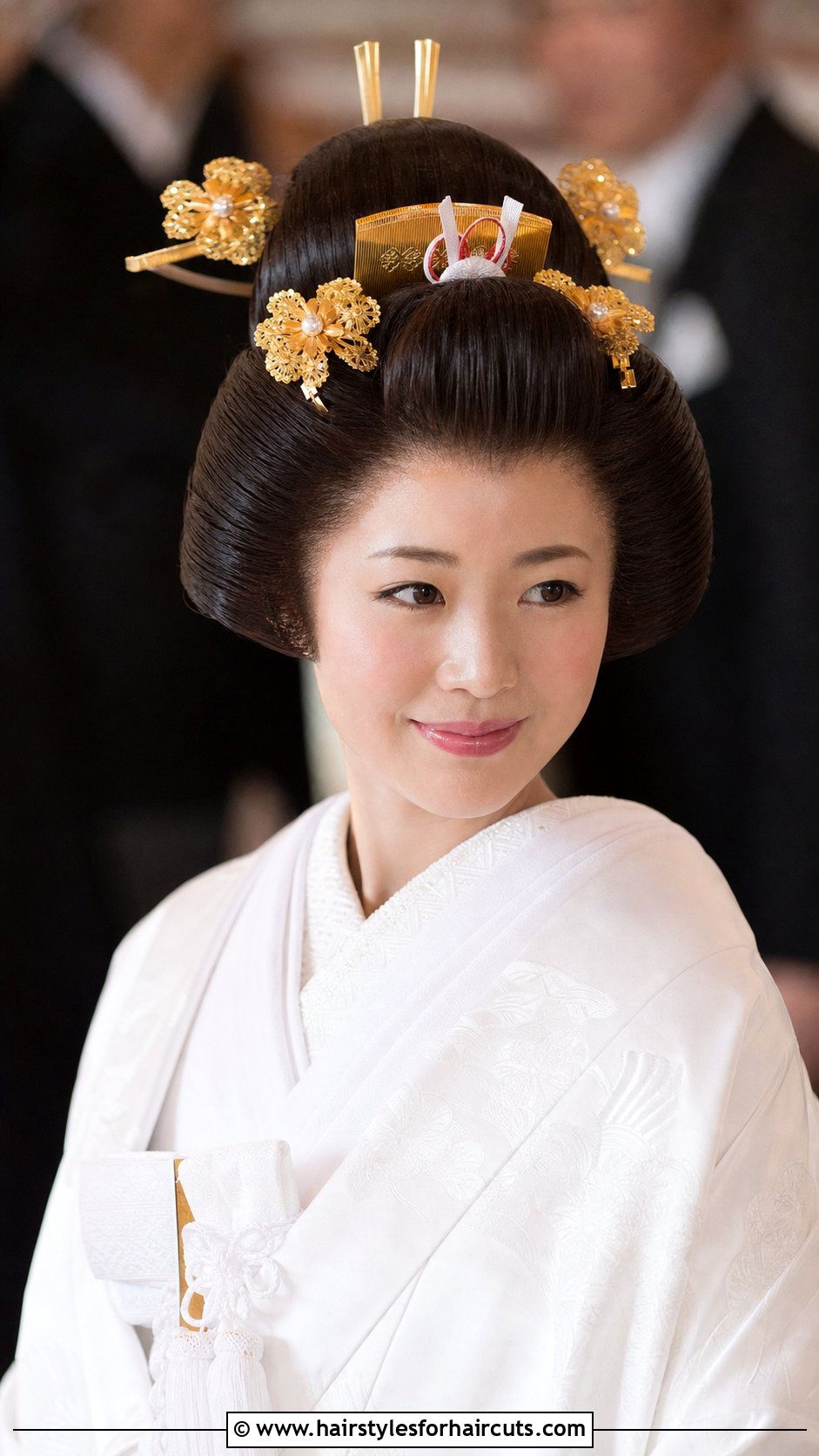
Are you looking for a breathtaking bridal look that honors heritage? The Taka Shimada Wedding Hairstyle is a highly elevated version of the classic Shimada, specifically designed for traditional Japanese brides. This elaborate updo sits higher on the head, creating a striking silhouette that pairs perfectly with the tsunokakushi, the traditional white bridal hood. The hair is heavily waxed and sculpted to maintain the tall, graceful loop without any flyaways. Long hair is crucial for building the impressive height and structural integrity of this magnificent style. Decorative pins and gold accents are woven throughout the bun to symbolize good fortune. This breathtaking look transforms any bride into a timeless vision of classical Japanese beauty.
3. Tsubushi Shimada Hairstyle

How did everyday women in the Edo period wear their hair? The Tsubushi Shimada Hairstyle offers a flatter, more subdued version of the standard Shimada, making it a practical yet beautiful choice for older women or widows. Instead of the high, prominent loop, the bun is pressed down and secured tightly against the head. This creates a sleek, sophisticated profile that requires less maintenance while retaining the signature elements of traditional Japanese styling. The long hair is still gathered and looped, but the anchor point sits much lower. A simple red comb or subtle floral kanzashi often adorns the front. This style beautifully balances grace and simplicity, perfect for those seeking a refined historical aesthetic.
4. Momoware Traditional Hairstyle
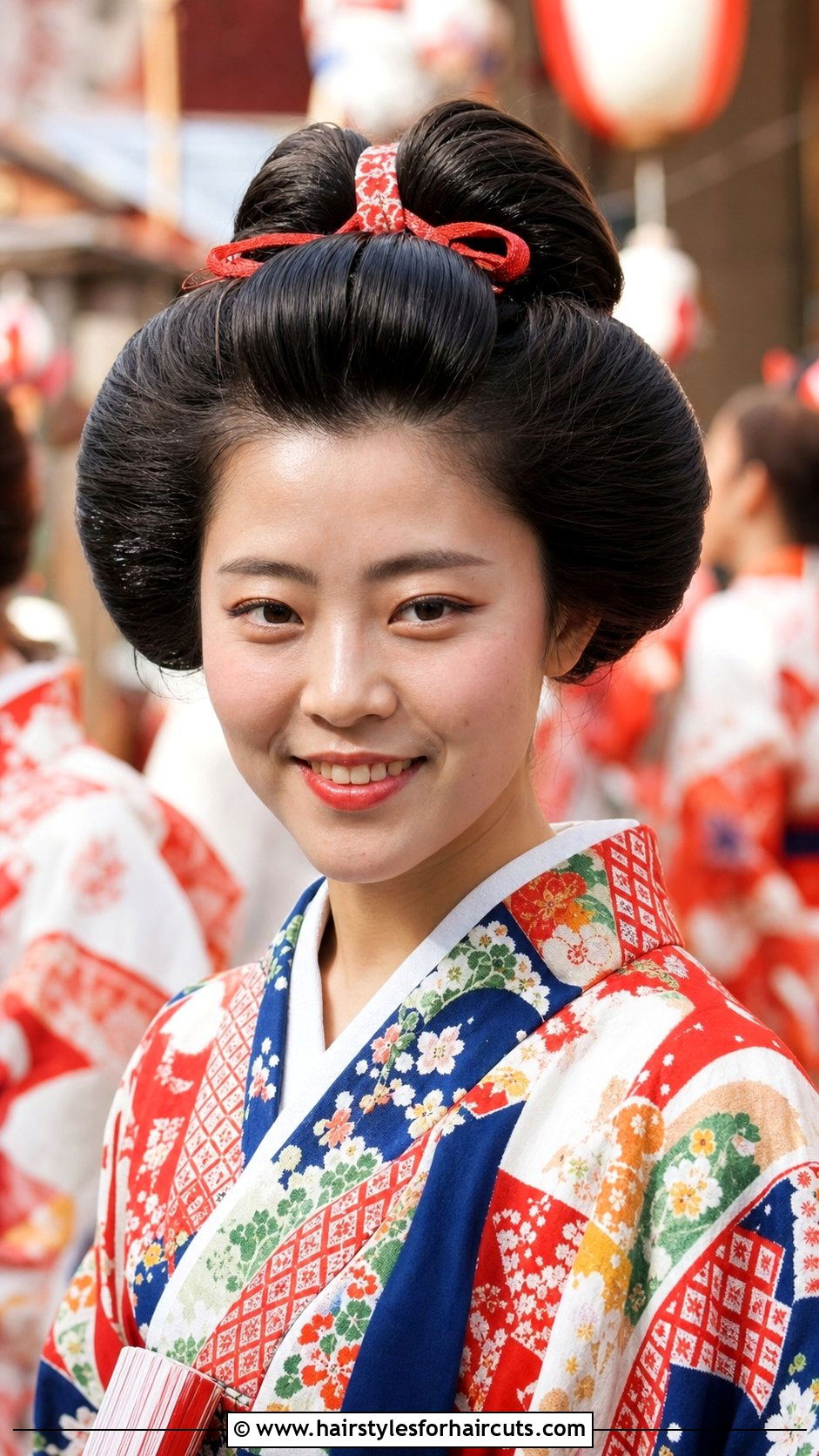
Have you ever seen a traditional updo divided perfectly down the middle? The Momoware Traditional Hairstyle is instantly recognizable by its split topknot, resembling a peach that has been halved. In fact, the name literally translates to “split peach.” This charming style was incredibly popular among unmarried women during the Edo period. The long hair is pulled up into a high bun, which is then carefully parted and spread open, often secured with a bright red ribbon woven through the center. The remaining ends form a small tail at the top. It is a youthful, vibrant look that demands attention. Adding decorative floral sticks makes this iconic Japanese hairstyle even more captivating for festivals.
5. Ikkogaeshi Samurai Hairstyle

Did you know that traditional topknots were not just for women? The Ikkogaeshi Samurai Hairstyle is a striking, minimalist updo originally worn by male samurai, but it translates beautifully into a bold fashion statement for anyone with long hair today. The hair is gathered at the top of the head and twisted into a simple, upright loop. The ends are pulled through, leaving a small tuft pointing forward. This functional yet powerful style kept hair out of the way during battle while representing honor and status. For modern wearers, this sleek topknot offers a fiercely elegant way to manage long locks. It pairs wonderfully with contemporary streetwear or traditional garments alike.
6. Wareshinobu Maiko Hairstyle

What is the most recognizable hairstyle for apprentice geisha? The Wareshinobu Maiko Hairstyle features a beautiful, split bun at the crown, characterized by a red piece of cloth woven through the center. This stunning updo is exclusively worn by junior maiko during their first years of training. The long hair is meticulously styled to create a wide, flat split at the top, with long front pieces framing the face. The red cloth accentuates the division and adds a vibrant pop of color. Because the style uses the wearer’s natural hair, it requires careful sleeping on a takamakura, a special wooden pillow. This intricate, traditional look is a true testament to Japanese dedication and artistry.
7. Ofuku Maiko Updo

How does a maiko’s hair change as she gains experience? The Ofuku Maiko Updo marks a significant milestone in an apprentice geisha’s career. Unlike the split top of the Wareshinobu, the Ofuku features a rounded bun at the nape of the neck. The hair is folded under and pinned, creating a softer, fuller shape. A piece of red crepe silk is often draped over the bun to protect it. This transition happens after a maiko’s mizuage, symbolizing her progression into a more senior role. The long hair is still worn with signature face-framing wings at the sides. It is an elegant, mature style that carries deep cultural meaning while offering a beautiful silhouette.
8. Yakko Shimada Geisha Hairstyle

Why do geisha prefer a slightly different updo for formal dances? The Yakko Shimada Geisha Hairstyle is a refined, elegant variation of the Shimada, traditionally worn by geisha during the Edo period and formal dance recitals. It features a slightly looser, more elongated loop at the back, giving it a graceful, sweeping appearance. The hair is pulled up, and the long locks are twisted into a shape that resembles a spreading tail. A beautiful cascade of ornamental pins often decorates the back of this updo. The Yakko Shimada exudes sophistication and artistic maturity. For anyone wanting to capture the ultimate geisha aesthetic with their long hair, this timeless style provides an unforgettable, dramatic profile.
9. Katsuyama Dance Hairstyle

Looking for a festive updo with historical flair? The Katsuyama Dance Hairstyle originated in the pleasure quarters of Kyoto and became widely popular among courtesans and townswomen during the mid-Edo period. This distinctive look features a large, round bun placed directly on top of the head, creating a crown-like effect. The long hair is wrapped tightly to form a perfect sphere, often decorated with extravagant kanzashi that dangle and sparkle with every movement. It is an incredibly festive, eye-catching style that pairs wonderfully with vibrant kimono. If you want a traditional Japanese hairstyle that commands attention and celebrates joyful movement, this spectacular topknot is a fantastic historical inspiration.
10. Sakkou Senior Maiko Hairstyle

What does a maiko wear right before she becomes a full geisha? The Sakkio Senior Maiko Hairstyle is the final and most symbolic hairstyle an apprentice wears before her erikae, or turning of the collar. It is easily identified by the wispy, unbound strands of hair at the back of the neck and the small tuft of hair left loose at the topknot. The long hair is pulled up, but the ends are intentionally left unlooped, signifying the transition from student to professional. Silver and gold tortoiseshell pins heavily decorate this style. Wearing the Sakkou is a poignant, beautiful tradition that marks a major life event. It is a deeply meaningful updo for long hair.
11. Marumage Married Woman Hairstyle

How did married women distinguish themselves in historical Japan? The Marumage Married Woman Hairstyle was the standard updo for wives during the Edo period, instantly communicating their marital status to society. The hair is gathered at the back of the head and formed into a large, rounded bun with a small opening in the center, resembling a peach or a chrysanthemum. The long locks are carefully wrapped and pinned to create this voluminous, secure shape. It is a dignified, mature style that balances elegance with practical daily life. While the opening is visible, the overall structure is solid and tightly bound. This classic traditional look remains a beautiful representation of historical Japanese matronly grace.
12. Tate Hyogo Oiran Hairstyle

Have you ever marveled at the extravagant hair of high-ranking courtesans? The Tate Hyogo Oiran Hairstyle is an incredibly dramatic, towering updo worn by the oiran, the elite courtesans of the Edo period. This spectacular style features massive, vertical loops of hair that stand straight up from the front of the head, often secured with thick, heavy ropes of paper. The long hair is aggressively pulled forward and upward, creating a striking silhouette that demanded respect and attention. Numerous ornate hairpins, called kanzashi, are thrust into the loops to display wealth and status. This bold, commanding look is perfect for theatrical performances or historical reenactments requiring maximum visual impact.
13. Soko Hyogo Courtesan Hairstyle
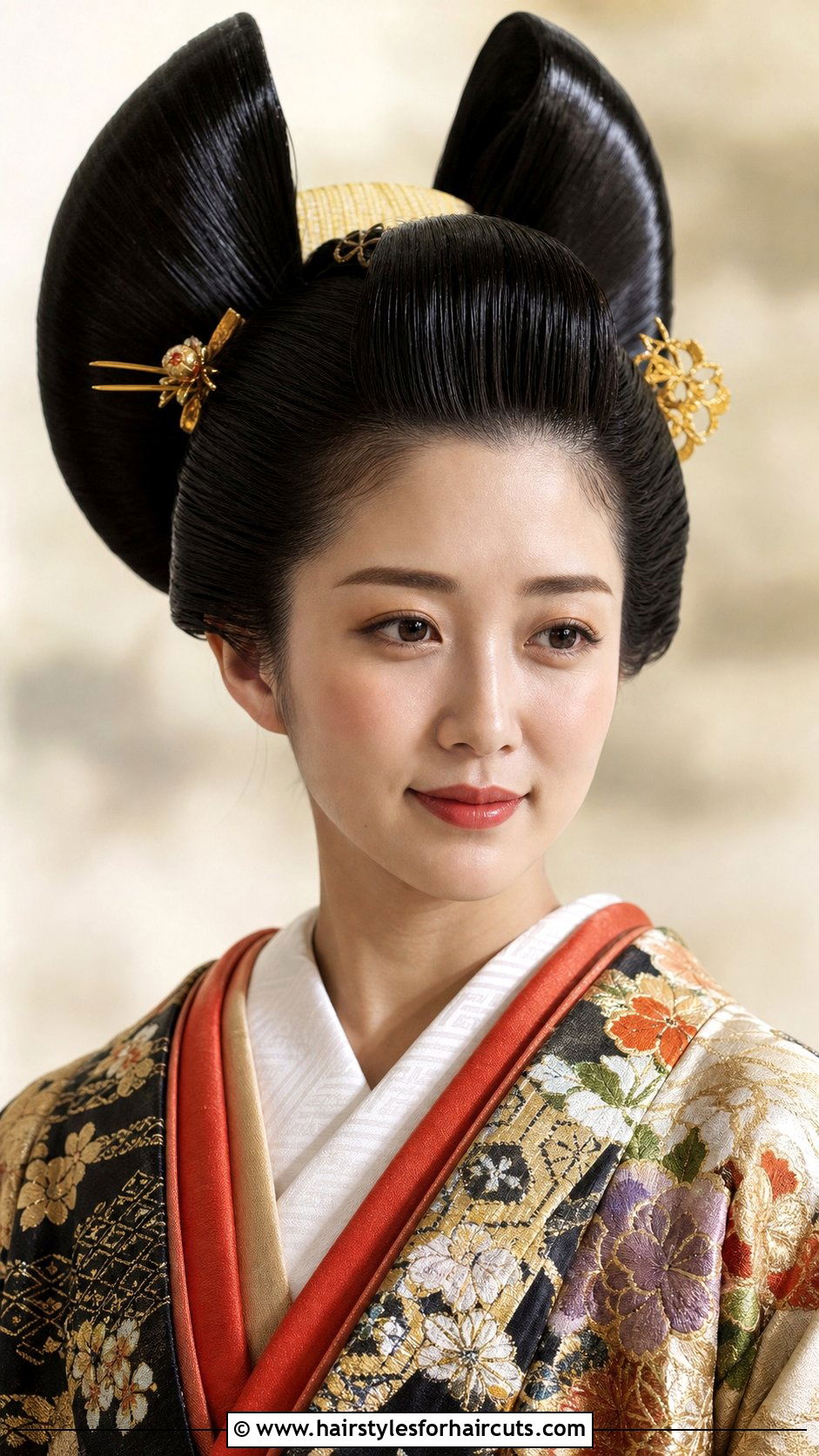
Want an extravagant historical look with a different silhouette? The Soko Hyogo Courtesan Hairstyle is another dramatic variation worn by high-ranking courtesans, but it differs from the Tate Hyogo by featuring loops that flare out dramatically to the sides rather than standing straight up. The long hair is pulled up and split into two wide, wing-like sections that frame the face. These protruding loops are heavily lacquered and stuffed with paper to maintain their rigid shape. The front of the hair is heavily waxed to create a smooth, glossy finish. This incredibly complex, sculptural updo represents the height of Edo period extravagance and is a true showstopper for anyone with very long hair.
14. O Ichou Maiko Hairstyle

What subtle changes mark the changing seasons in traditional hair? The O Ichou Maiko Hairstyle is a seasonal variation worn by maiko, named after the ginkgo leaf because the topknot resembles the fan-like shape of the leaf. It is typically worn during the winter months. The long hair is pulled up and formed into a wider, flatter bun at the back, lacking the prominent split seen in the Wareshinobu. The front wings are styled to frame the face softly. A beautiful silk pongee ornament is often draped over the bun. This elegant, slightly softer silhouette offers a wintery charm that beautifully complements heavy, embroidered kimono. It is a delicate and refined traditional Japanese updo.
15. Osafune Traditional Updo
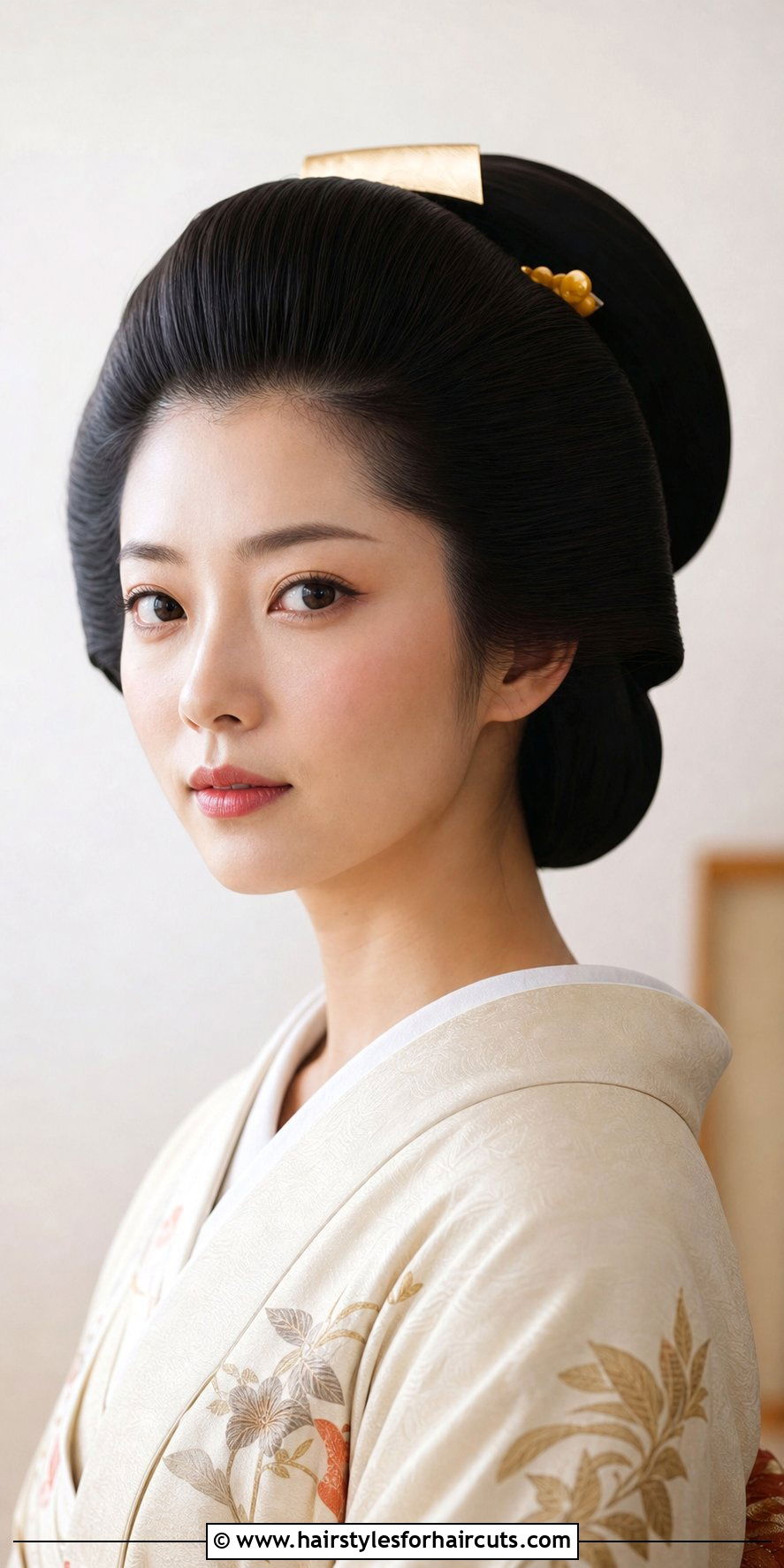
Are you fascinated by regional variations in historical styling? The Osafune Traditional Updo hails from the Edo period and was popular among women in specific regional districts. It is characterized by a sleek, smooth front that sweeps back into a wide, flattened bun at the lower back of the head. The long hair is carefully oiled and combed to eliminate any volume at the crown, directing all the visual weight to the nape. This creates a sophisticated, elongated profile that highlights the neckline. Simple wooden combs and subtle floral pins are the perfect accessories. This style works wonderfully for those who appreciate understated elegance and a highly polished, meticulous finish.
16. Yoshi No Hana Hairstyle

How did townswomen adapt high-fashion hair for everyday life? The Yoshi No Hana Hairstyle translates to “reed flower,” and it offers a simpler, more approachable version of the elaborate Shimada. This charming updo features a smaller, less structured loop at the back, making it a practical choice for women who had to work or manage households. The long hair is gathered loosely, allowing for a softer, more natural texture rather than the heavily waxed, rigid look of the upper classes. A modest ribbon or a single decorative pin is all that is needed to complete this look. It is an excellent entry point for anyone wanting to try traditional Japanese styling without extensive sculpting.
17. Japanese Half Up Half Down Hairstyle
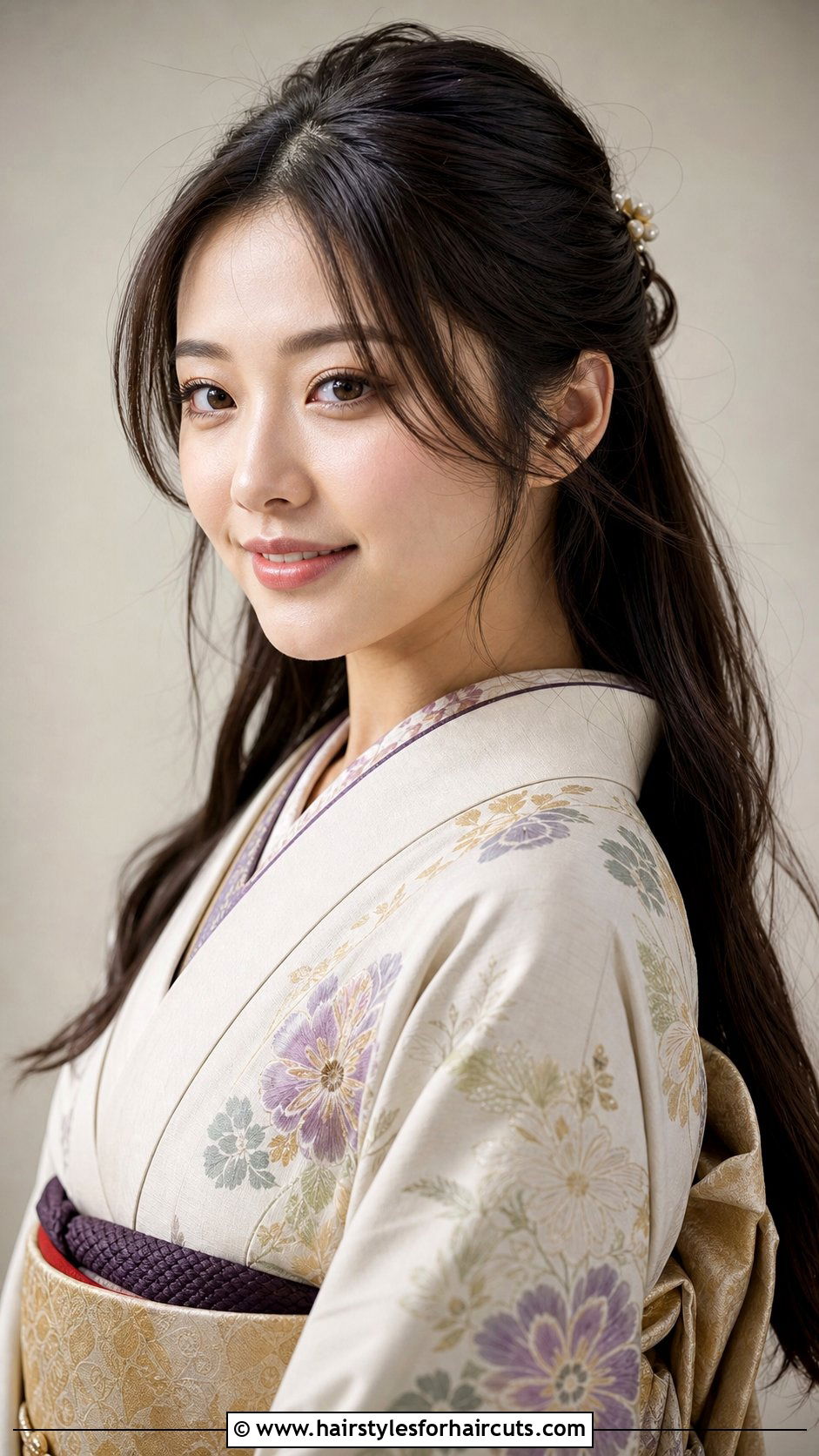
Is it possible to blend traditional elements with a more casual feel? The Japanese Half Up Half Down Hairstyle takes the classic face-framing wings and front loops of Nihongami but leaves the back of the hair flowing freely. This stunning hybrid look allows you to showcase the length and texture of your long hair while still enjoying the ornamental beauty of traditional kanzashi. The top section is pulled back, twisted, and secured into a small loop or bun, while the remaining tresses cascade down the back. It is highly versatile and much easier to execute than a full updo. This beautiful style is perfect for anime conventions or modern festival wear.
18. Traditional Japanese Low Bun

Looking for a graceful style that minimizes hair damage? The Traditional Japanese Low Bun focuses on the sleek, elegant nape rather than towering topknots. While not as rigidly categorized as the Shimada or Momoware, this minimalist updo was commonly worn by women in the privacy of their own homes or during informal settings. The long hair is smoothly brushed back and gathered at the nape of the neck, twisted into a soft, round bun. It avoids the heavy use of wax and tight pulling, making it much gentler on the scalp. A beautiful tortoiseshell stick or a simple silk ribbon elevates this everyday style into something truly serene and effortlessly elegant.
19. Japanese Crown Braid Updo
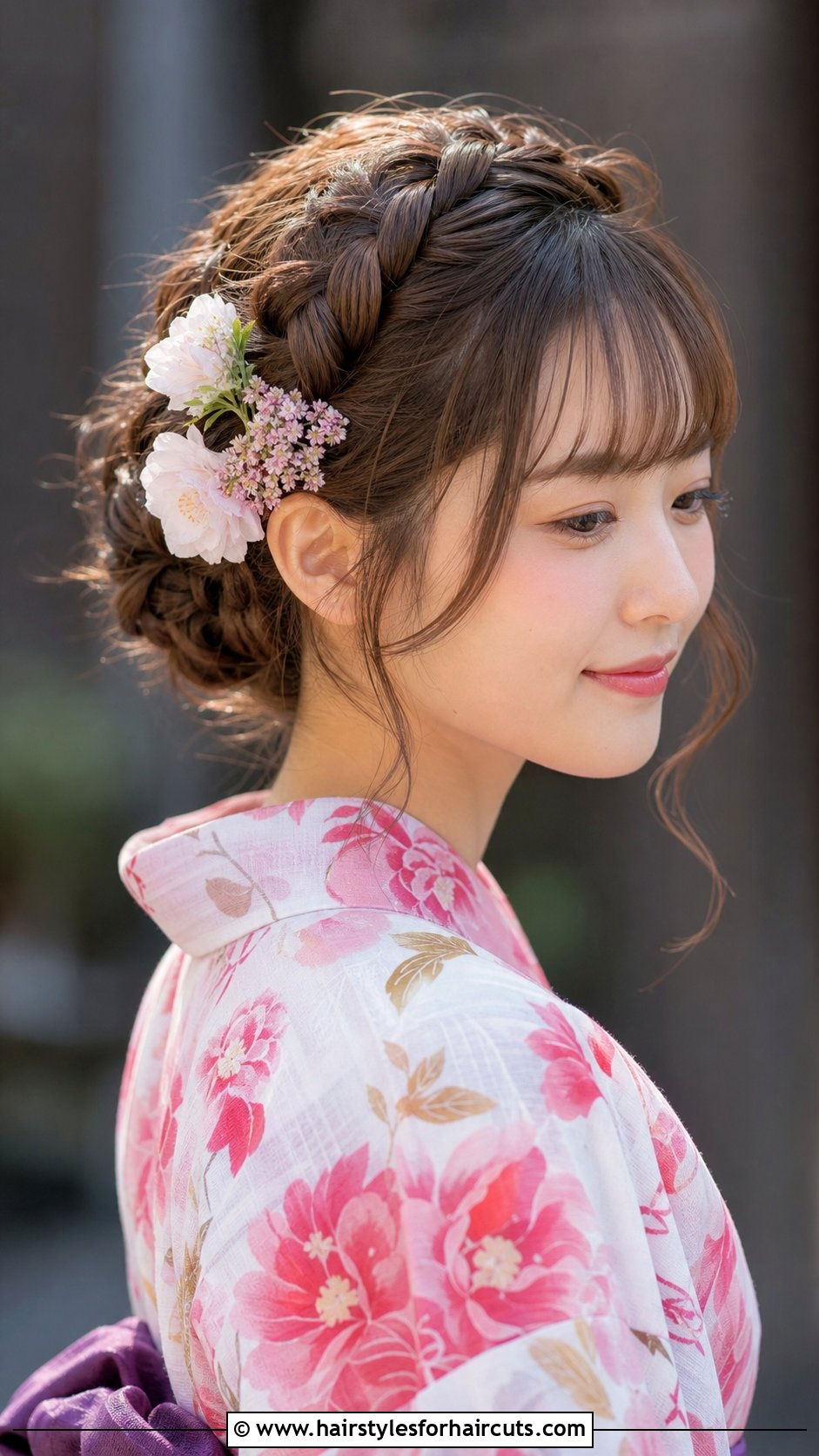
Can braids be incorporated into historical Japanese styling? While traditional Nihongami relies heavily on twisting and looping, the Japanese Crown Braid Updo offers a beautiful, practical alternative that still honors the aesthetic. The long hair is divided and woven into thick braids, which are then wrapped around the head like a crown. This creates a regal, secure style that keeps every strand in place. While less historically rigid than a waxed mage, this braided approach mimics the structured silhouette of traditional updos without the need for extensive hair padding. Tucking seasonal flowers or golden pins between the braids adds a touch of authentic charm. It is a comfortable, stunning festival choice.
20. Geisha Traditional Updo
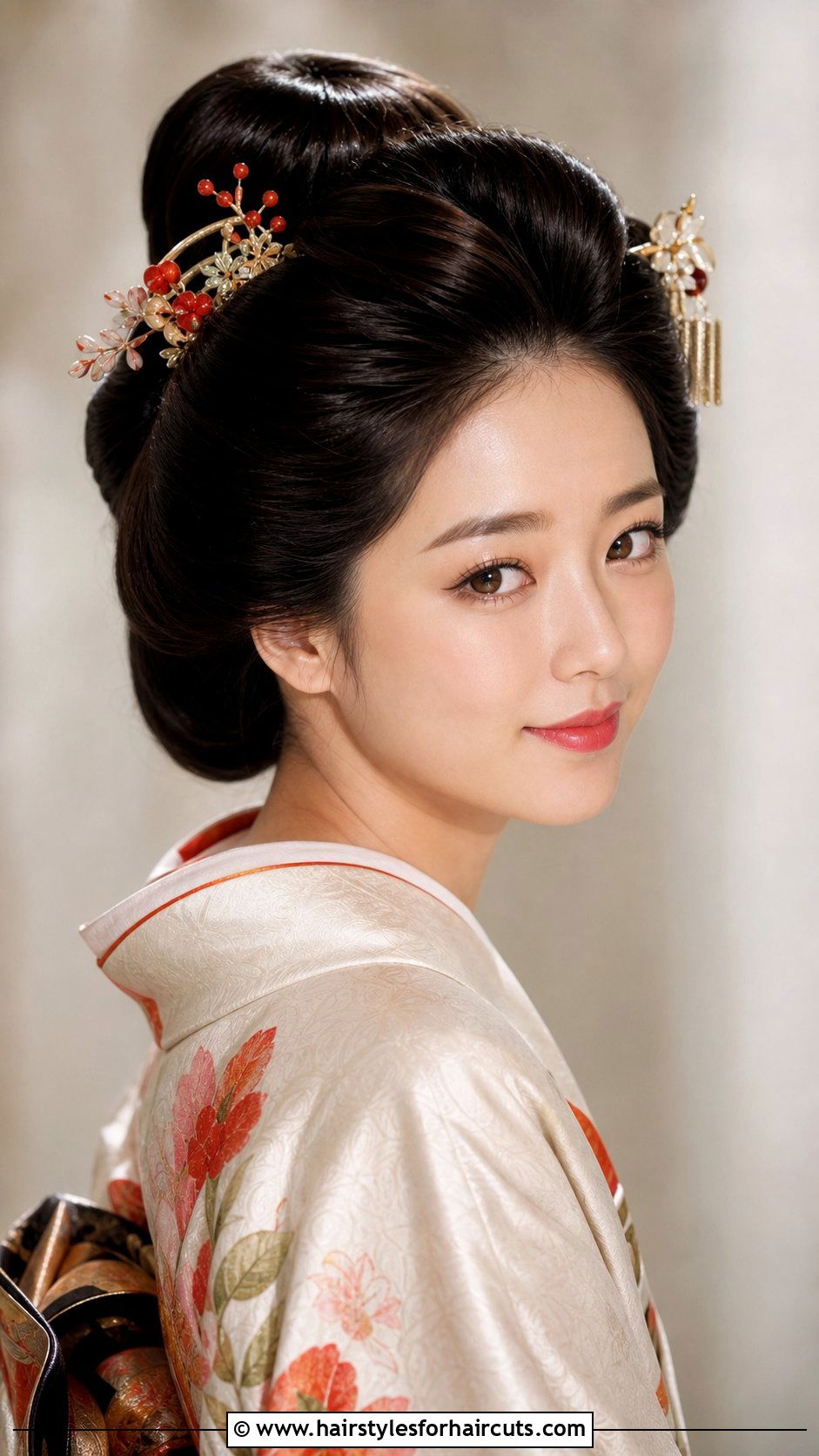
What defines the ultimate professional geisha look? The Geisha Traditional Updo is a masterclass in polished, mature elegance. Unlike the ornate, split buns of the maiko, a fully qualified geiko wears a sleeker, more refined Shimada. The long hair is pulled back smoothly, with not a single strand out of place. The bun at the back is neat, elegant, and slightly lower, emphasizing the grace of the neck. The front features subtle wings that frame the face perfectly. Because this style uses the natural hair, it requires exceptional skill to maintain. Adding a minimal arrangement of seasonal pins completes this iconic, sophisticated look that represents the pinnacle of traditional Japanese beauty.
21. Japanese Braided Topknot

How can you add texture to a classic topknot? The Japanese Braided Topknot takes the foundational shape of the traditional mage and introduces a woven element for added visual interest. Instead of simply twisting the long hair into a loop, the hair is tightly braided before being wrapped and pinned into a topknot. This technique creates a stunning textural contrast against the smooth, sleek front sections of the hairstyle. It also provides extra grip and security, ensuring the heavy bun stays in place all day. This style is a fantastic way to blend the fierce samurai aesthetic with a softer, more intricate detail. It looks magnificent with both historical and modern outfits.
22. Traditional Japanese Side Swept Updo
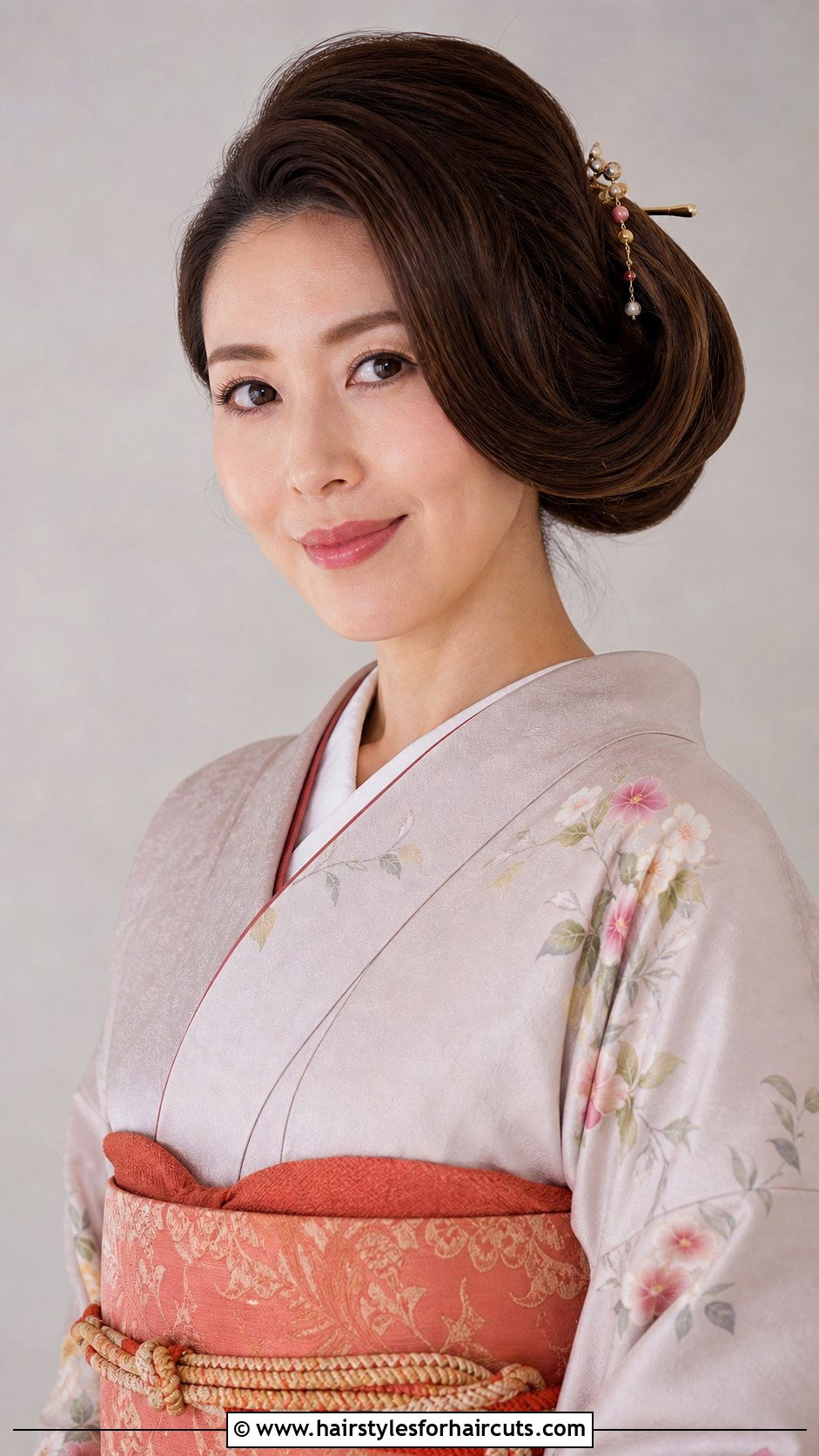
Want an asymmetrical look that still feels historically accurate? The Traditional Japanese Side Swept Updo is directly inspired by the Shimada’s characteristic slight tilt, but exaggerates it for a more dramatic effect. The long hair is gathered and directed entirely to one side, forming a heavy, elegant loop over the ear. This sweeping motion creates a beautiful, asymmetrical silhouette that draws the eye and highlights the neck and collarbone. It is a highly romantic and artistic variation of the classic updo. Decorating the side bun with a cascade of dangling kanzashi enhances the asymmetry and adds movement. This breathtaking style is perfect for photography or formal cultural gatherings.
23. Edo Period Female Updo
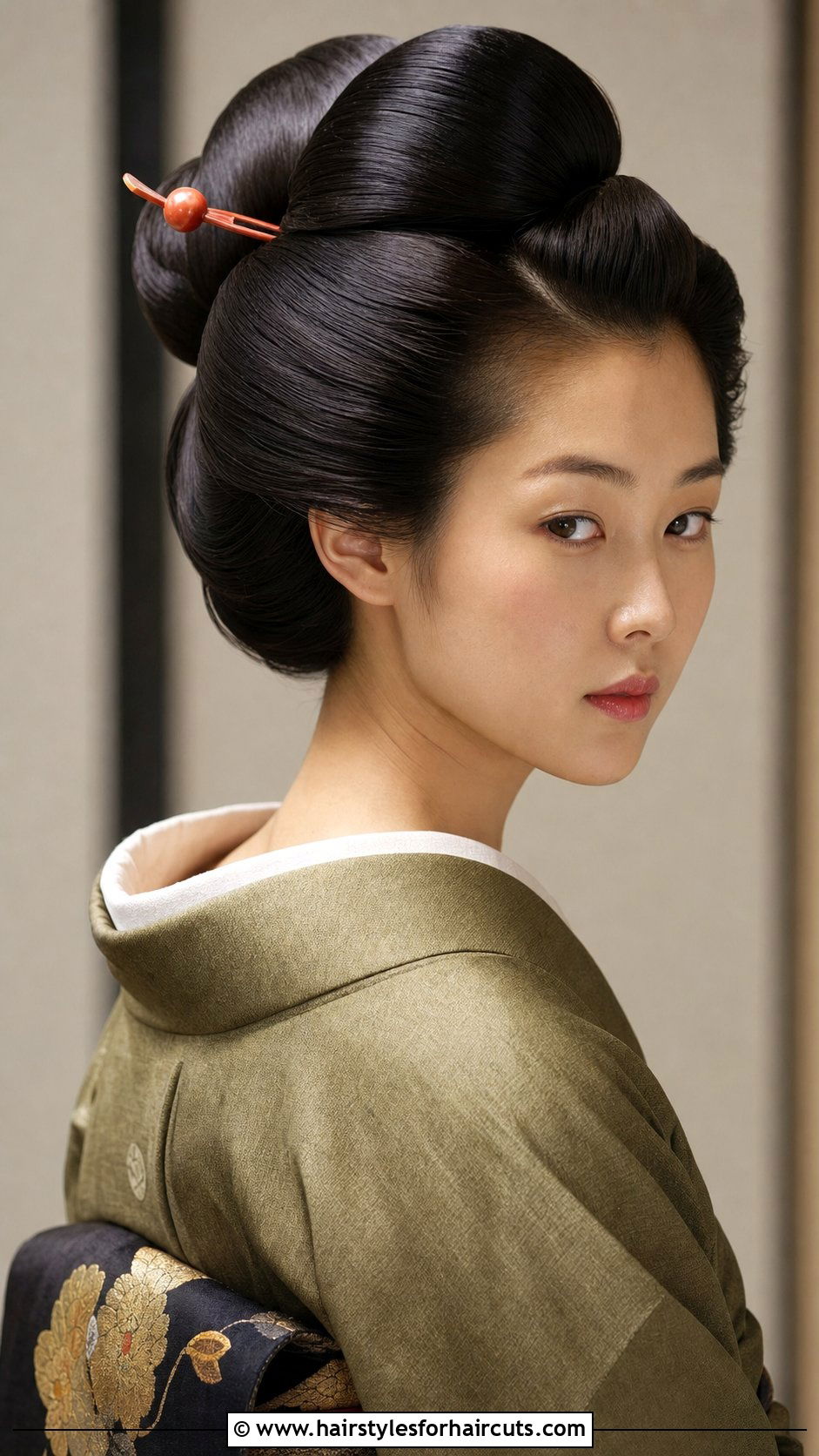
How can you capture the true essence of the Edo era? The Edo Period Female Updo encompasses the classic, foundational elements that defined an entire era of beauty. It features the heavily oiled, sleek front sections that frame the face, leading into a structured, prominent looped bun at the back. The long hair is meticulously styled to create a flawless, glossy surface that reflects light beautifully. This is the quintessential look you see in historical woodblock prints. Wearing this style requires patience and an appreciation for historical accuracy. Tucking a beautiful red coral pin or a silk flower into the loop brings the whole historical masterpiece to life with stunning authenticity.
24. Japanese Loop Bun Hairstyle

Need a highly structured look that holds up all day? The Japanese Loop Bun Hairstyle focuses on the core mechanic of traditional Nihongami—the loop. The long hair is pulled through a tie, folded over, and pinned securely to create a distinct, open loop at the back of the head. This is the foundational shape for styles like the Shimada, but wearing it as a standalone loop bun offers a cleaner, more minimalist vibe. It eliminates the complicated front wings and heavy waxing, making it accessible for modern wear. The loop can be positioned high or low, depending on your preference. A simple wooden stick pushed through the loop adds authentic charm.
25. Traditional Japanese Ponytail Updo
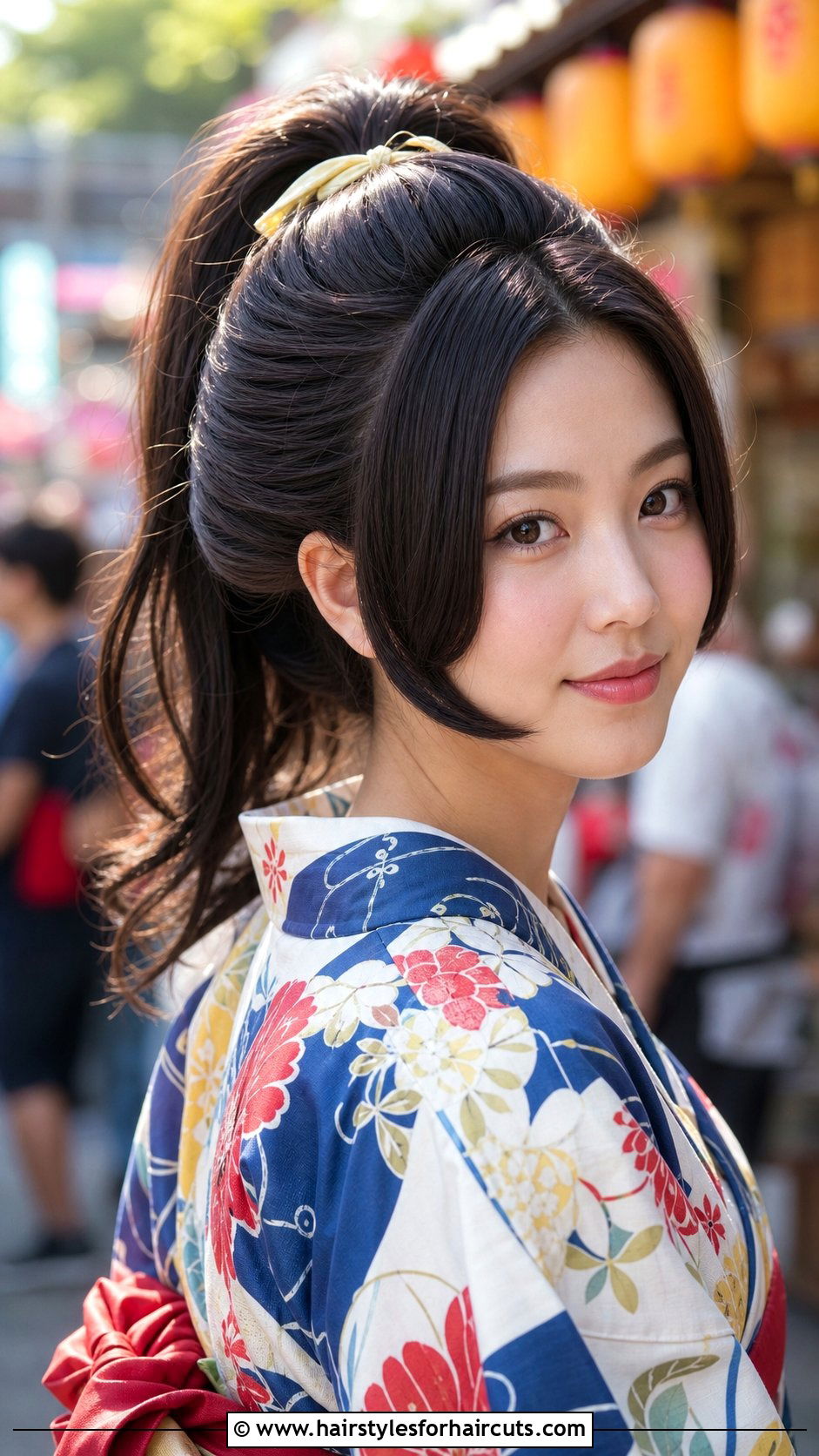
Is there a simpler way to achieve a traditional aesthetic? The Traditional Japanese Ponytail Updo offers a youthful, dynamic alternative to the heavily structured buns. In this style, the long hair is pulled back tightly and secured high on the head, but instead of being looped, it flows freely down the back. To give it that historical Japanese flair, the front sections are styled into the characteristic face-framing wings. The ponytail itself can be tied with a thick, beautiful silk ribbon or a braided cord. This look is incredibly practical and keeps the hair off the neck while still looking culturally inspired. It is perfect for active festivals or casual cosplay events.
Conclusion:
Mastering these 25 long hair traditional japanese hairstyles connects you to a rich, artistic history. Each updo, from the elegant Shimada to the dramatic Oiran styles, showcases the incredible versatility of long hair. While traditional Nihongami requires patience, wax, and practice, the results are absolutely breathtaking. You do not need to be a geisha or a bride to appreciate these magnificent silhouettes. By adapting these techniques for modern events, you keep the artistry of the Edo period alive. Whether you choose a simple loop bun or an elaborate split topknot, your long hair becomes a canvas for cultural expression. Embrace the beauty, gather your kanzashi, and start styling today.

Leave a Reply