
Native hairstyles carry deep cultural meaning, representing heritage, status, and connection to the earth. Across generations, Indigenous communities have embraced unique ways of wearing their hair that honor tradition while fitting modern life. Exploring 25 native hairstyles offers a beautiful way to appreciate the artistry and significance behind these looks. From intricate braided patterns that tell family stories to simple, elegant styles meant for everyday living, each hairstyle reflects a rich history. Whether you are looking to reconnect with your roots or simply want to find inspiration in culturally significant hairdos, this guide will walk you through various authentic native hairstyles. Discover the beauty and respect woven into every strand and braid. Let us celebrate these timeless traditions.

1. Traditional Native American Double Braids

Have you ever admired the timeless beauty of traditional double braids? This iconic native hairstyle features two perfectly symmetrical braids framing the face, often extending down the chest. It is a practical yet deeply meaningful look worn by many Indigenous women and men. The braids keep long hair secure during daily tasks while representing balance and harmony within the universe. Sometimes, ribbon or beadwork is woven directly into the strands to add a personal touch. Wearing this style is a beautiful way to keep hair manageable and honor cultural roots simultaneously. It works wonderfully for thick, straight hair, creating a striking silhouette that celebrates heritage with every step you take.
2. Single Long Navajo Braid

Running your fingers through a single, thick braid reveals the stunning simplicity of this traditional Navajo look. Instead of dividing the hair into multiple sections, all the hair is gathered at the back and woven into one robust, long braid. This native hairstyle is incredibly practical for windy climates and physical work, keeping hair completely out of the face. It also highlights the sheer length and health of the hair. Often tied off with a traditional cord or yarn, the single braid emanates quiet strength and focus. It is a fantastic option for anyone seeking a low-maintenance but culturally rich style that stays neat all day long. You can wear it confidently anywhere.
3. Cherokee Knot Topknot

Imagine sweeping all your hair upward into a regal, sculpted knot sitting right at the crown of your head. The Cherokee knot topknot is a striking native hairstyle that commands respect and attention. Historically, this style indicated a person’s status or readiness for battle, but today it stands as a powerful symbol of pride. The hair is carefully gathered, twisted, and secured into a tight, elegant bun. This look leaves the neck bare and the face open, making it perfect for warmer weather or ceremonial occasions. It requires minimal styling tools, relying instead on the natural length and texture of the hair to hold its strong, beautiful shape throughout the day.
4. Native American Braided Crown

Who says a crown must be made of metal? The braided crown is a breathtaking native hairstyle that wraps one or two thick braids around the head like a natural diadem. This elegant updo keeps hair entirely off the neck and shoulders, making it ideal for formal events or hot summer days. To create this look, the hair is parted down the middle, braided into two pigtails, and then pinned across the top of the head. It gives the wearer an ethereal, majestic appearance while keeping the hair protected and tidy. This style showcases incredible craftsmanship and offers a secure, beautiful way to manage very long hair effortlessly.
5. Indigenous Hair Wrap With Beads

Feeling the smooth texture of a beaded hair wrap brings a deep sense of connection to Indigenous artistry. This native hairstyle integrates colorful beads, shells, or metal cones into a section of a braid or loose hair. The beads are often woven into a wrapped thread that adorns the hair, creating a gentle, rhythmic sound when the wearer moves. It is a highly personal style, with the colors and materials often representing specific tribes, families, or personal milestones. Adding a hair wrap transforms a simple braid into a wearable piece of art. It draws the eye and sparks conversations about the rich traditions behind the beautiful, handcrafted adornments.
6. Long Straight Native Hair With Center Part

There is an undeniable power in wearing your hair exactly as it grows. Long, straight native hair with a center part is a classic, beautiful look that celebrates natural texture and health. The hair falls seamlessly over the shoulders, framing the face symmetrically. This native hairstyle requires minimal manipulation, allowing the natural oils to travel down the shaft and keep the strands strong and shiny. It is often worn during ceremonies or daily life to show respect for the Creator’s gift. Brushing it daily keeps it looking neat and polished. This simple yet profound style honors the natural beauty of Indigenous hair in its purest, most authentic form.
7. Native American Mohawk Braid
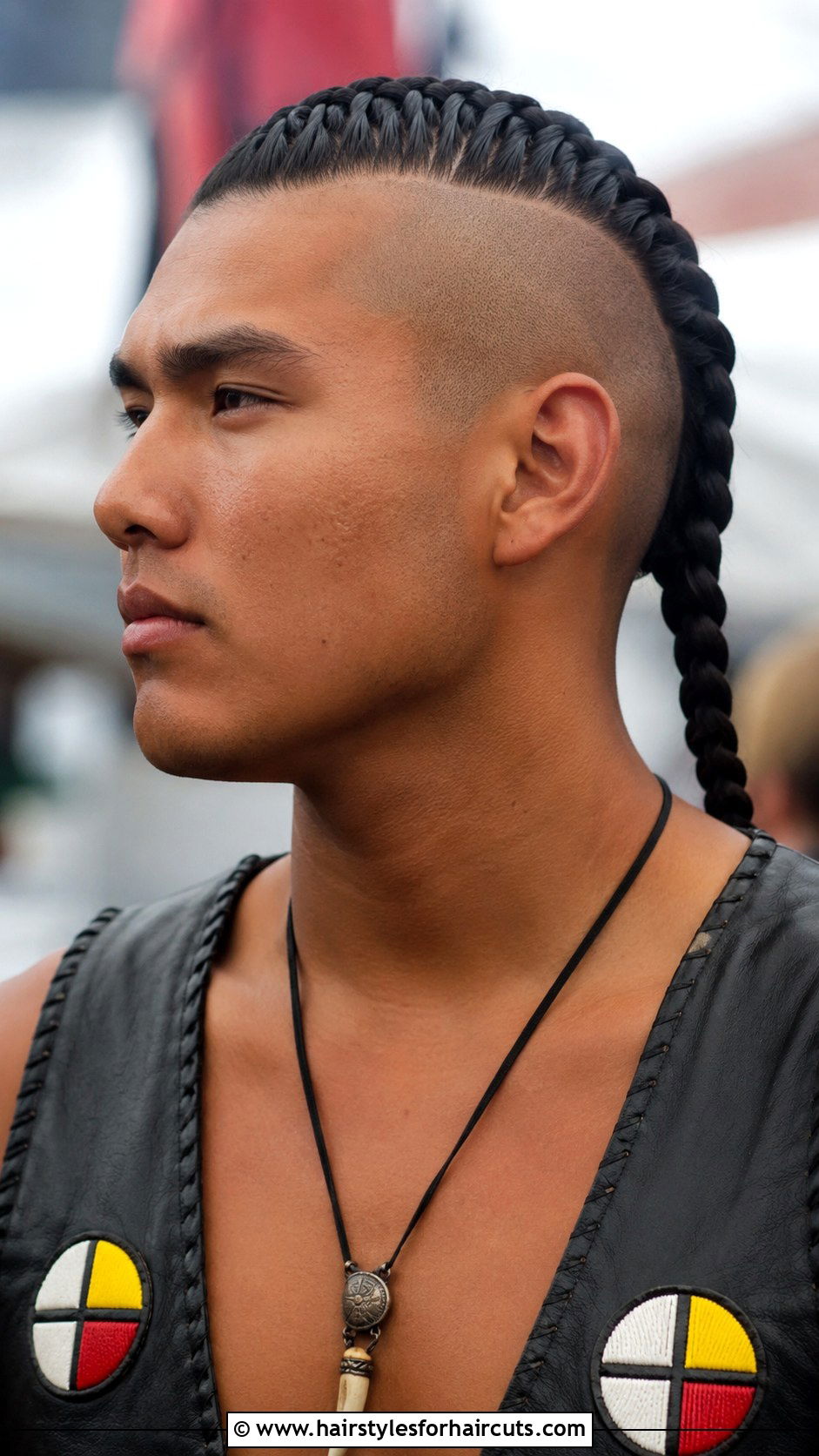
Looking for a style with a bit more edge and height? The Native American Mohawk braid takes the classic punk silhouette and softens it with intricate, cultural braiding techniques. Instead of spiking the hair up with gel, the central strip of hair is braided tightly from the forehead down to the nape, while the sides are often shaved, twisted, or cornrowed flat. This native hairstyle is bold, fierce, and deeply rooted in warrior traditions. It combines the striking visual of a Mohawk with the protective and spiritual elements of braiding. This look makes a strong statement, proving that traditional techniques can easily adapt to modern, powerful aesthetics.
8. Lakota Scalp Lock Hairstyle

What does it mean to wear a hairstyle of true historical significance? The Lakota scalp lock is a traditional native hairstyle primarily worn by men, featuring a long, single lock of hair left to grow at the crown while the rest is kept short or braided close to the head. This distinctive lock often had ceremonial or spiritual meaning, sometimes decorated with beads or feathers. It was a point of pride and a physical representation of a warrior’s spirit. Today, wearing a scalp lock honors those ancestors and keeps their memory alive. It is a striking, deeply respectful style that connects the wearer directly to the bravery of the past.
9. Native American Roach Hairstyle
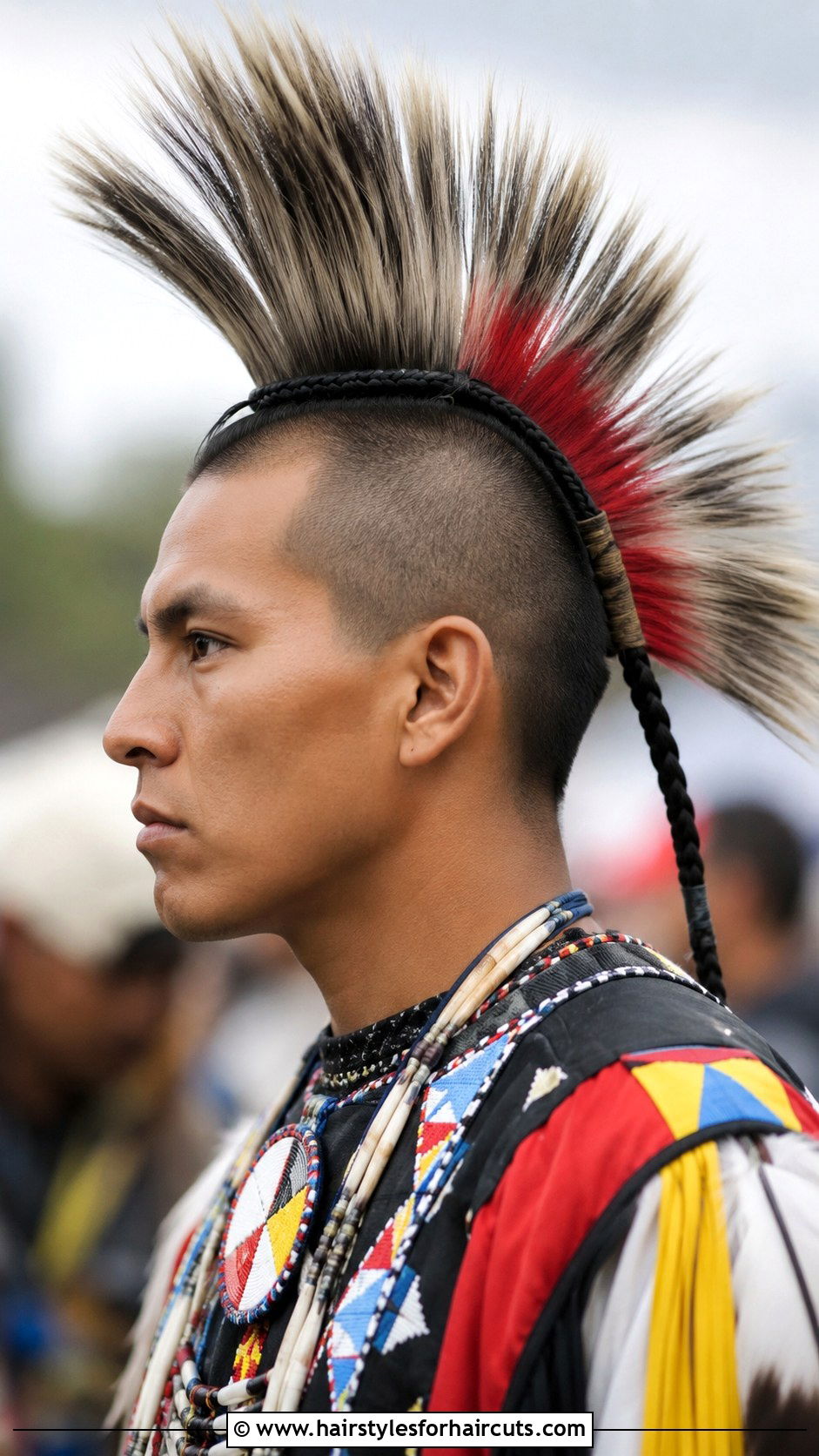
Standing tall and moving with the rhythm of the drum, the roach hairstyle is iconic in powwow culture. Worn traditionally by male dancers, this native hairstyle involves shaving or closely cropping the hair, leaving only a narrow strip down the center. A porcupine hair roach is then attached to this strip, standing upright and swaying with every movement. The base hair is often styled into a braided queue at the front to hold the roach securely. This style is purely ceremonial and holds immense spiritual significance, representing honor and respect in the dance circle. It is a powerful visual anchor for traditional regalia and a testament to enduring cultural practices.
10. Iroquois Warrior Shaved Sides With Top Knot

Picture the fierce readiness of an Iroquois warrior stepping into the forest. This traditional native hairstyle features hair grown long on the very top and center of the head, while the sides and back are completely shaved. The long top section is then gathered and tied into a secure, tight topknot at the crown. This look was highly practical for battle, keeping hair out of the face while eliminating anything an opponent could easily grab. Today, it remains a striking, masculine style that speaks to strength and resilience. It is low maintenance on the sides but offers versatility with the topknot, making it a bold choice for modern Indigenous men.
11. Indigenous Low Braided Chignon

Soft, elegant, and deeply rooted in tradition, the low braided chignon is a stunning native hairstyle for formal gatherings. The hair is braided into a single plait at the nape of the neck and then coiled into a smooth, flat bun. This style keeps the hair perfectly contained and protected, while offering a graceful silhouette. It is often secured with wooden pins or decorative ties that complement traditional attire. Wearing a low chignon allows the focus to remain on the face and any jewelry or regalia worn around the neck. It is a sophisticated choice that blends practical hair management with a refined, culturally aware aesthetic.
12. Ojibwe Double Twist Braids

Twisting strands together creates a rope-like effect that is both beautiful and symbolic. The Ojibwe double twist braid is a unique native hairstyle where two sections of hair are tightly twisted rather than traditionally woven. These twists hang on either side of the head, offering a chunkier, more textured appearance than standard braids. This technique is incredibly protective, minimizing frizz and locking in moisture for thick, coarse hair. It is a wonderful everyday style that stays secure during physical activity or outdoor adventures. The double twists frame the face nicely and can be easily dressed up with silver or beadwork for community gatherings and celebrations. They showcase versatility.
13. Native American Side Swept Fishtail Braid

Draping beautifully over one shoulder, the side-swept fishtail braid offers a romantic take on traditional native hairstyles. Instead of a standard three-strand plait, the hair is divided into two sections, and small pieces are crossed over from one side to the other. This creates an intricate, woven pattern that looks much more complex than it actually is. Sweeping it to one side keeps the hair off the neck while allowing the detailed braid to catch the light. It is a perfect style for showcasing long, healthy hair and any accessories woven into the ends. This look effortlessly combines casual comfort with stunning, eye-catching craftsmanship for any occasion.
14. Hopi Squash Blossom Whorls

Have you ever seen a hairstyle that mimics the beauty of a blooming flower? The Hopi squash blossom whorl is a highly distinctive native hairstyle worn traditionally by unmarried Hopi women. The hair is parted down the middle and rolled into two large, symmetrical coils over the ears, representing the squash blossom, a symbol of fertility and life. Creating this look requires careful shaping and often the use of cardboard or wood to maintain the perfect circular form. It is a breathtaking visual statement that immediately communicates the wearer’s identity and status within the community. This style remains one of the most recognizable and beautiful Indigenous hair traditions today.
15. Indigenous Feathered Long Hair Look

Catching the breeze, a single feather secured in long flowing hair creates a striking, spiritual image. The indigenous feathered long hair look celebrates natural, unbound hair adorned with a token from the sky. The hair is typically worn straight down the back with a center part, while a feather or two is attached near the temple or woven into a small side braid. This native hairstyle is not just decorative; the feather often holds spiritual meaning, representing strength, freedom, or a specific prayer. It is a simple, powerful way to wear your hair that honors the connection between the earth and the sky, adding profound meaning to your daily look.
16. Native American Dutch Braid Pigtails

Braiding hair so it pops out from the scalp creates a wonderful dimensional effect. Native American Dutch braid pigtails take the classic double braid and invert the technique, making the braid sit on top of the hair rather than underneath. This creates a thicker, more prominent plait that stands out beautifully against the hair. It is a robust native hairstyle that keeps hair tightly secured, making it perfect for active days or dancing. The two braids hang heavily down the sides, offering a symmetrical and playful look. You can easily add beads or cuffs to the ends of these braids to bring extra shine and cultural significance to the style.
17. Cheyenne Top Knot With Side Braids

Combining the sleekness of an updo with the tradition of braids, this native hairstyle is strikingly balanced. The Cheyenne top knot with side braids features a large, prominent bun at the very front or crown of the head, while the sides and back are woven into thin, tight braids. The contrast between the smooth, gathered topknot and the textured, hanging braids is visually captivating. This style was historically worn by men and reflects a warrior’s status and preparation. Today, it remains a bold expression of cultural identity. The topknot keeps the majority of the hair secure and out of the face, while the side braids add intricate detail.
18. Indigenous Braided Space Buns

Putting a fun, modern twist on traditional braiding, Indigenous braided space buns are playful and stylish. Instead of wrapping the hair into standard buns, the hair is first braided into two pigtails, and then those braids are coiled into two buns on top of the head. This native hairstyle is fantastic for keeping long hair completely off the neck and shoulders during physical activities or warm weather. The braided texture makes the buns look much more intricate and interesting than a simple twisted bun. It is a youthful, energetic style that still honors the importance of braiding in Indigenous culture, allowing for creative expression and practical comfort simultaneously.
19. Native American Waterfall Braid Loose Hair

Watching a waterfall cascade down rocks mirrors the way hair flows in this beautiful native hairstyle. The waterfall braid loose hair look incorporates a single, horizontal braid that wraps around the back of the head, with sections of hair dropping through the braid to create a falling effect. The rest of the hair remains long, loose, and flowing down the back. This style is perfect for those who want to wear their hair down but still want the intricate detail of a braid. It adds a touch of elegance and structure to free-flowing hair. This look is stunning for gatherings where you want to show off the length and health of your hair.
20. Traditional Inuit Two Braids With Fur Trim
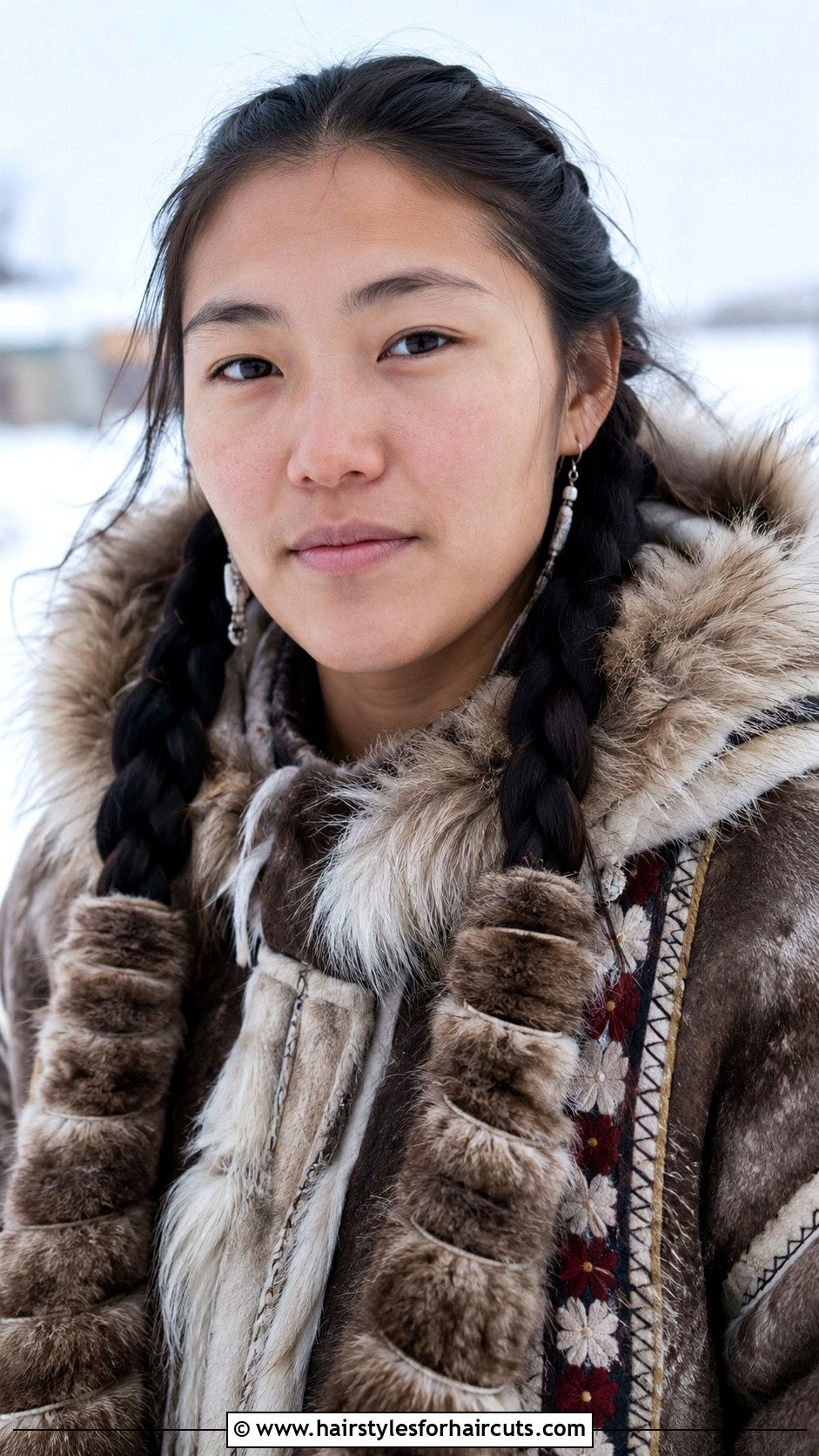
Braving the cold requires practical and beautiful solutions, and this traditional native hairstyle delivers both. The traditional Inuit two braids with fur trim features two long, classic braids adorned with strips of fur woven or tied near the ends. The fur serves a practical purpose, keeping the ends of the hair protected from harsh, freezing winds, while also looking incredibly striking. The braids keep the hair manageable under heavy parkas and hoods. This style represents a deep connection to the land and the animals that sustain the community. It is a gorgeous, functional look that honors the resourcefulness and artistry of northern Indigenous cultures during the harshest winter months.
21. Native American Loop Braid Updo
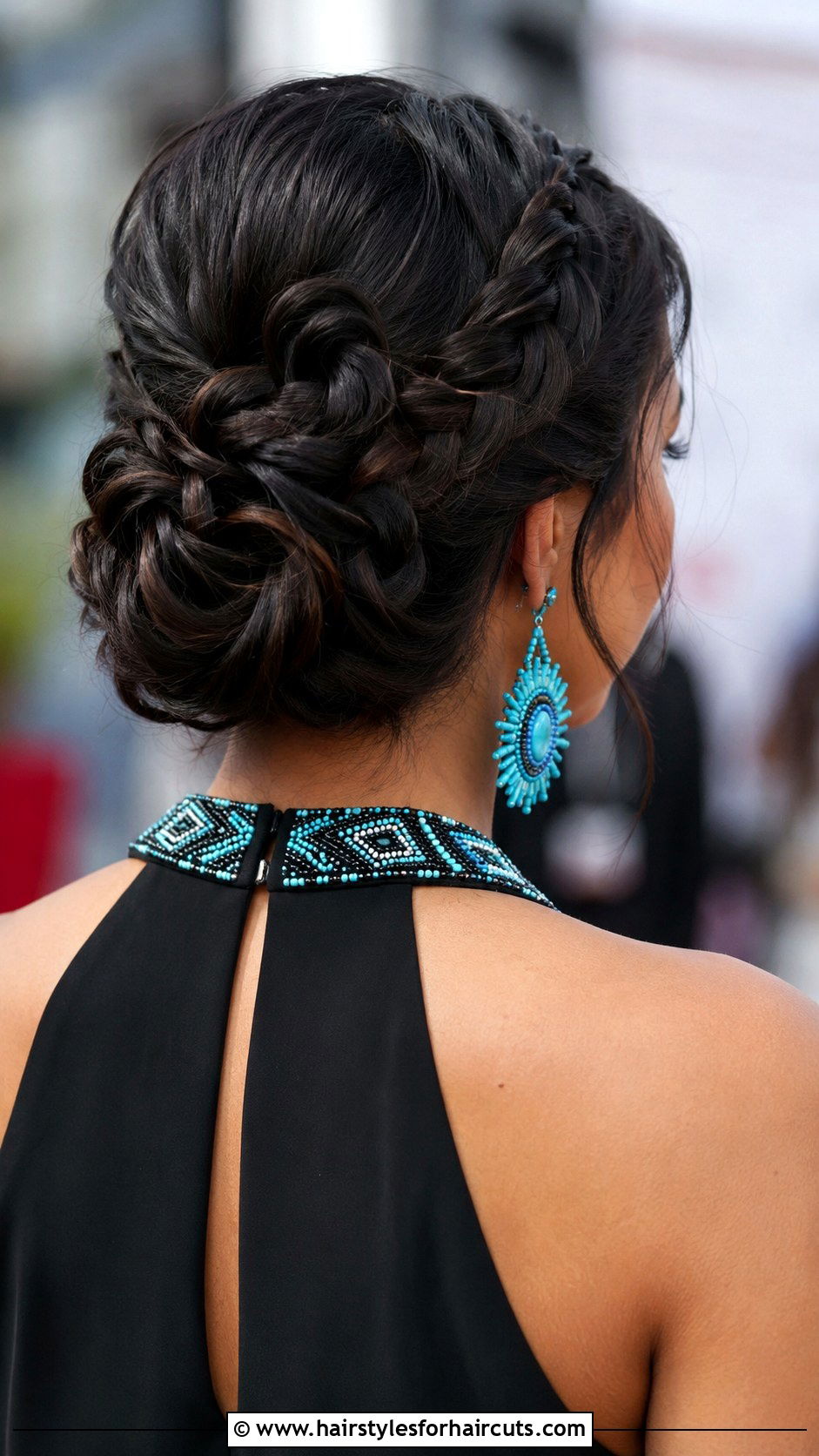
Twisting and looping braids creates an updo that is rich in texture and cultural pride. The Native American loop braid updo involves braiding the hair and then folding and pinning the braids into loops against the back of the head. This creates a complex, woven pattern that looks like a beautiful basket or piece of pottery. It is a sophisticated native hairstyle that keeps all the hair completely up and out of the way. This updo is perfect for ceremonies, weddings, or formal occasions where a polished appearance is desired. The looped braids hold securely, ensuring the style lasts all day while showcasing incredible attention to detail and artistic skill.
22. Indigenous Half Up Half Down Braids
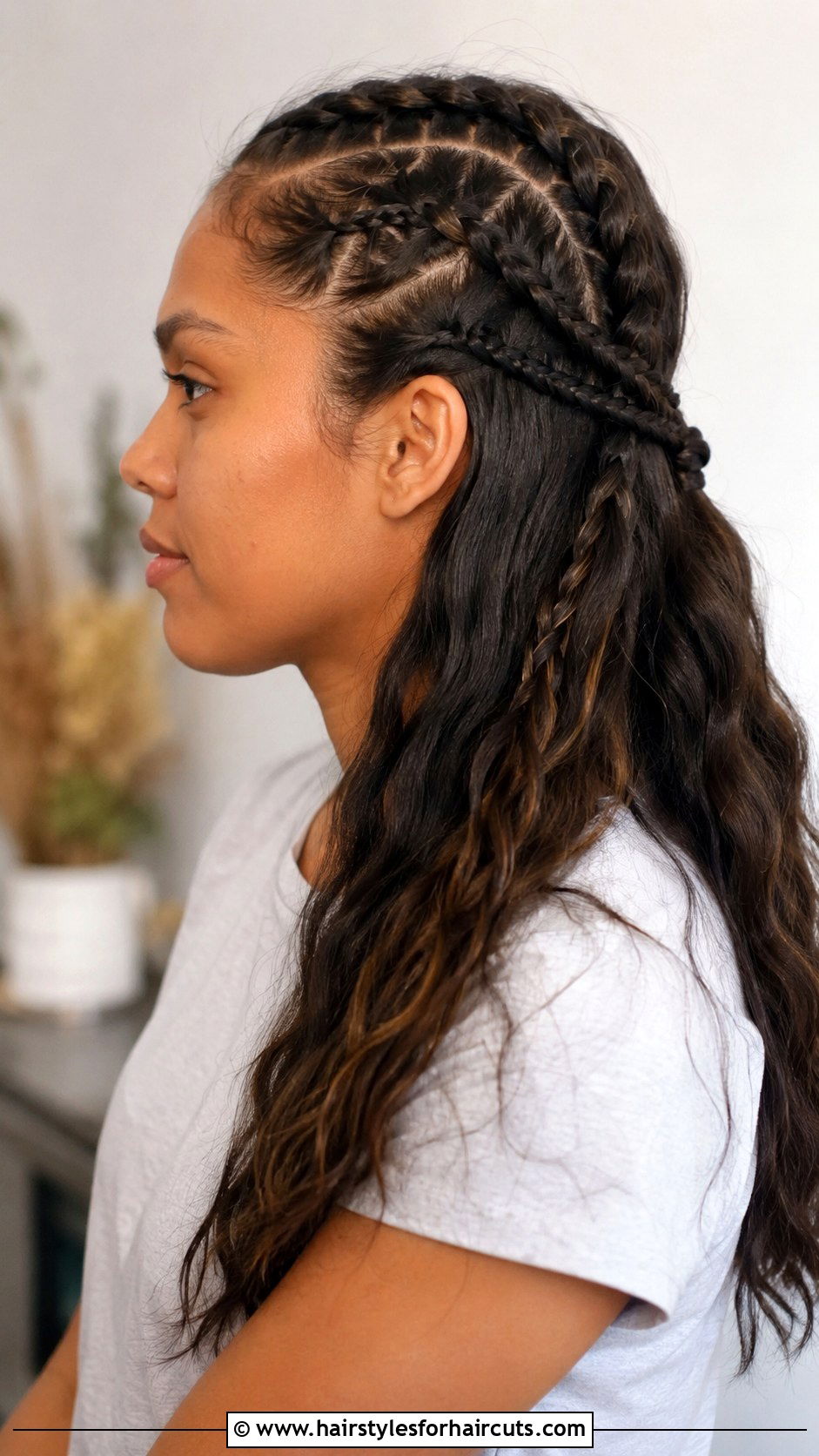
Want the best of both worlds? The indigenous half up half down braids style lets you enjoy the freedom of loose hair while keeping the front sections secure and styled. Two small braids start at the temples and are tied together at the back of the head, while the rest of the hair flows freely down the back. This native hairstyle is highly versatile and works beautifully for everyday wear. It keeps hair out of your eyes without the commitment of a full updo. You can easily add beads, shells, or metal cuffs to the joined braids at the back to elevate the look for special occasions or community events.
23. Zuni Side Buns With Bangs

Framing the face with soft bangs adds a unique flair to this traditional Pueblo look. The Zuni side buns with bangs feature large, rolled buns sitting directly over the ears, while the rest of the forehead is covered with a straight, blunt fringe. This native hairstyle is deeply rooted in Zuni culture and is immediately recognizable. The buns are often wrapped with yarn or cloth to keep their shape perfectly round. The bangs highlight the eyes and cheekbones, creating a striking facial frame. This is a beautiful, historically rich style that demonstrates how specific hairdos can communicate cultural affiliation and tradition within Indigenous communities across generations. It remains a proud symbol.
24. Native American Long Faux Hawk Braid

Channeling the spirit of the warrior with a modern touch, the long faux hawk braid is a showstopper. This native hairstyle mimics the appearance of a Mohawk without shaving the sides. Instead, the hair on the sides is tightly French braided or cornrowed up toward the center, while a long, thick braid runs down the middle from the forehead to the nape. The contrast between the sleek sides and the voluminous center plait is incredible. It gives the illusion of height and edge while maintaining the length of the hair. This protective style is perfect for those who want a bold, fierce look that still honors traditional braiding techniques.
25. Indigenous Rope Braid Ponytail

Gathering hair into a single, thick rope braid creates a look of sheer strength and simplicity. The indigenous rope braid ponytail involves tying the hair back and then twisting two sections around each other to form a heavy, durable plait down the back. Unlike a traditional three-strand braid, the rope twist creates a smooth, spiraled effect that looks incredibly chic. This native hairstyle is perfect for those who want a secure, low-maintenance option that still looks intentional and polished. It swings beautifully when you walk and keeps your hair tangle-free. You can easily wrap a small piece of leather or ribbon around the tie to complete this striking everyday look.
Conclusion:
Exploring these 25 native hairstyles reveals the incredible diversity, artistry, and deep cultural significance woven into Indigenous hair traditions. Each style, from the simple single braid to the intricate squash blossom whorls, tells a story of heritage, resilience, and connection to the earth. Wearing these hairstyles is about more than just aesthetics; it is a profound way to honor ancestors and keep cultural practices alive. Whether you choose a practical double braid or a formal looped updo, you are embracing a legacy of strength and beauty. Remember to always wear these styles with the respect and pride they deeply deserve. Let your hair be a proud reflection of your identity.

Leave a Reply