
Step back into the opulent era of the 15th and 16th centuries, where hair was a canvas for artistry, status, and elegance. Whether you are preparing for a themed festival, a theatrical performance, or simply want a touch of historical romance in your everyday look, exploring these 25 renaissance hairstyles offers endless inspiration. This remarkable period introduced intricate braids, lavish pearl accessories, and voluminous curls that still captivate the modern beauty world. From iconic updos worn by noblewomen to the romantic loose locks seen in famous paintings, these historical looks are surprisingly wearable today. Discover how you can recreate the magic of this unforgettable epoch with our comprehensive guide. Let these timeless designs transport you to a world of classic beauty and unmatched craftsmanship.

1. Renaissance Braided Crown

Have you ever wondered how to channel pure royalty with your hair? The Renaissance braided crown is the ultimate answer. This stunning look features two Dutch or French braids wrapped around the head to form a complete, seamless halo. Women of the era used this style to keep their hair clean and off their faces while displaying their weaving skills. It works beautifully on medium to long hair and creates an effortlessly regal silhouette. You can wear it tight and neat for a formal event or gently pull the edges for a softer, romantic feel. Add small ribbons or thin gold threads through the loops for an authentic historical touch. This timeless updo remains a favorite for modern weddings and outdoor festivals.
2. Botticelli Curls
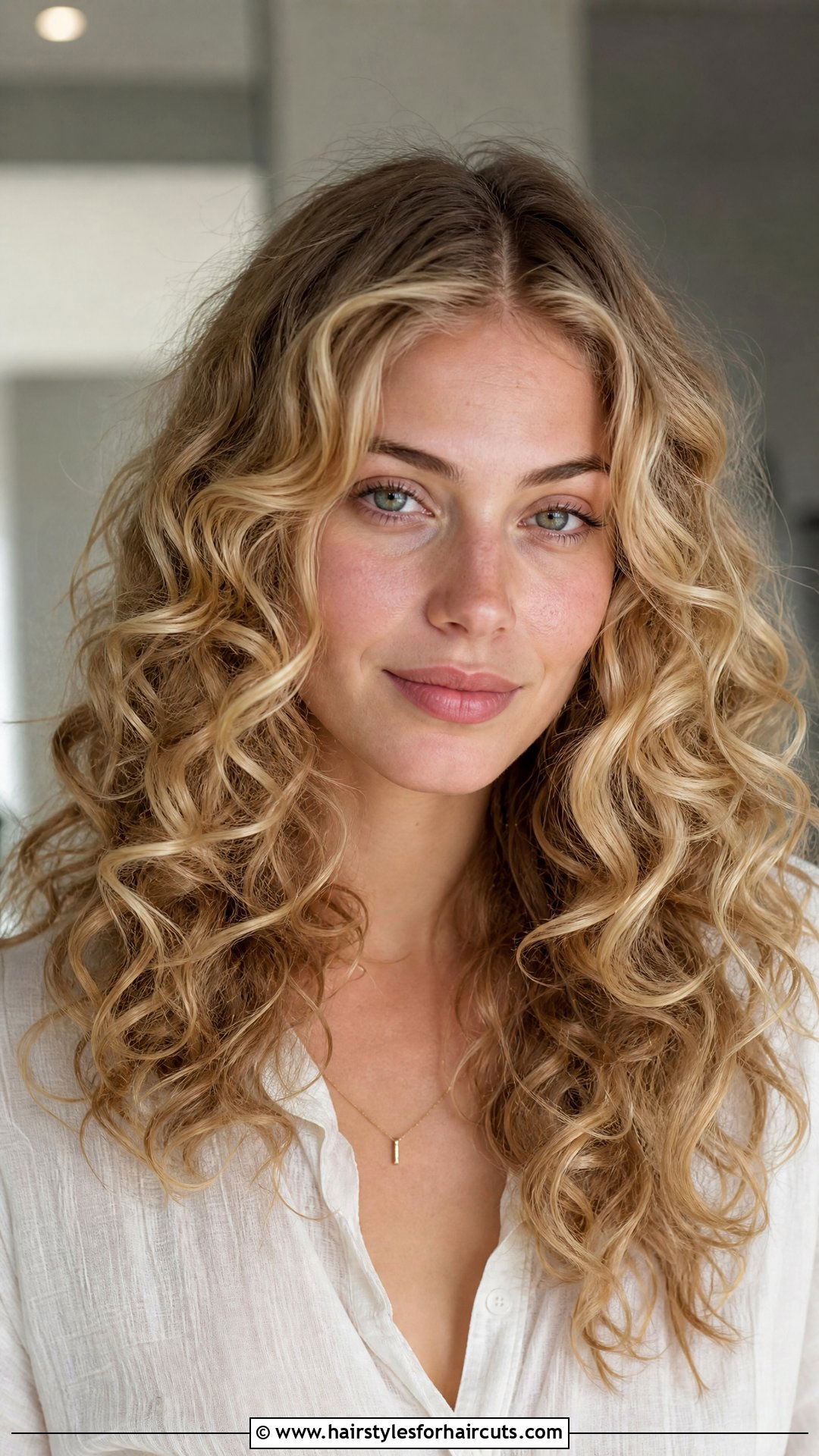
Imagine stepping right out of a Florentine painting with cascading, golden waves. Botticelli curls capture the exact essence of this dreamy aesthetic. Named after the famous painter who featured flowing, textured locks on his mythological subjects, this look relies on natural volume and movement. Instead of modern curling irons, women back then used heated clay rods or rag ties to achieve these soft, spiraling waves. The hair is typically parted down the middle and left to flow freely over the shoulders. To get this look today, use a large-barrel curling iron and brush out the rings for a softer bounce. A light hold mousse will maintain the body without making the hair stiff. It is a breathtaking choice for anyone with natural waves.
3. French Hood Updo

How did Tudor queens maintain such flawless elegance? The French hood updo was their secret weapon. This polished style involves smoothing the hair flat against the head and tucking it neatly under a crescent-shaped, jeweled headpiece. Anne Boleyn famously brought this look to the English court, and it quickly became a symbol of high status. The front hair is usually parted in the middle and framed softly around the face, while the back is concealed in a snug snood or pinned into a low bun. This creates a refined, modest silhouette that highlights the cheekbones and jawline. Modern versions can be achieved using a simple headband and bobby pins. It is an incredibly sophisticated option for historical reenactments or costume galas.
4. Milkmaid Braid
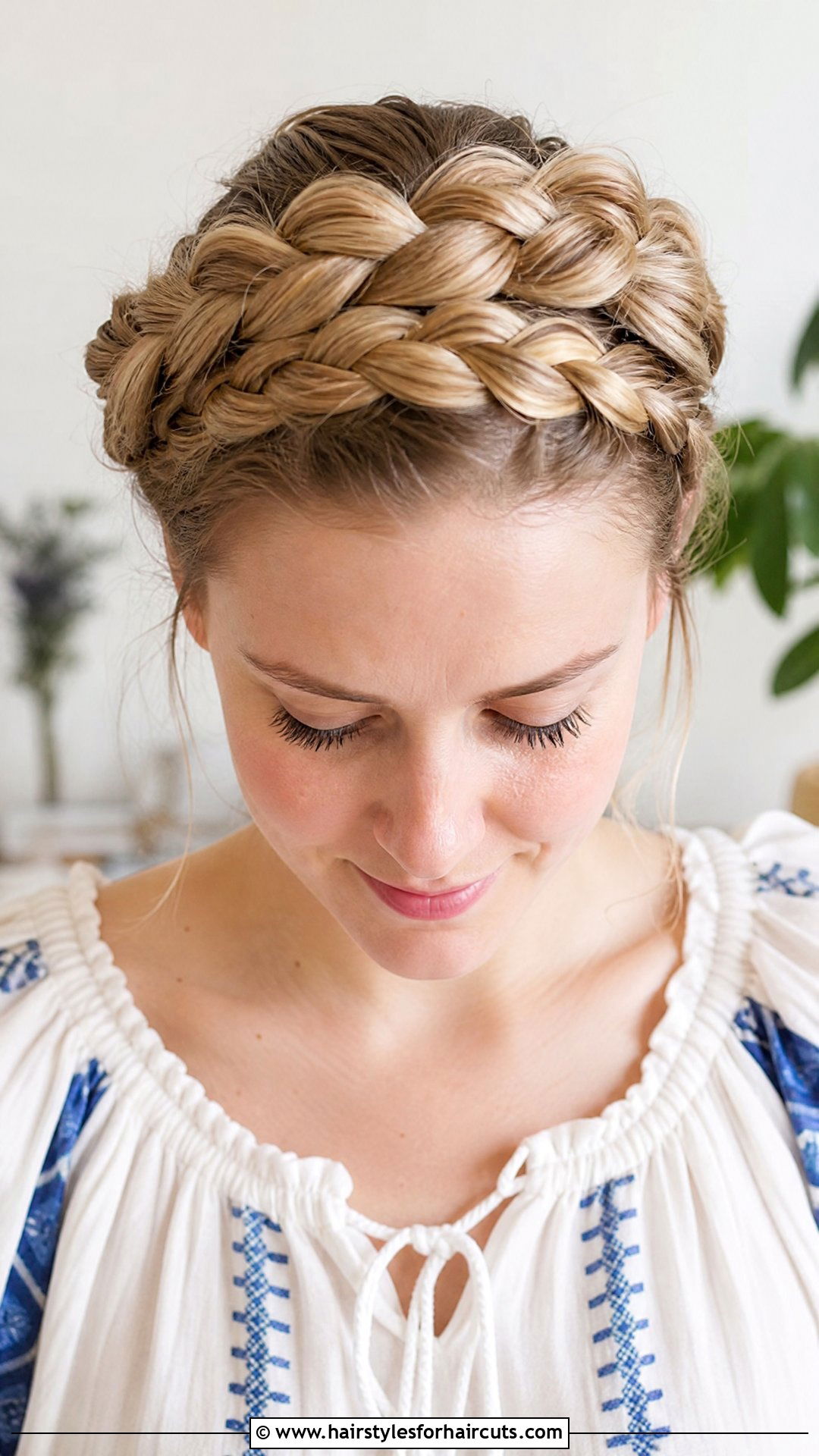
Searching for a charming and practical historical look? The milkmaid braid delivers both simplicity and undeniable charm. Originating from the working women of the Renaissance who needed their hair safely secured during daily chores, this style features two traditional pigtail braids pinned up and crossed over the top of the head. Unlike the braided crown, this method starts with separated sections, making it much easier for beginners to achieve. The overlapping braids create a thick, textured band that sits like a natural headband. It keeps every strand out of your face while looking incredibly stylish. This updo is perfect for hot summer days or outdoor events. Leave a few wispy pieces around your face for a relaxed, approachable finish.
5. Gable Hood Style
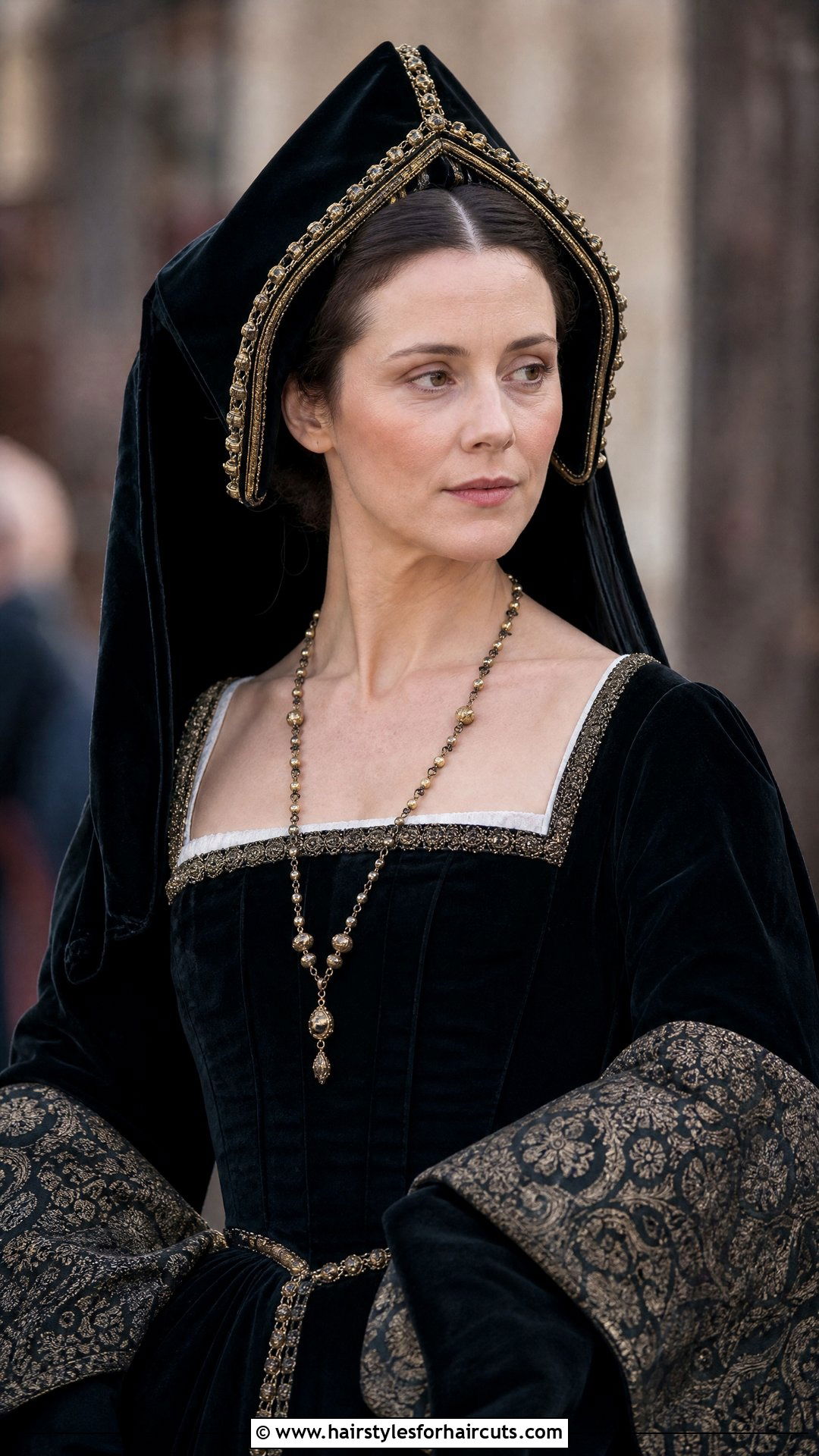
What defined the striking silhouette of early Tudor fashion? The gable hood style stands out as one of the most recognizable looks of the era. Resembling the pointed roof of a house, this structured headdress frames the face with rigid, angular lines. The hair beneath is completely hidden, smoothly pinned back and covered by a dark fabric cap. Lappets of rich velvet or silk hang down the sides, often pinned up to reveal a highly decorated undercap. While it might seem restrictive today, wearing this style instantly transforms you into a figure of historical power and piety. Modern historical enthusiasts can recreate the shape using wire framing and heavy brocade fabrics. It is a spectacular choice for authentic Tudor cosplay.
6. Renaissance Half Up Half Down Curls
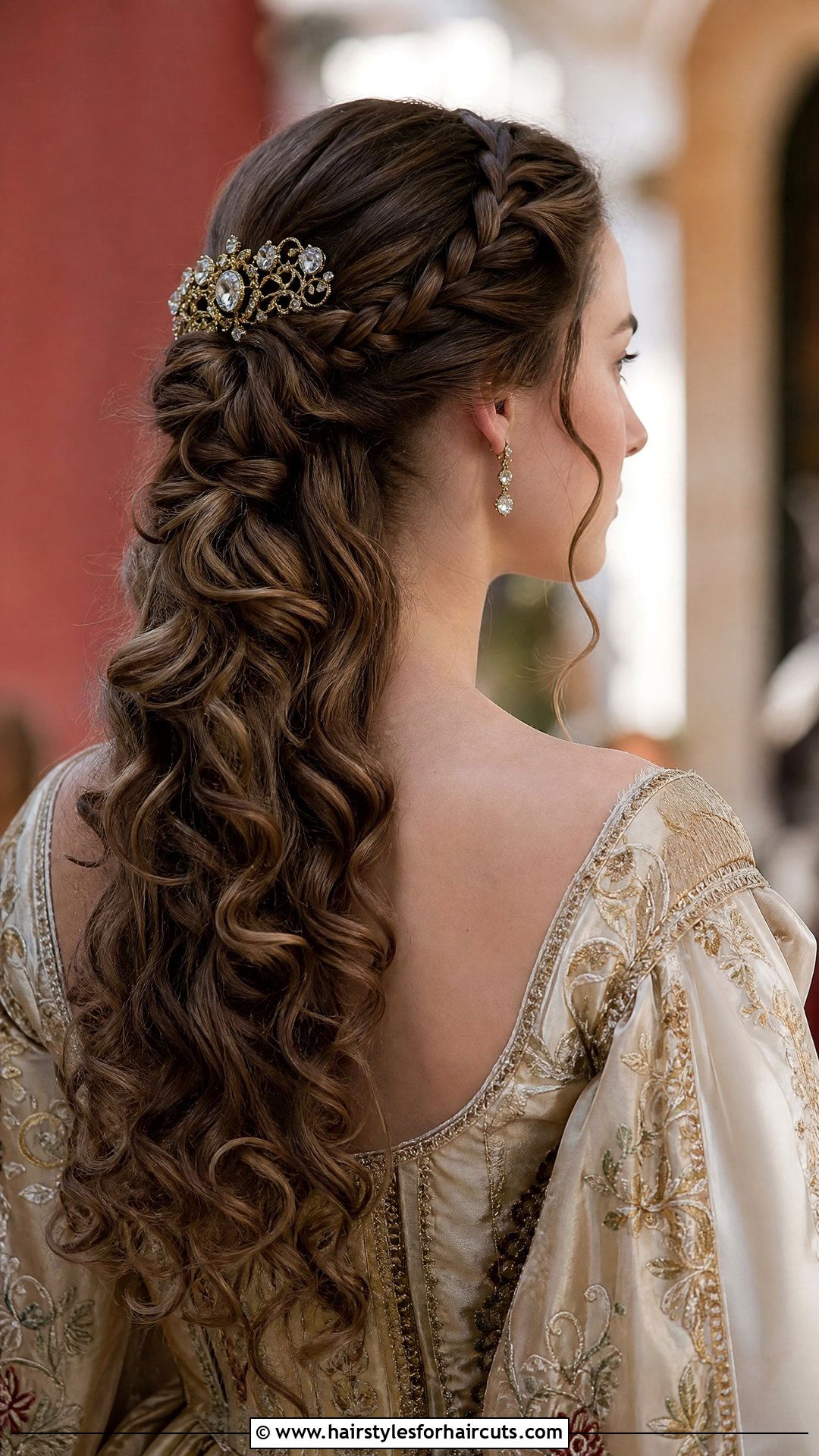
Why choose between wearing your hair up or down when you can enjoy both? The Renaissance half up half down curls offer the perfect compromise. This romantic style was a favorite among Italian noblewomen who wanted to show off the length of their hair while keeping it practical. The top section is pulled back and secured with decorative pins or a subtle braid, while the remaining locks tumble down in rich, voluminous curls. This approach beautifully frames the face and highlights the neck without the full commitment of an updo. To recreate this, simply curl the bottom half of your hair and secure the top with a jeweled clip. It is an effortlessly gorgeous option for any formal occasion.
7. Caul And Snood Hairstyle

Need a break from complicated braiding techniques? The caul and snood hairstyle provides an elegant, low-effort alternative. A caul is a decorative hairnet, often made of gold thread or adorned with pearls, that holds the hair at the back of the head. A snood is a similar pouch-like net that covers a bun or chignon. Women across all social classes wore these accessories, though the materials varied wildly from simple yarn to exquisite silk and jewels. The hair is easily gathered, twisted into a basic bun, and tucked inside the net. This instantly elevates a simple hairstyle into something historically accurate and visually striking. It is an excellent way to add a touch of period flair to your everyday wardrobe.
8. Elizabethan Red Curls
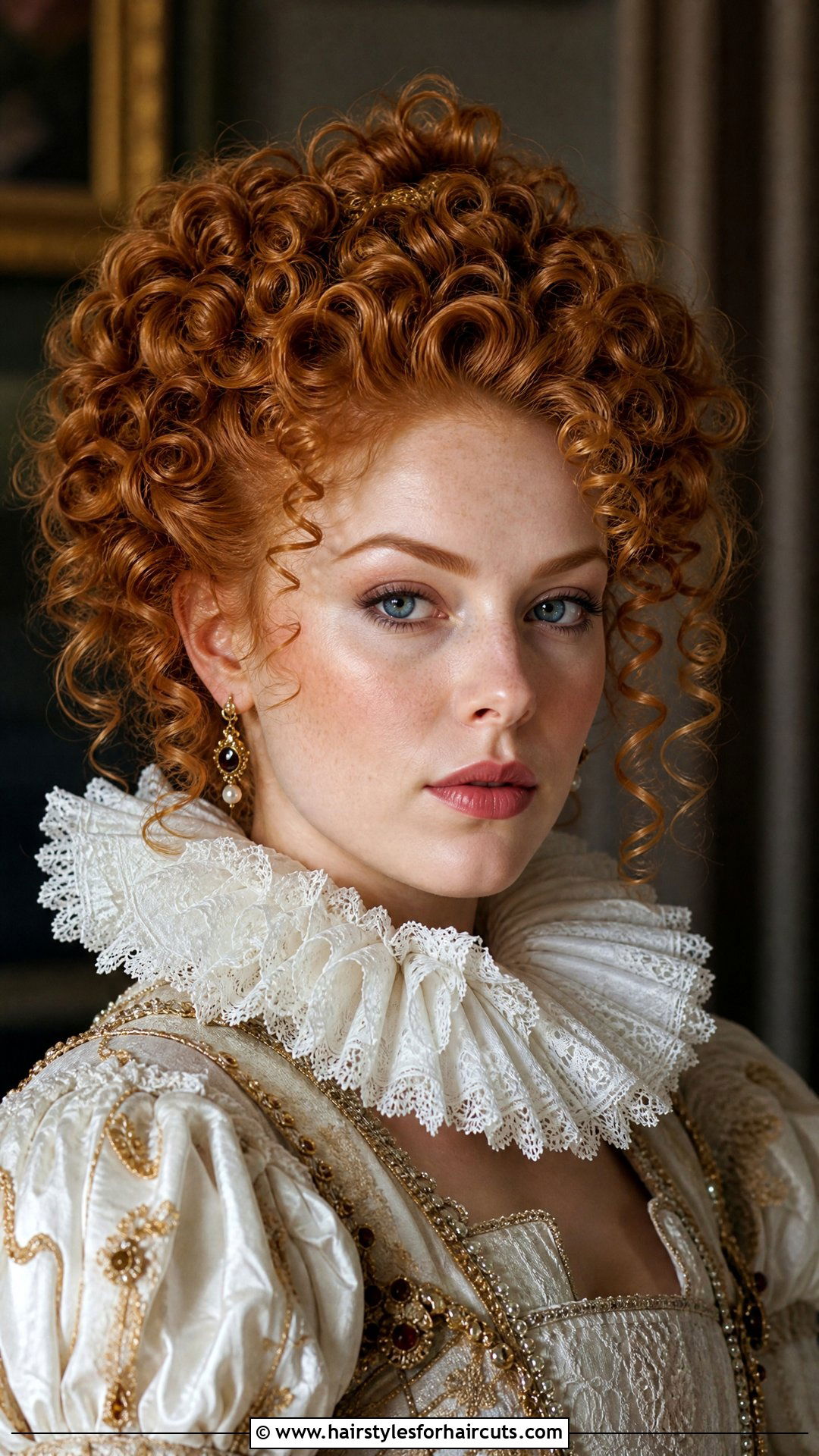
Can a single hair color define an entire century? Elizabethan red curls certainly made an unforgettable mark on history. Queen Elizabeth I famously adopted a striking red-gold hue that became the ultimate standard of beauty across England. The hair was styled in tight, voluminous curls framing the face, often pulled back to reveal a high forehead, which was considered highly fashionable at the time. Modern red hair dyes make achieving this iconic shade easier than ever. Simply curl your hair into small, bouncy ringlets and arrange them around your face. A center part or a swept-back front both work wonderfully. This bold look commands attention and celebrates one of the most powerful women of the Renaissance period.
9. Italian Renaissance Loop Braid
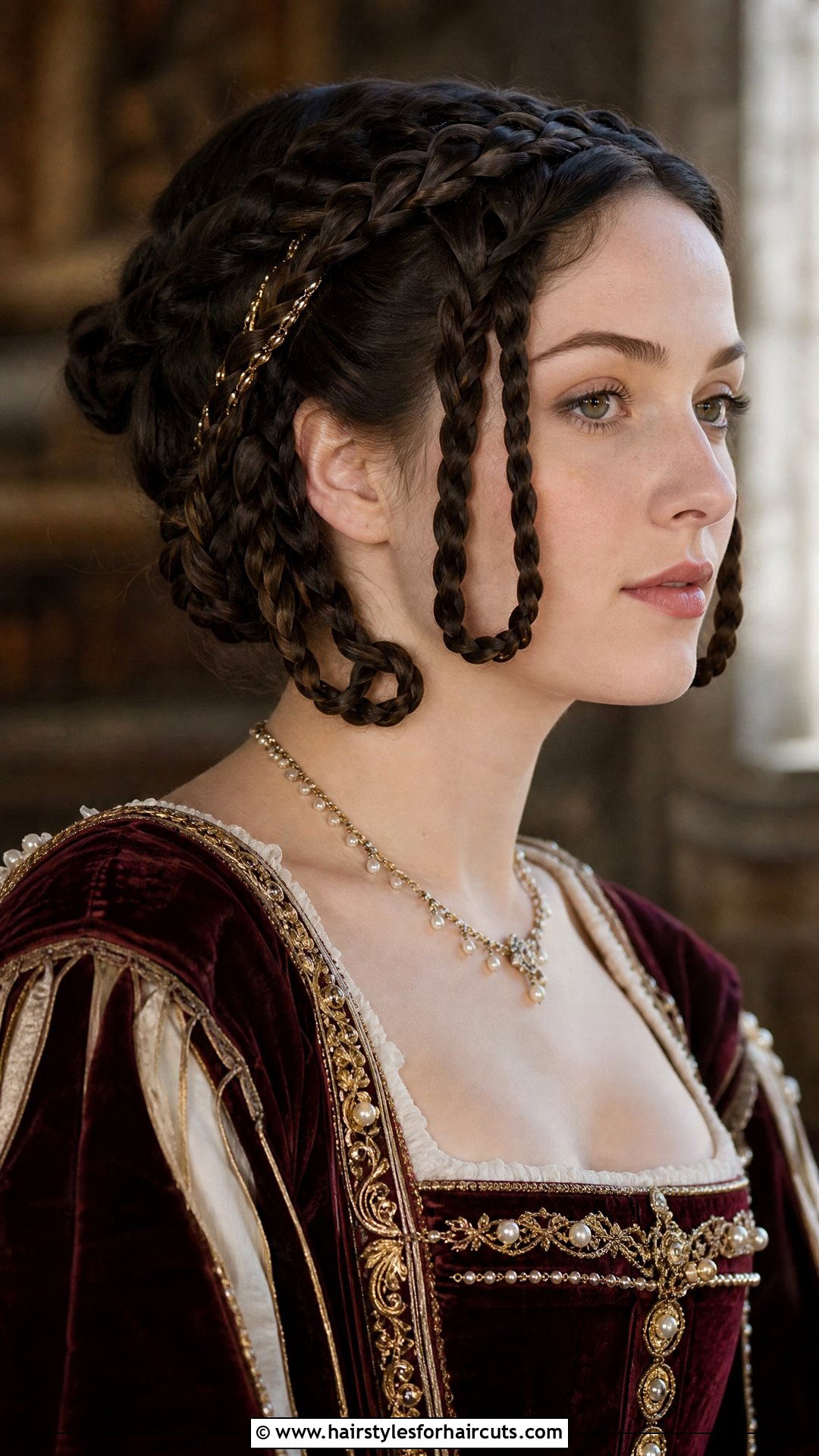
Looking for a braiding technique that truly stands out? The Italian Renaissance loop braid is an intricate and mesmerizing choice. Unlike standard three-strand braids, this method involves creating loops of hair that are pulled through one another to form a complex, chain-like pattern. Italian women wore these braids draped over their ears or wrapped around the head like a crown. The open loops give the hair incredible visual depth and a surprisingly delicate appearance. It takes a bit of practice to master the looping technique, but the stunning result is absolutely worth the effort. You can secure the ends with a clear elastic and tuck them under the braid. This style is a true conversation starter at any historical gathering.
10. Renaissance Hair Taping

How did women secure their elaborate styles before modern bobby pins? Renaissance hair taping was the ingenious solution. This technique involves taking long ribbons and literally stitching them through the hair and around the head to anchor the style in place. The ribbons wrap around braids or twists, creating a beautiful woven effect that is both decorative and highly functional. Taping was often used to keep the hair firmly attached to the back of the head or to secure a veil. It creates a remarkably sturdy updo that can withstand hours of dancing and movement. Choose velvet ribbons in deep jewel tones like burgundy or emerald for a striking, authentic finish. It is a fantastic method for keeping long hair secure.
11. Center Part With Veil
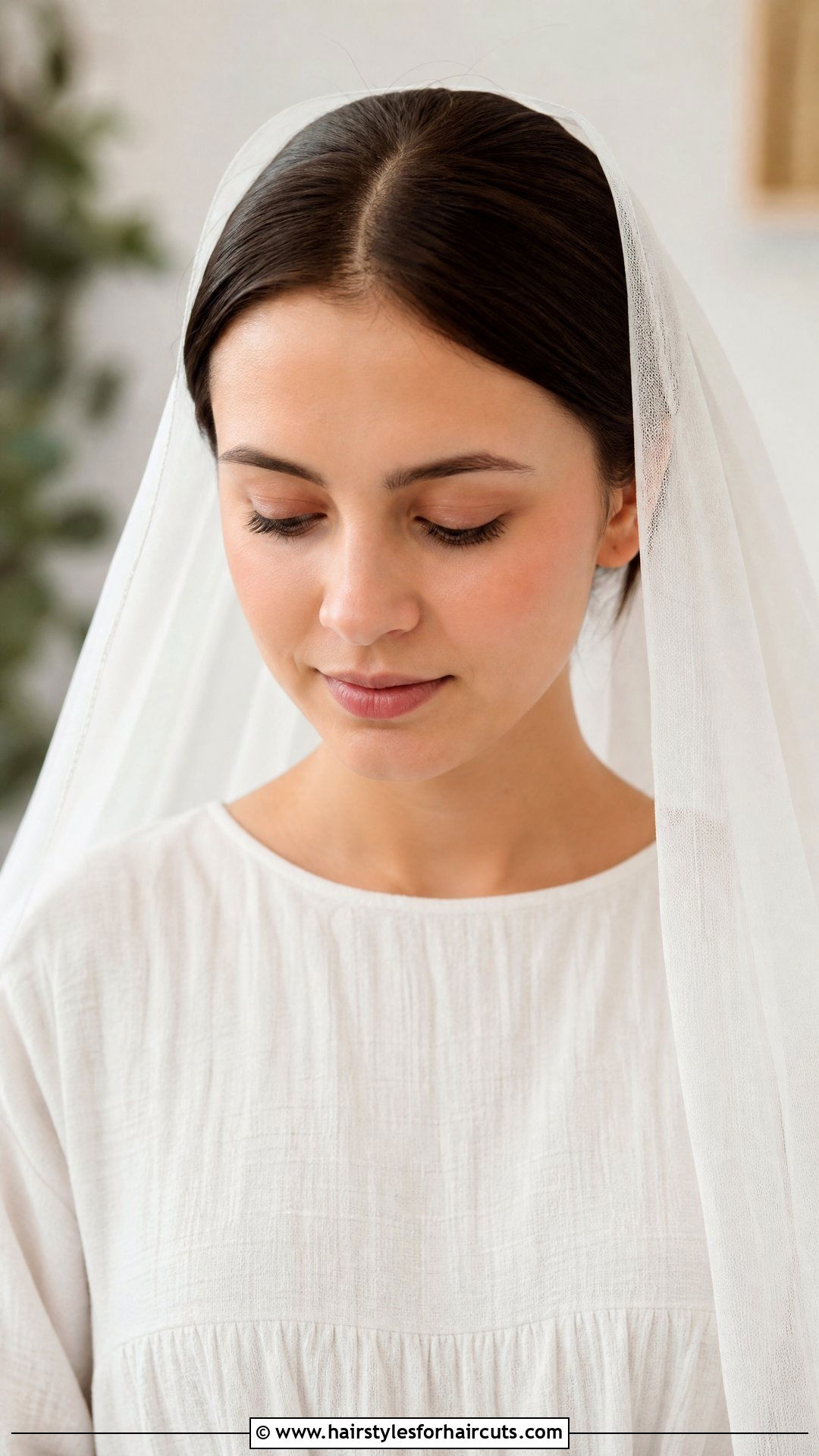
What is the easiest way to achieve a classic historical look? The center part with veil is wonderfully simple yet profoundly authentic. During the Renaissance, modesty was highly valued, and married women frequently covered their hair with sheer veils. The hair is parted strictly down the middle and styled flat against the head, often braided or tied in a low bun at the nape. A lightweight linen or silk veil is then draped over the head and pinned into place. This minimalist approach highlights the natural beauty of the face while adhering to historical customs. It is an incredibly accessible style for beginners who want to participate in reenactments without spending hours on complex hairdos. Add a simple circlet over the veil.
12. Renaissance Fishtail Braid
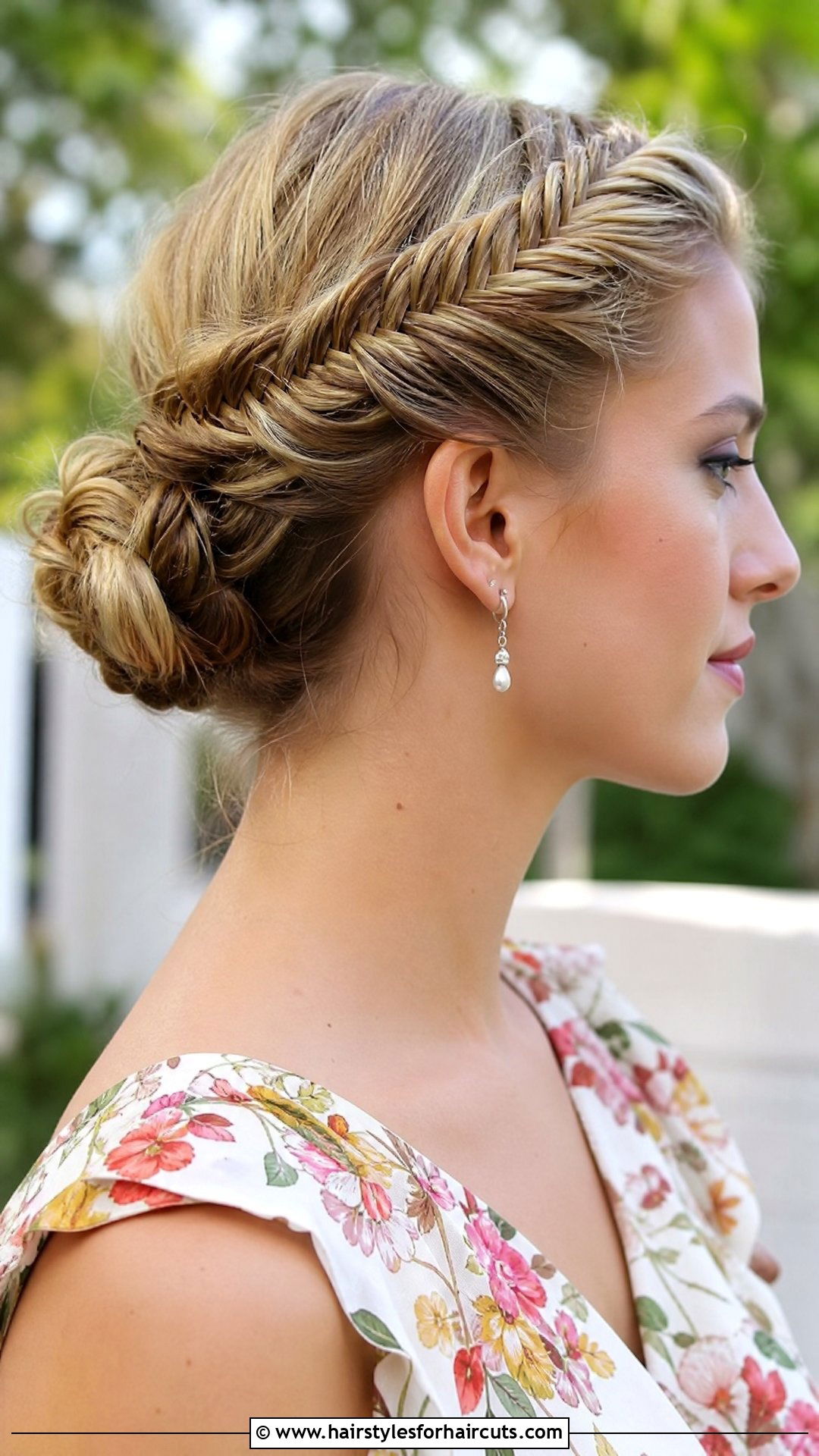
Want to add a touch of intricate detail to your long locks? The Renaissance fishtail braid offers a tighter, more sophisticated texture than a regular plait. While modern fashion recently revived this braid, women of the Renaissance utilized similar techniques to create beautifully detailed updos. By taking small sections from the outside of two main ponytails and crossing them over, you achieve a stunning, woven effect. This braid can be worn hanging down the back or wrapped around the head like a crown. Pulling out a few small pieces softens the look and gives it that romantic, lived-in feel. It works exceptionally well on second-day hair, providing the grip needed to hold the intricate weave securely in place all day.
13. Heart Shaped Updo
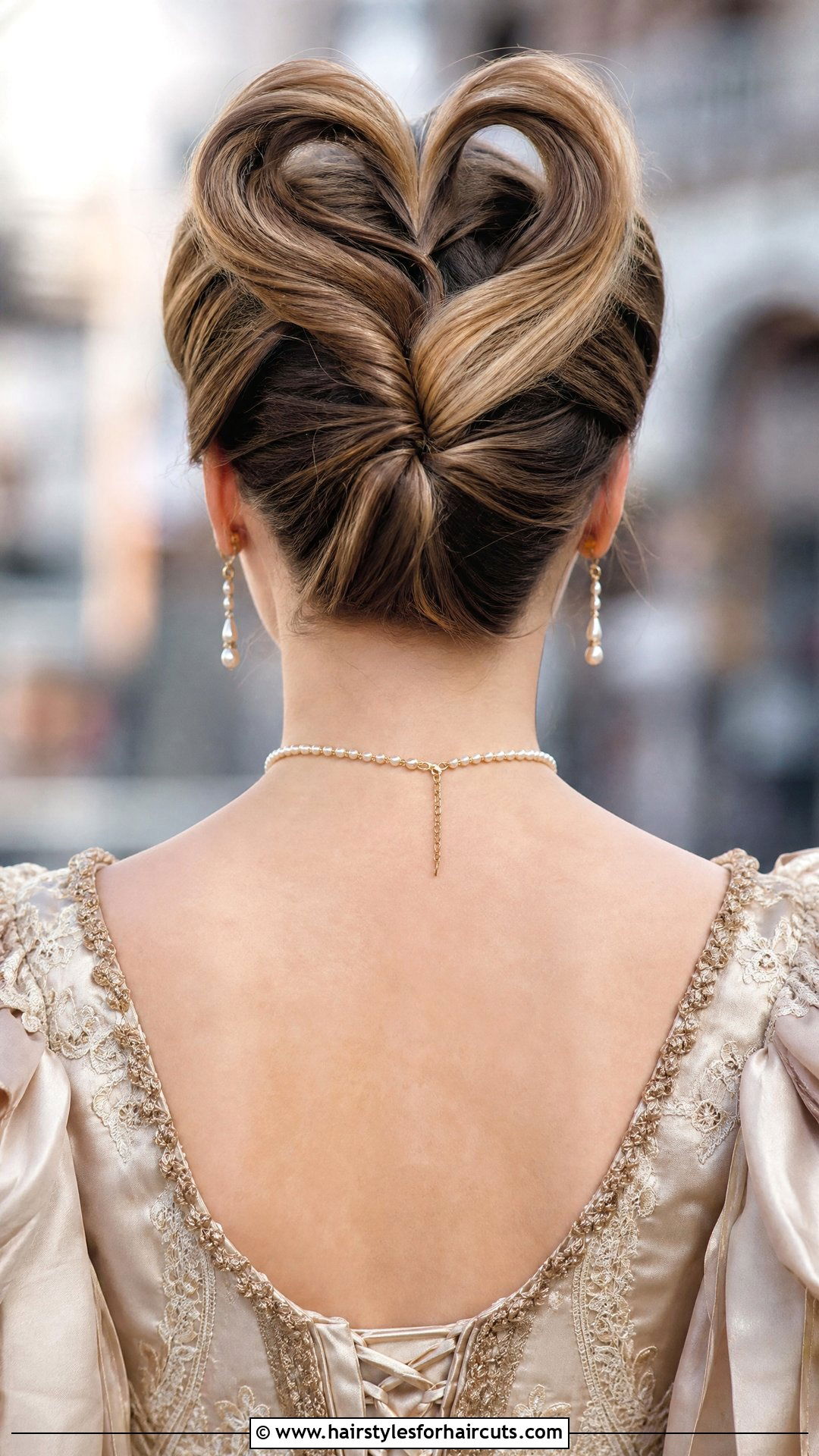
Is it possible to shape your hair into a symbol of love? The heart shaped updo proves that hair can indeed become art. This incredibly romantic style was popular among young women of the Venetian court. The hair is parted down the center and meticulously pulled up and around to form two distinct loops that meet at the top, creating the shape of a heart. The rest of the hair is braided or pinned underneath to complete the silhouette. This requires a lot of length and plenty of pins, but the result is breathtakingly unique. Using a strong holding spray and a fine-tooth comb will help you sculpt the hair precisely. It is an unforgettable style for special occasions.
14. Double Braided Bun

Are you seeking an updo that combines durability with historical charm? The double braided bun is a practical and pretty solution. This style begins with the hair divided into two equal sections, which are then braided into standard plaits. These two braids are subsequently wrapped around each other and coiled into a secure bun at the back of the head. The dual braids give the bun incredible texture and volume, making it look far more complicated than it actually is. It was a common choice for working women who needed their hair completely out of the way but still wanted to look neat. Tuck the ends firmly and use sturdy hairpins to ensure the bun stays perfectly intact all day.
15. Renaissance Pin Curl Updo
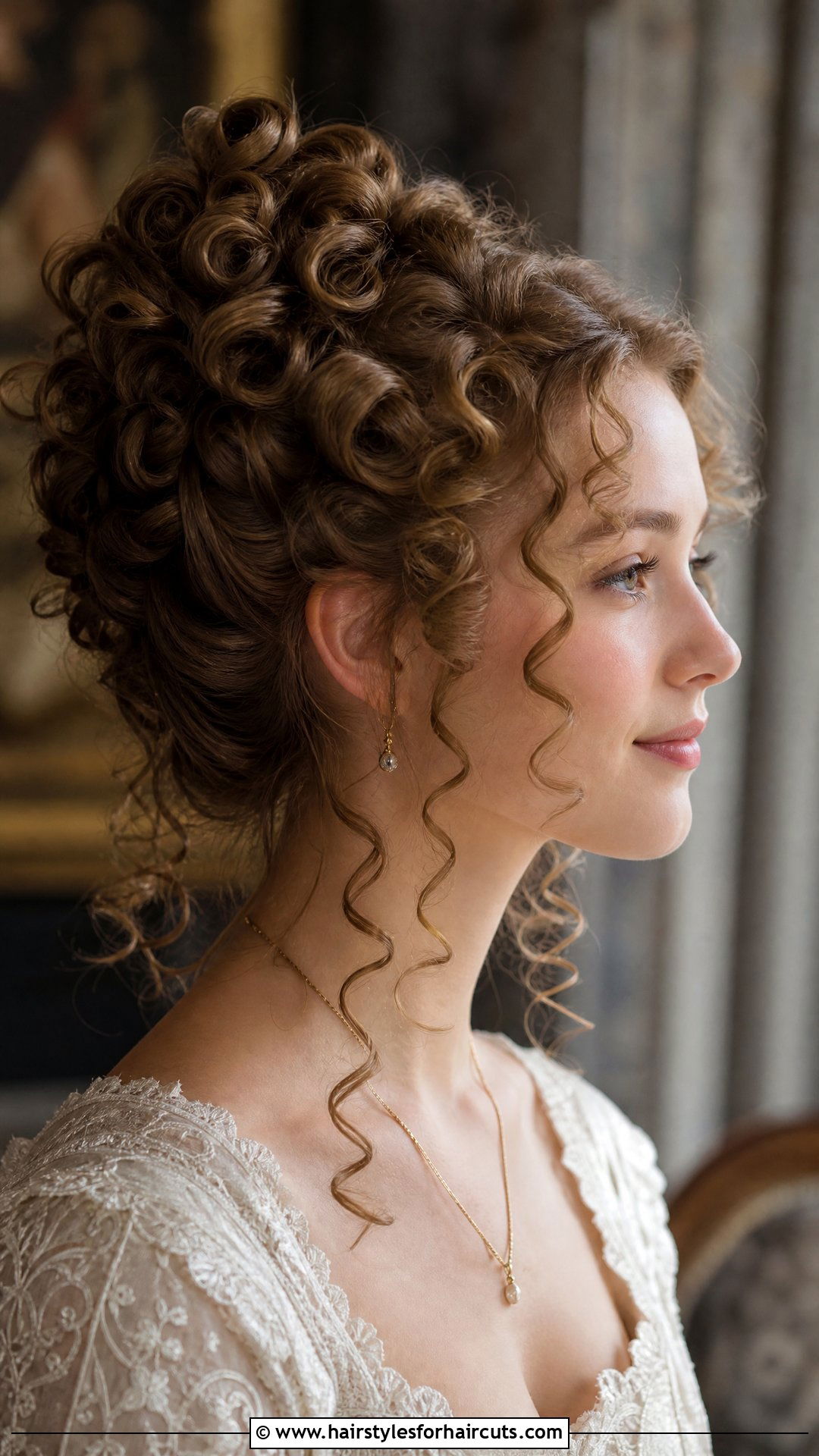
Have you ever wondered how women achieved those flawless, compact curls before hot tools? The Renaissance pin curl updo was their daily ritual. Women would take small sections of damp hair, wrap them into tight circles, and pin them flat against the scalp to dry naturally overnight. When released, the hair formed perfect, bouncy ringlets. For an updo, these ringlets were gathered and pinned gracefully at the nape or crown, creating a mass of controlled volume. This method remains incredibly gentle on the hair, completely avoiding heat damage. You can easily replicate this vintage technique today for a stunning, authentic look. It gives the hair a rich texture that modern curling wands often struggle to replicate accurately.
16. Braided Headband With Loose Hair

Why not try a style that beautifully controls your hair while showing off its length? The braided headband with loose hair does exactly that. This style involves taking a small section of hair from one side of the head, braiding it tightly, and pulling it across the front to the other side, pinning it like a natural headband. The remaining hair is left completely loose and free-flowing. It gives the illusion of wearing a beautiful hairpiece while keeping the hair out of your eyes. This look perfectly balances a relaxed aesthetic with intentional design. It works wonderfully for outdoor festivals or casual events where you want a touch of Renaissance flair without a full, formal updo.
17. Renaissance Chignon

Looking for a sleek, low-profile hairstyle that whispers elegance? The Renaissance chignon is a timeless classic. Situated at the nape of the neck, this low bun was a staple for women across Europe. The word chignon comes from the French phrase meaning nape of the neck. Women would twist their hair smoothly into a roll or knot and secure it firmly. For higher classes, the chignon was often covered with a jeweled snood or adorned with pearl pins. For lower classes, it was a simple, practical way to keep hair tidy. A touch of pomade will smooth away flyaways and give your chignon a polished finish. This style is effortlessly chic and appropriate for any modern professional or formal setting.
18. Ornate Pearl Pin Updo

How did noblewomen display their immense wealth through their hair? The ornate pearl pin updo was a direct display of riches. Pearls were highly coveted during the Renaissance, and women wove them directly into their hairstyles. The base of this look is usually a structured bun or a braided updo, which then serves as a canvas for dozens of pearl-tipped hairpins. The pearls catch the light beautifully and add a stunning focal point to an otherwise simple twist. You can easily transform a basic chignon by inserting a row of imitation pearl pins along the edges. This instantly elevates the entire look, making it suitable for a bride or a modern queen. It is pure, unadulterated luxury.
19. Simple Renaissance Twist

Do you need a quick historical style that takes only minutes? The simple Renaissance twist is incredibly efficient. Unlike complex braids that require three or more strands, a twist uses just two sections of hair twisted around each other. Women often gathered their hair at the nape, split it into two halves, twisted them together tightly, and coiled the rope into a quick bun. The natural friction of the twisted hair holds the shape remarkably well without needing dozens of pins. It is a fantastic everyday hairstyle that keeps your hair secure and off your neck. You can dress it up by adding a decorative clip or a few fresh flowers. This approach proves that historical beauty does not have to be complicated.
20. Renaissance Triple Braid Updo
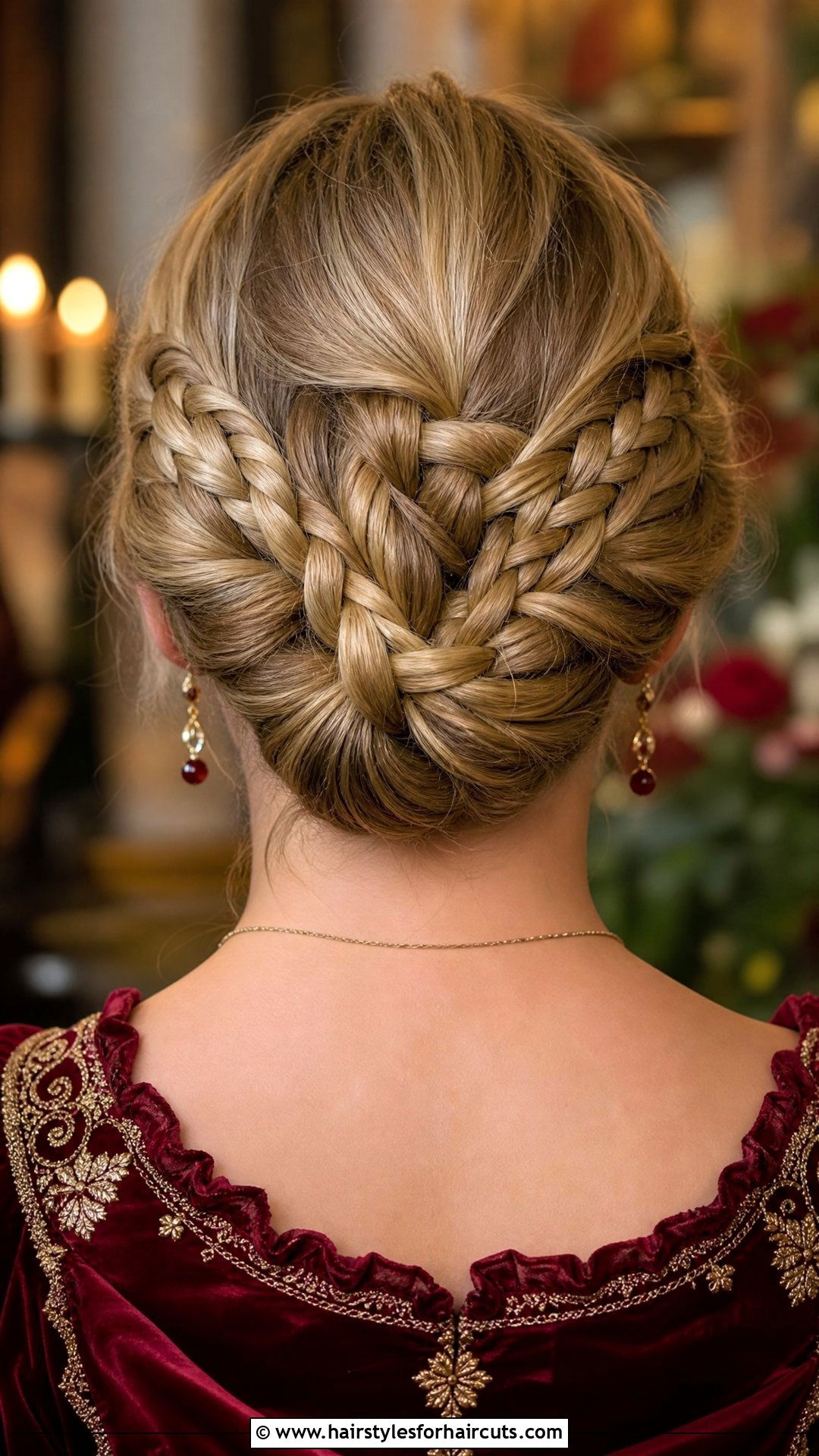
Ready to tackle a more advanced and visually striking style? The Renaissance triple braid updo is sure to turn heads. This look requires you to divide your hair into three separate sections, typically creating two side braids and one central braid. The center braid is rolled up to form the base of the updo, while the two side braids are crossed over it and pinned down to create a stunning interwoven design. This technique creates an incredibly sturdy and voluminous hairstyle that looks like a professional work of art. It was a popular choice for brides and high-ranking ladies during festival seasons. Make sure to gently pull apart the braids for a thicker, more impressive final silhouette.
21. Loose Side Braid With Ribbons
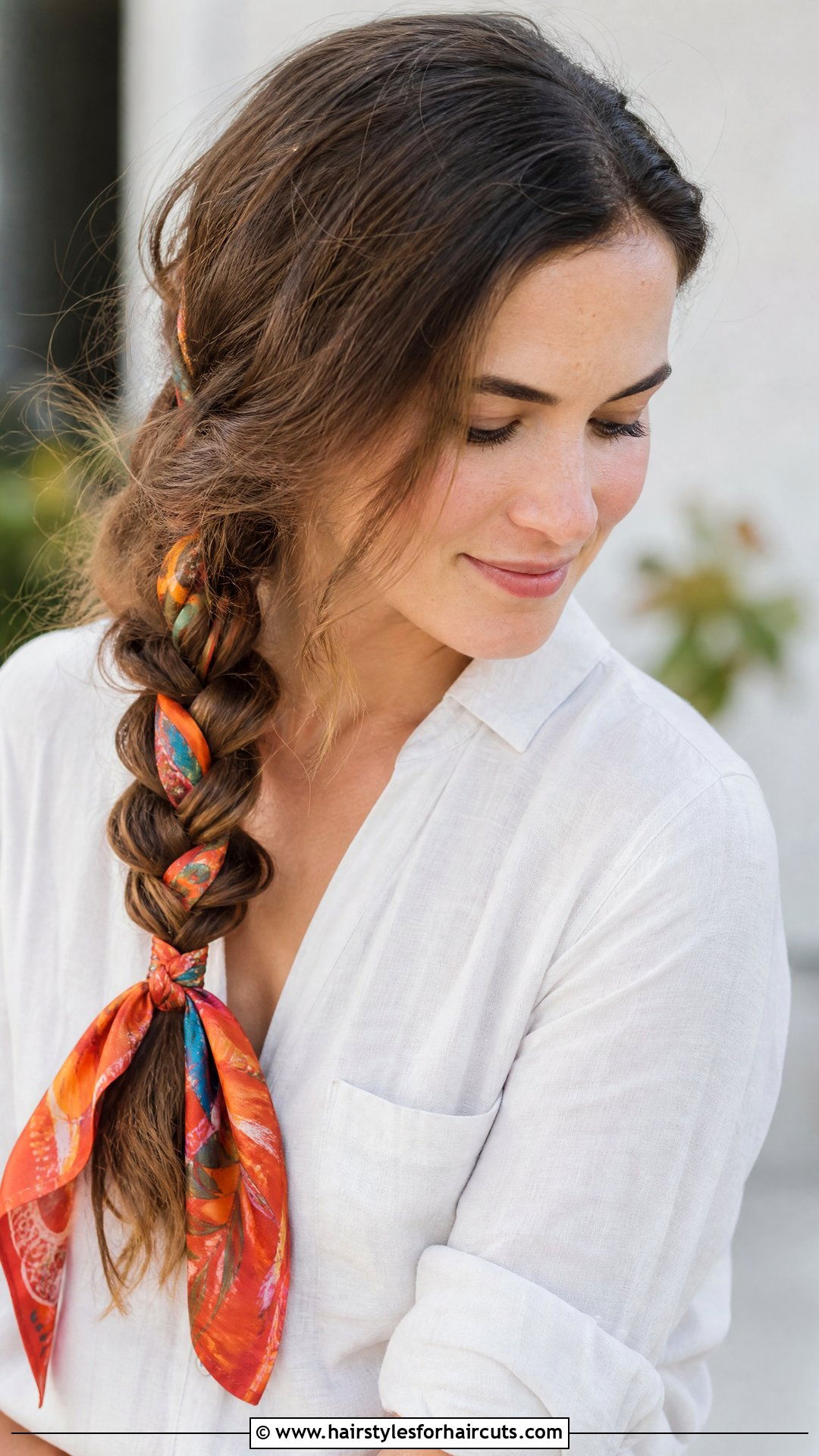
Want a relaxed hairstyle that still feels historically authentic? The loose side braid with ribbons is a charming option. While tight, structured braids were common for formal events, everyday wear often featured softer, more casual plaits. Draping the hair over one shoulder and weaving a silk ribbon directly into the braid adds an immediate pop of color and historical accuracy. The ribbon helps hold the braid together while making the style look intentionally decorative. This is particularly great for those with layers, as the loose, slightly messy texture forgives any shorter pieces that might slip out. Choose a ribbon that matches your outfit for a cohesive look. It is a breezy, romantic choice for any casual gathering.
22. Renaissance Top Knot
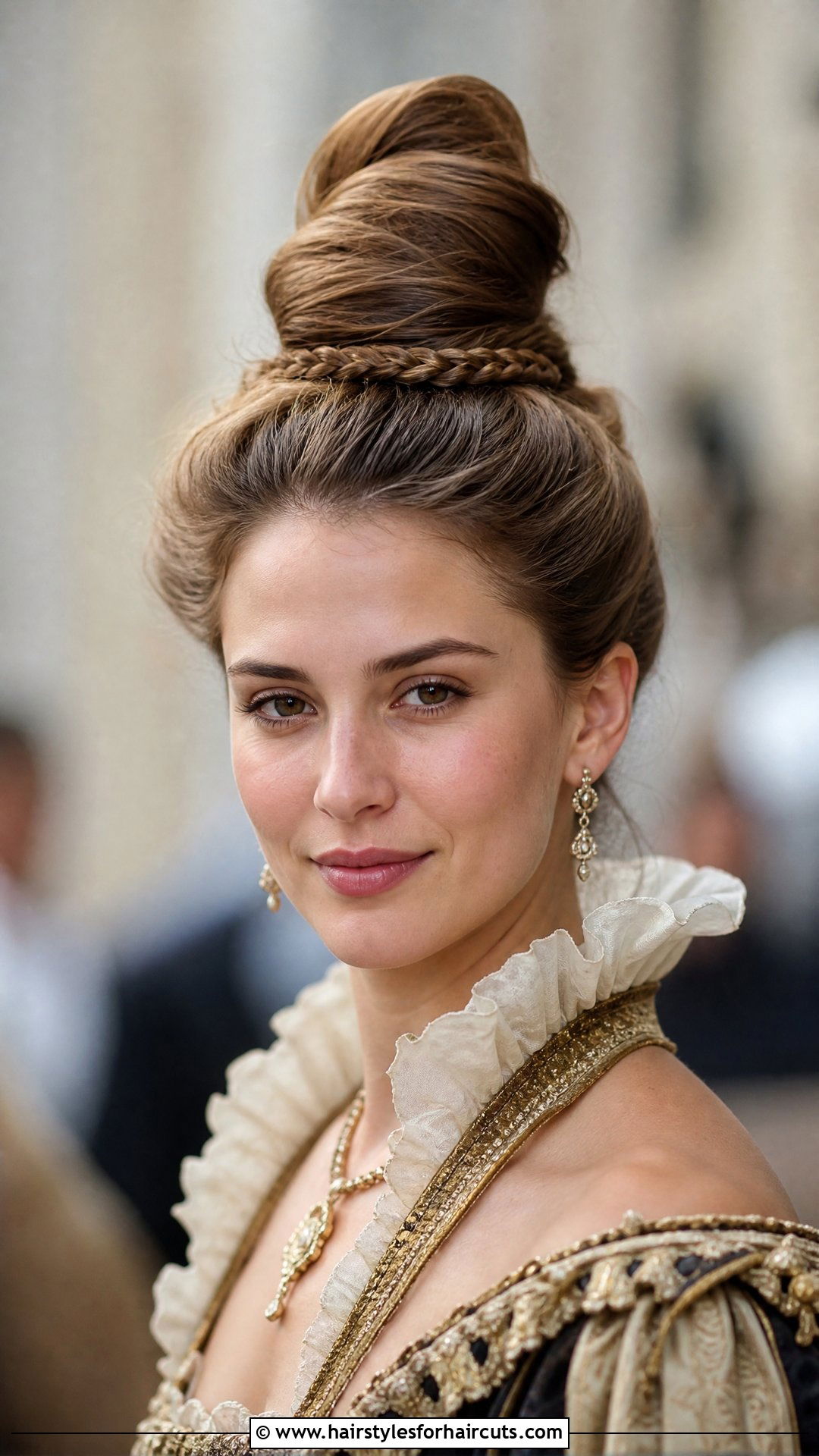
Is it possible for an updo to be both practical and fiercely striking? The Renaissance top knot answers with a resounding yes. While lower buns were more common, taller top knots were worn by specific regional groups and during later periods to create dramatic height. The hair is pulled straight up to the crown of the head and twisted into a tight, towering knot. This completely exposes the neck and the expensive ruffled collars of the era. A top knot requires strong hold and plenty of hairpins to stay securely upright. Wrapping a braided section around the base of the knot adds beautiful dimension. This bold style projects confidence and keeps you cool in warm weather.
23. Coiled Braid Crown
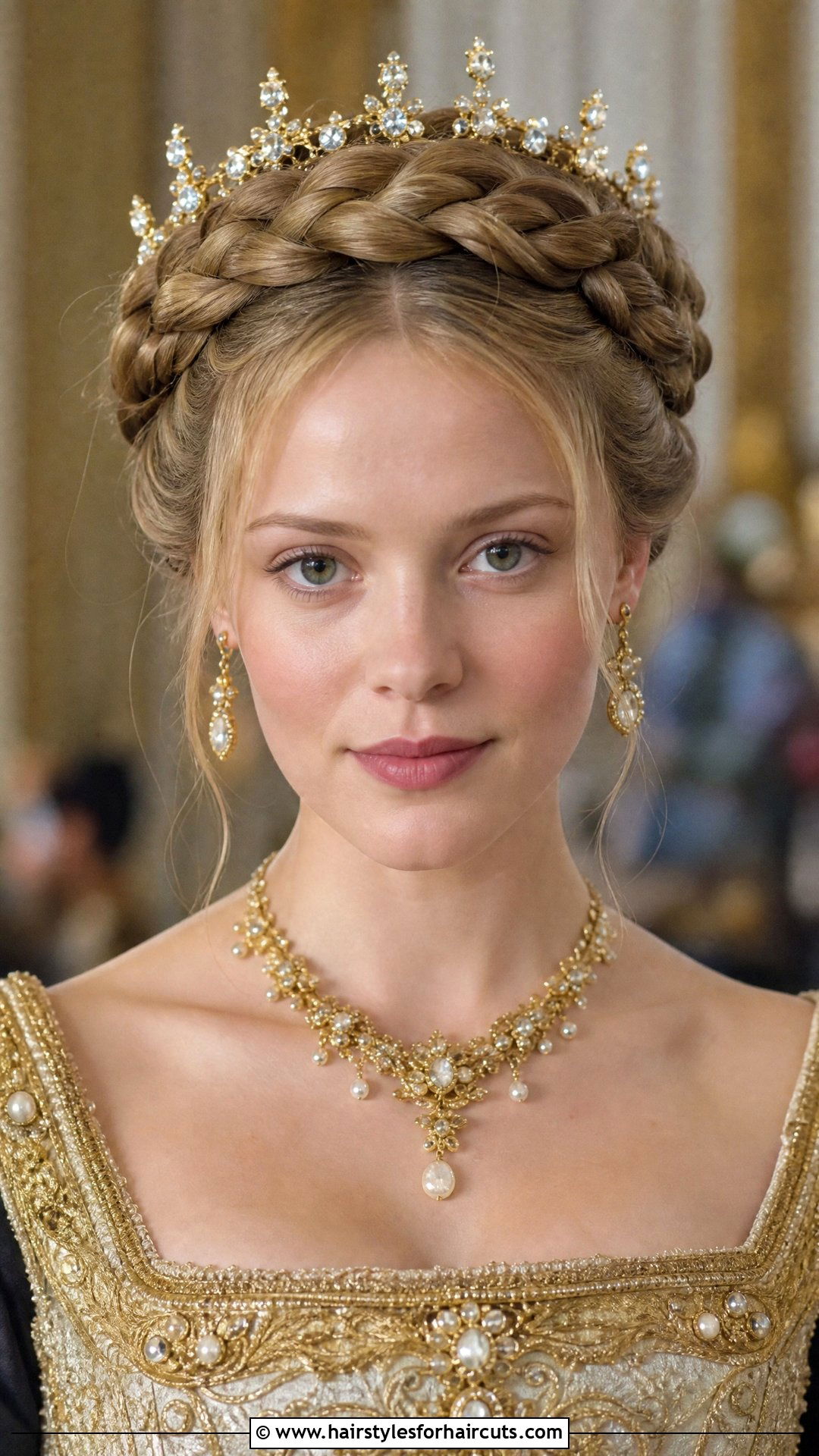
How can you make a standard braided crown look even more impressive? The coiled braid crown takes the basic concept to a whole new level. Instead of wrapping the braids horizontally around the head, the hair is braided in a single thick plait and then coiled flat against the top of the head like a basket. This creates a stunning, structured disc of hair that resembles a woven hat. It was an extremely sophisticated look favored by women of the Italian courts. This style works best with very long hair to ensure the coil covers the entire crown. Use long u-shaped hairpins to anchor the coil firmly to the scalp. It is a masterpiece of historical hairdressing.
24. Half Up Renaissance Braid With Flowers
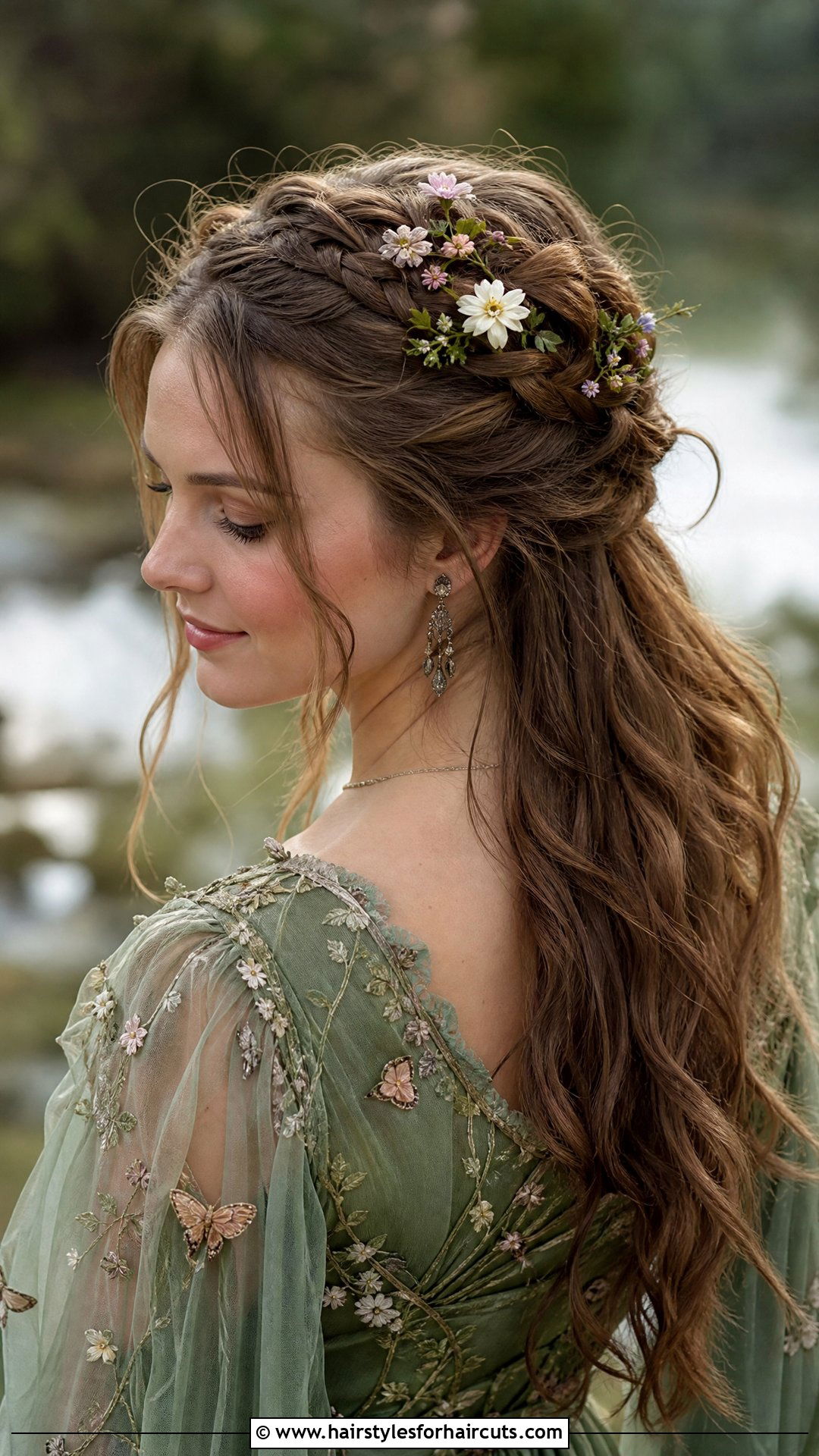
Are you dreaming of a fairy-tale look straight from a woodland celebration? The half up Renaissance braid with flowers captures that exact magic. This style starts with the top section of the hair pulled back and secured with a small French or Dutch braid. The rest of the hair flows freely in soft waves. The true beauty of this look lies in the addition of fresh or silk flowers tucked into the braid. Women frequently used seasonal blooms to decorate their hair for festivals and weddings. Weaving small floral stems into the loops of the braid ensures they stay secure all day long. This creates an enchanting, nature-inspired aesthetic that feels joyful, romantic, and deeply connected to historical traditions.
25. Taped Braided Updo

Need an unshakable hairstyle that will survive the most vigorous activities? The taped braided updo is the most secure option available. This technique combines the strength of braiding with the rigid hold of ribbon taping. The hair is first braided into tight plaits, then literally sewn or taped to the head using strong ribbons. The ribbons wrap around the braids and stitch them flat against the scalp, creating a sleek, immovable cap of hair. This was an essential practice for women engaging in physical labor or traveling. Modern dancers and performers often use this exact method to keep their hair flawless during routines. It is the ultimate blend of historical technique and modern practicality for absolute security.
Conclusion:
Exploring these 25 renaissance hairstyles reveals a world where hair was a profound expression of identity, artistry, and social standing. From the simple elegance of a center part with a veil to the jaw-dropping complexity of the coiled braid crown, there is a historical look for every skill level and occasion. The incredible ingenuity of these styles, relying on braids, twists, and ribbons rather than modern hot tools, is truly inspiring. By incorporating elements like pearl pins, sheer snoods, or fresh flowers, you can easily bring a touch of the 15th century into your modern life. Embrace the romance and craftsmanship of the past. Pick up your comb, grab some ribbons, and start creating your own beautiful history today.

Leave a Reply