
Exploring the elegance of the Edwardian era brings us to the fascinating world of 25 short hair 1900s hairstyles. During this transformative period, women began embracing shorter lengths for both practicality and high fashion. While long, voluminous updos were the standard, early cropped cuts and styled short hair emerged as bold statements of independence. These vintage looks combined soft femininity with structured shapes, creating iconic silhouettes that still inspire modern retro styling. From the fluffy pompadour to the early bobs and marcel waves, these hairstyles reflected a society on the brink of modern change. Discover how women styled their cropped locks with grace, pins, and plenty of creativity in this detailed historical guide.

1. Gibson Girl Pompadour Short Hair

Have you ever wondered how the iconic Gibson Girl adapted to shorter lengths? The Gibson Girl pompadour short hair look brought the famous voluminous top into a more manageable form. Women with jaw-length hair would tease the front sections to create that signature rounded lift over the forehead. The sides and back were smoothly pinned or tucked under to mimic a neat bun. This style captured the confident and athletic spirit of the Edwardian woman while keeping the hair off her neck. It perfectly balanced practicality with the romantic elegance that defined the era. Using a simple comb and a few hairpins, anyone could achieve this timeless volume today.
2. Edwardian Bouffant Bob

Stepping into a new century required a fresh look. The Edwardian bouffant bob offered a daring choice for women ready to chop their locks. Unlike the sleek bobs of the 1920s, this early version maintained significant volume. Hair was cut to the chin and backcombed extensively to achieve a rounded, fluffy appearance all around. The ends were often flipped under slightly using hot tongs. This created a soft frame for the face, making it highly flattering for various face shapes. It was a bold rejection of heavy, floor-length skirts and corsets, symbolizing a desire for movement and freedom. The style remains a gorgeous option for vintage enthusiasts seeking a romantic yet structured short cut.
3. 1900s Marcel Wave Short Hair
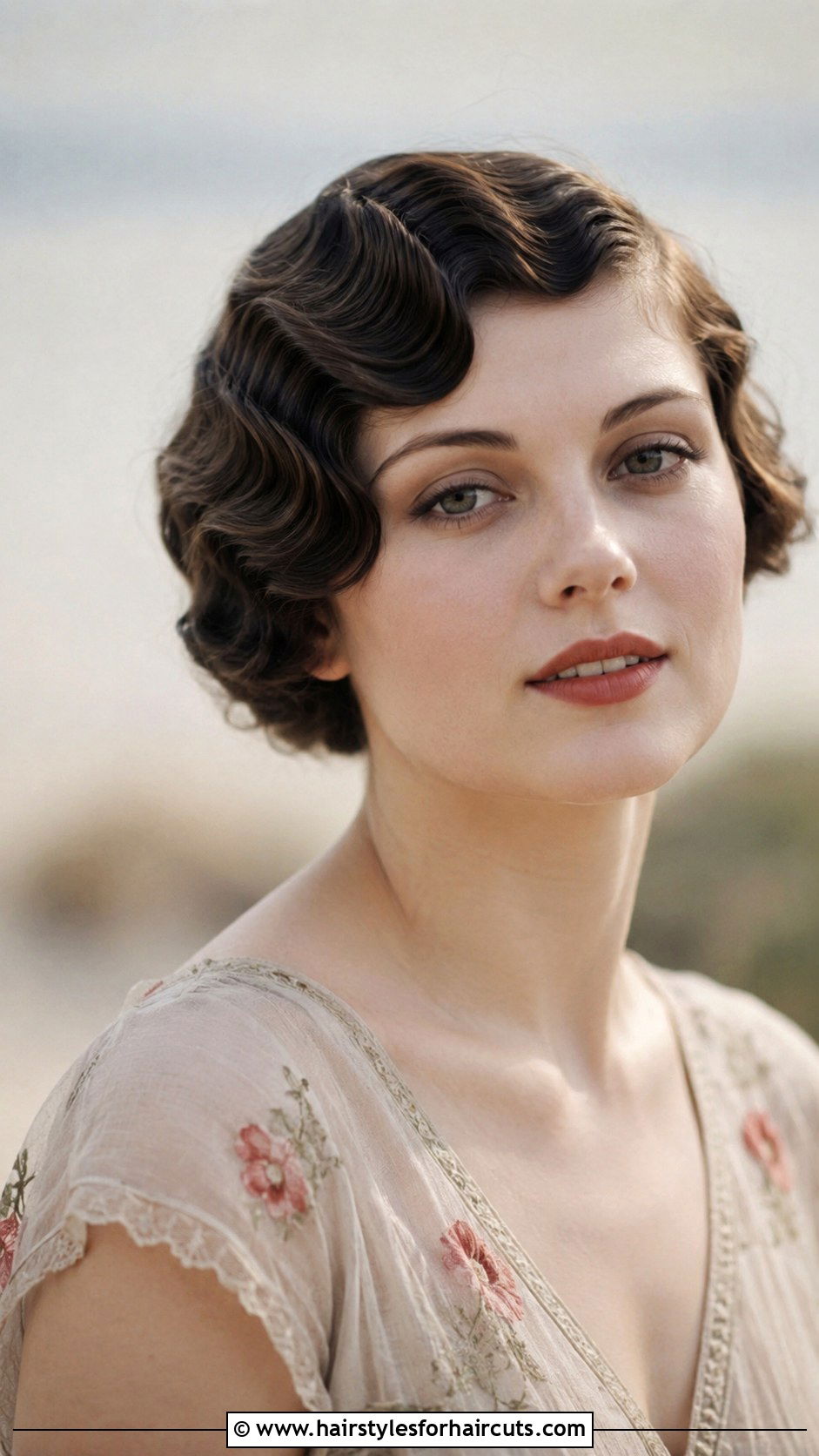
The unmistakable s-curve of the marcel wave added instant glamour to any cropped cut. With 1900s marcel wave short hair, women used heated curling irons to create deep, lasting waves that framed the face beautifully. On shorter hair, these waves were typically styled to sweep diagonally across the forehead and down the sides. The back was neatly tucked or gently waved to match the front. This technique provided a polished and sophisticated finish that caught the light perfectly. It was a staple for evening events and formal daytime outings alike. Mastering the iron was essential, as the precise temperature ensured those crisp, defined waves without causing damage to delicate strands.
4. Psyche Knot Short Hair

Nothing says classic romance quite like a soft, low bun. The psyche knot short hair variation allowed women with shorter lengths to participate in this elegant trend. Instead of a massive, elaborate knot at the nape, the hair was gathered into a small, rounded coil. Because the hair was short, the knot sat closer to the head, often supplemented with hair rats or pads to add fullness. Loose curls were deliberately pulled out around the face to soften the overall aesthetic. This created a deeply feminine and graceful silhouette that worked wonderfully for both day and evening wear. It proved that shorter hair could still achieve intricate and traditional updo styles with a little creativity.
5. Victorian Frizz Short Hair

Imagine framing your face with a cloud of soft, fuzzy curls. The Victorian frizz short hair style carried over into the early 1900s, offering a delicate and youthful appearance. Women used hot tongs or rag curlers to create tight, small curls all around the hairline and crown. On short hair, this resulted in a halo of texture that added incredible volume without the need for long lengths. The frizz was not seen as messy but rather as a sign of refined styling effort. It perfectly softened strong jawlines and added a touch of whimsy to everyday wear. This charming look remains an enchanting choice for anyone wanting to embrace true historical texture.
6. 1900s Poodle Cut

Have you ever considered a style that embraces tight, coiled volume? The 1900s poodle cut was a whimsical choice for women sporting early short hair. This look involved cutting the hair to ear level and setting it in tight, even curls all over the head. The uniform texture resembled the coat of a poodle, hence the name. It offered a remarkably bouncy and playful vibe that stood out against the more severe updos of the time. The fullness created by the tight curls made the hair appear incredibly thick and healthy. It was an incredibly practical option for active women, as the curls held their shape well throughout the day with minimal upkeep.
7. Edwardian Curl Pompadour

Picture a striking combination of height and texture. The Edwardian curl pompadour brought together the lift of a classic pompadour with the softness of pinned curls. Women with short hair would sweep the front sections upward and back, securing them with combs. The remaining hair at the sides and back was styled into loose, dangling curls or pinned under to form a faux bob. This half-up, half-down approach gave the illusion of length while keeping the hair securely off the neck. It was a highly versatile look that easily transitioned from a busy morning to an elegant evening affair. The contrast between the smooth front and the textured curls made this style truly unforgettable.
8. 1900s Wispy Updo Short Hair

Finding elegance in simplicity is a timeless pursuit. The 1900s wispy updo short hair style relied on the natural texture of the hair to create a soft, ethereal finish. Instead of rigidly structured rolls, the hair was loosely gathered and pinned at the back. Shorter layers naturally fell out, creating wispy tendrils around the face and nape. This effortless appearance was highly valued during the Edwardian era for casual daytime activities. It required fewer hairpins and less manipulation, making it a gentle option for delicate hair. The resulting look was romantic and approachable, proving that a relaxed style could still look incredibly chic and historically accurate for modern vintage fans.
9. Mary Pickford Curls Short Hair
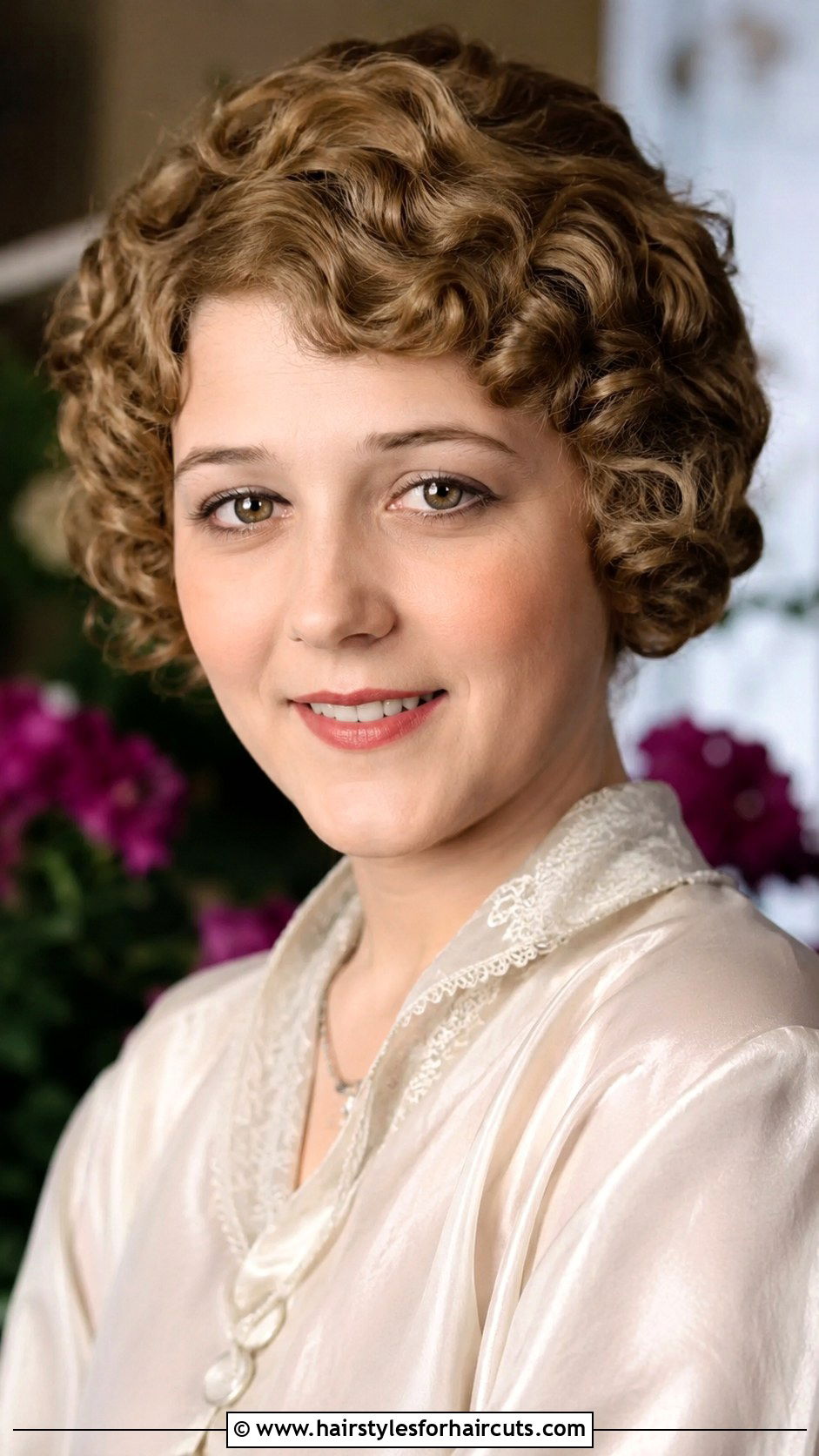
Who could forget the most famous curls of the silent screen? Mary Pickford curls short hair adaptations brought Hollywood glamour to everyday women. While Pickford was known for her long curls, women with short hair achieved a similar effect by pinning up the length and leaving a row of thick, barrel curls cascading around the face. The sides were smoothed back, allowing the front curls to take center stage. This look offered a sweet, innocent, yet deeply alluring aesthetic that defined early cinema beauty. It was particularly flattering for round faces, as the vertical lines of the curls elongated the features. Recreating this style today instantly adds a touch of starlet sophistication.
10. 1900s Side Part Short Hair

A simple change in the parting can transform an entire look. The 1900s side part short hair style offered a sleek and sophisticated alternative to centered looks. By parting the hair deeply to one side, women created instant asymmetry and volume on the larger side. The hair was then smoothly combed over the forehead in a gentle wave, tucking neatly behind the ear. The back was rolled or pinned under neatly. This style felt very modern and professional, making it a favorite for working women and travelers. It provided a clean silhouette that highlighted the cheekbones and jawline beautifully. The side part remains an effortlessly chic way to wear short hair today.
11. Edwardian Feathered Short Hair

Can short hair look both soft and structured? The Edwardian feathered short hair style proves it is entirely possible. This look involved cutting the hair into short layers and curling them very loosely. The curls were then brushed out until they formed soft, feather-like waves that floated around the head. This technique removed bulk while maintaining a light, airy texture that moved gracefully. It was a refreshing departure from the heavy, solid hairstyles of the Victorian era. The feathered effect added a youthful energy to the wearer, making it a popular choice for summer outings. It requires minimal styling products, allowing the hair’s natural movement to shine through beautifully.
12. 1900s Fluffy Pompadour

Think of the ultimate symbol of Edwardian volume. The 1900s fluffy pompadour took the standard pompadour to new heights by embracing maximum lift and texture. Women with short hair would use backcombing and pads to create a massive, rounded shape at the front. The key to the fluffy look was lightly brushing the surface to smooth it without pressing down the volume. The back was styled into a tidy roll or cluster of curls. This exaggerated style was a favorite for high-society portraits and formal galas. It conveyed confidence and a strict adherence to the era’s beauty standards. The fluffy pompadour makes a dramatic statement for any vintage recreation event.
13. Edwardian Center Part Bob

Symmetry brings a unique balance to any face. The Edwardian center part bob was a sleek, early adaptation of the bobbed trend. Hair was cut straight along the jawline and parted precisely down the middle. The sides were tucked behind the ears or allowed to curve inward slightly. This look was incredibly ahead of its time, hinting at the sleeker bobs that would dominate the next decade. It projected an image of intellectual seriousness and modern thinking. The center part highlighted the eyes and nose, making it a striking choice for those with symmetrical features. It remains a minimalist and highly sophisticated short hair option for modern women.
14. 1900s Rolled Short Hair

Mastering the art of the roll can change your entire styling routine. The 1900s rolled short hair technique involved taking sections of hair and rolling them inward toward the scalp. Women would create rolls along the sides and back, forming a structured, architectural shape. Because the hair was short, these rolls were smaller and more delicate than those on long hair. They were secured with pins to create a clean, sculpted finish. This style was perfect for keeping hair completely off the face and neck during warm weather or physical activities. It offered a neat and polished appearance that lasted all day, reflecting the meticulous grooming habits of the era.
15. Gibson Tuck Short Hair

Ever wished for a quick way to look effortlessly elegant? The Gibson tuck short hair method provided an ingenious solution. This style involved creating a soft, face-framing pouf at the front, then tucking the remaining length up and inside itself at the nape. For short hair, the tuck was shallower, resulting in a charming, small roll at the back. It was a clever way to simulate an updo without needing long, heavy hair. The look was casual yet refined, perfect for afternoon tea or a walk in the park. The simplicity of the Gibson tuck made it accessible to women who lacked professional styling tools but still desired a fashionable outcome.
16. 1900s Curly Pixie Crop

Step away from the ordinary with a daringly short cut. The 1900s curly pixie crop was an incredibly rare but striking choice for the bravest women. Hair was cropped close to the head, leaving just enough length to form tight, defined curls on top. The sides and back were cut shorter to emphasize the volume at the crown. This style was often seen on actresses and performers who needed to wear wigs easily. It was highly liberating, freeing the wearer from the heavy styling routines of the time. Today, this look stands out as a bold, beautiful tribute to early rebellious fashion and remains a fierce, low-maintenance styling choice.
17. Edwardian Swirl Short Hair

Creating movement in short hair requires skillful placement. The Edwardian swirl short hair style achieved this by molding the hair into continuous, sweeping curves across the head. Instead of distinct waves or curls, the hair was brushed and pinned into one large, elegant swirl. This often started at the crown and circled down to the nape. The smooth, unbroken lines gave the illusion of longer, flowing hair. It was a masterclass in styling, requiring strong holding pins and a careful hand. The swirl added a touch of artistic flair to everyday life, elevating a simple short cut into a work of art that captured the romantic essence of the period.
18. 1900s Chignon Bob

Blending two distinct concepts creates something entirely new. The 1900s chignon bob combined the structured jawline of a bob with the gathered elegance of a chignon. Women would cut their hair to the chin but leave the back slightly longer to form a tiny, low knot. This small chignon rested right at the nape, adding interest to the classic bob shape. It was a highly practical style for keeping the collar clean while maintaining a sense of proper dress. The slight disconnection between the bob front and the knotted back felt very modern. This hybrid look is perfect for anyone wanting the ease of a bob with the formality of an updo.
19. Edwardian Finger Wave Short Hair

Sculpting hair without heat is an art form. Edwardian finger wave short hair styling relied solely on the fingers, a comb, and setting lotion. Women pressed the hair into deep s-shaped waves that lay flat against the head. On short hair, these waves usually framed the face and ended at the cheekbones. The sleekness of this style highlighted the facial features dramatically. It was the pinnacle of sophisticated grooming, often worn under elaborate hats. The precise, undulating lines created a highly polished and glamorous appearance that required no backcombing. Learning to mold these waves is a fantastic way to achieve authentic vintage glamour with very short hair today.
20. 1900s Puff Short Hair

Softness and volume were the ultimate goals for many Edwardian women. The 1900s puff short hair style focused on creating small, rounded puffs of hair all over the head. Short hair was sectioned, lightly backcombed, and smoothed into little cloud-like shapes. These puffs were arranged symmetrically to create a halo of volume. This style was incredibly effective for making thin hair look remarkably thick and luxurious. It also provided a lovely foundation for securing hats, which were massive at the time. The puffs gave the wearer an angelic, delicate look that perfectly matched the lacy, high-necked dresses of the day. It remains a sweet and intricate vintage styling option.
21. Irene Castle Bob

Nothing revolutionized short hair quite like a dance icon. The Irene Castle bob became a national sensation when the famous dancer cut her hair for convenience before an appendectomy. This early bob was cut to ear level and featured soft, natural waves rather than stiff curls. It allowed for easy movement, perfectly suiting the energetic dances of the 1910s. The style quickly became synonymous with modernity, freedom, and youthful rebellion. Women loved how easy it was to wash and maintain compared to long hair. The Castle bob remains a legendary cut, offering an effortlessly chic and bouncy look that flatters almost every face shape and hair texture.
22. 1900s Pin Curl Short Hair

Achieving flawless curls overnight is a classic styling dream. The 1900s pin curl short hair technique was the secret to beautiful, bouncy curls without daily heat damage. Women would divide their damp short hair into small sections, twist each into a tight coil, and pin it flat against the scalp. After sleeping on the set, the pins were removed to reveal tight, springy curls. These could be brushed out for soft waves or left intact for a textured look. This method was essential for maintaining the elaborate styles of the era. It remains a fantastic, heatless way to achieve long-lasting vintage curls on any short haircut today.
23. Edwardian Ducktail Short Hair

Looking for a style with a bit of edge? The Edwardian ducktail short hair look offered a unique silhouette at the nape of the neck. While the front and sides were smoothed or waved, the hair at the back was parted down the center and folded inward on both sides. This created a shape resembling a duck’s tail. It was a neat and tidy way to finish a short cut, ensuring no stray hairs escaped. The style kept the focus on the face and the front volume while maintaining a highly polished back. It is an excellent detail to add to a short vintage cut for a truly authentic historical finish.
24. 1900s Voluminous Curl Short Hair

Embracing natural body was key to this stunning look. The 1900s voluminous curl short hair style relied on large, thick curls to create maximum impact. Instead of tight ringlets, women used large rollers or tongs to create broad, sweeping curls. On short hair, this resulted in a rounded, full silhouette that felt incredibly glamorous. The curls were arranged to frame the face generously, often swept to one side. This style was perfect for evening events, catching the light beautifully and adding a sense of grand drama. It proved that short hair could be just as luxurious and imposing as the most elaborate long styles of the era.
25. Edwardian Side Sweep Short Hair
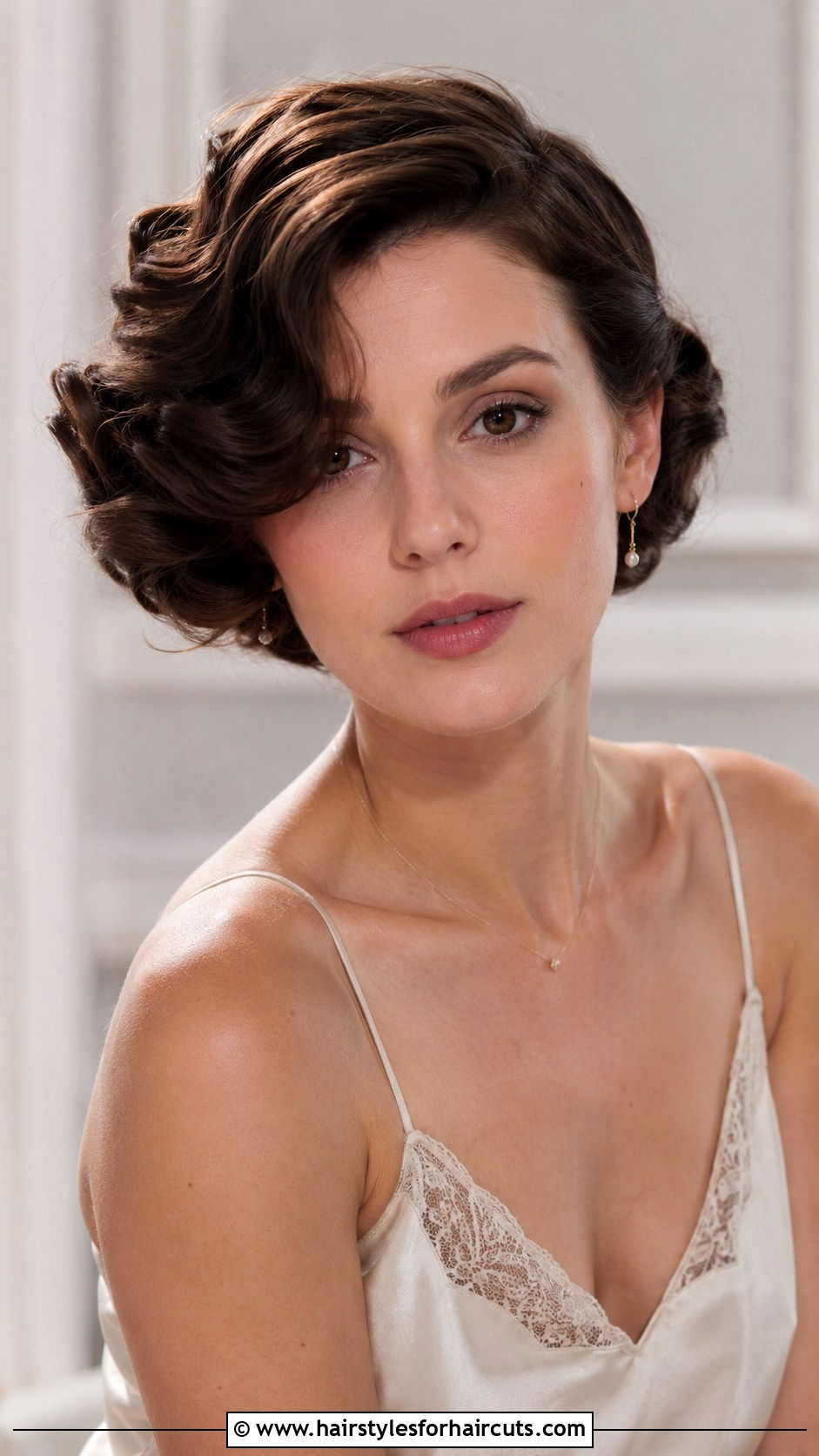
Asymmetry always adds a touch of intrigue. The Edwardian side sweep short hair look involved pushing all the hair to one side to create a dramatic cascade. A deep side part was essential, with the heavier side featuring large marcel waves falling over the ear. The lighter side was pinned back tightly to contrast the volume. This created a beautiful, unbalanced harmony that highlighted the cheekbones and neck. It was a highly sophisticated look, often adorned with decorative combs or pins on the sleek side. The side sweep remains a timeless technique for adding instant glamour and vintage flair to any modern short haircut.
Conclusion:
Exploring these 25 short hair 1900s hairstyles reveals a fascinating era of transition and bold self-expression. While the Edwardian period is often remembered for its massive, flowing updos, these shorter styles prove that women were already seeking convenience and modernity. From the iconic Irene Castle bob to the intricate Gibson tuck, these vintage looks offer endless inspiration for today’s styling. They show us that short hair can be deeply romantic, incredibly voluminous, and strikingly elegant. Whether you want to add finger waves to your pixie cut or try a fluffy pompadour, history provides a wealth of beautiful options. Embrace the charm of the past and let these timeless short hairstyles elevate your everyday look.

Leave a Reply