
When exploring the rich history and stunning artistry of global hair traditions, discovering 25 tribal hairstyles reveals a world of deep cultural significance and breathtaking creativity. These iconic looks are much more than simple fashion statements. They serve as powerful symbols of identity, age, status, and community heritage. From intricate braided patterns that map out ancient stories to majestic sculpted knots worn during ceremonial events, each style carries a profound legacy. Today, these traditional techniques continue to inspire modern hair trends, blending ancestral pride with contemporary flair. Whether you want to honor your roots or simply appreciate the remarkable craftsmanship behind these global traditions, this comprehensive guide will walk you through some of the most visually striking and meaningful historical and modern indigenous hair designs.
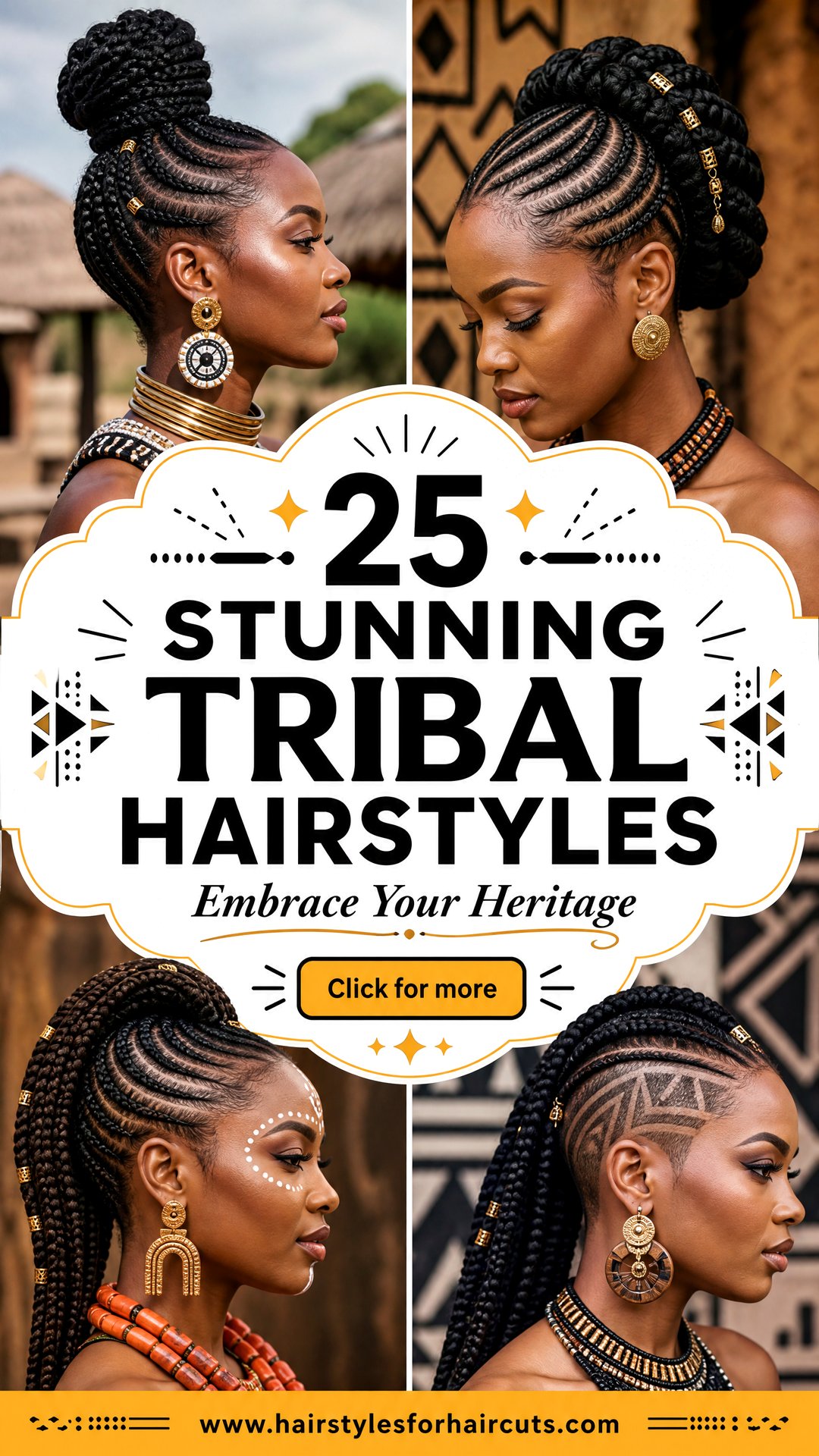
1. Fulani Tribal Braids

Have you ever admired those beautifully intricate braids cascading down the sides of the face? Fulani tribal braids are a stunning traditional hairstyle originating from the Fulani people of West Africa. This distinctive look features a central braid or twist running down the middle of the head, paired with side-swept braids hanging gracefully along the temples. Often adorned with colorful beads, cowrie shells, or metallic rings, this style beautifully highlights the facial structure while keeping hair neatly secured. The symmetrical or asymmetrical patterns woven into the scalp reflect family traditions and personal identity. Today, this versatile protective style remains incredibly popular, offering an elegant way to celebrate African heritage while enjoying a practical, visually captivating everyday look.
2. Bantu Knots Hairstyle

There is something undeniably powerful about a hairstyle that makes a bold sculptural statement. The Bantu knots hairstyle is a classic African tribal look created by sectioning the hair, twisting it, and wrapping it into small, spiraled buns across the scalp. Originating from the Zulu people of Southern Africa, these striking knots are not only visually captivating but also highly functional. They serve as a fantastic protective style that locks in moisture and minimizes breakage. When unraveled, they also create gorgeous, heat-free curls known as a Bantu knot-out. Worn proudly as a symbol of heritage and strength, this iconic look continues to be a favorite for anyone wanting to embrace a fierce, culturally rich aesthetic.
3. Zulu Top Knot

Imagine a hairstyle so grand it immediately commands respect and admiration. The Zulu top knot is exactly that, traditionally worn by Zulu men and unmarried women as a symbol of status and age. This striking look involves carefully gathering the hair at the very crown of the head and sculpting it into a prominent, upright bun. The hair is heavily conditioned and molded to maintain its impressive height and structure, often using a special red ochre mixture for traditional ceremonies. The silhouette is sharp, proud, and deeply connected to the warrior spirit of the Zulu nation. Modern interpretations often keep the majestic central focus, offering a bold, minimalist statement that honors a profound historical legacy.
4. Tribal Mohawk Braid

What happens when you combine the fierce edge of a modern punk aesthetic with deep indigenous roots? You get the tribal mohawk braid, a striking hybrid style that turns heads everywhere. Historically, tribes like the Mohawk and other Native American groups shaved the sides of the head while leaving a dramatic strip of hair down the center, signifying readiness for battle. Today, this powerful look is often achieved without cutting the hair by tightly cornrowing the sides flat against the scalp. The central strip of hair is then braided, twisted, or left loose to run from the forehead to the nape. It is a defiant, bold expression of strength and individuality that bridges ancient warrior traditions with modern street style.
5. Maasai Beaded Braids

Can a hairstyle double as a breathtaking piece of art? Maasai beaded braids certainly prove that it can. The Maasai people of East Africa are renowned for their vibrant, intricate beadwork, and they seamlessly weave this artistry into their hair. Long, thin braids are meticulously crafted and heavily adorned with colorful glass beads that form stunning patterns along the length of the hair. The beads are not just decorative; they communicate the wearer’s age, social status, and marital standing within the community. The weight of the beads creates a rhythmic swaying motion, adding dynamic movement to the look. This gorgeous style is a true celebration of color, community, and cultural storytelling.
6. Himba Ochre Locs

The rich scent of otjize paste and the glowing red hue of the desert immediately come to mind with Himba ochre locs. Worn by the Himba women of Namibia, this iconic tribal hairstyle is deeply tied to their environment and beauty standards. The hair is thickly coated with a mixture of butter, fat, and red ochre pigment, creating striking crimson dreadlocks that frame the face and cascade down the shoulders. The paste protects the hair from the harsh sun and keeps it clean in the arid climate. The locs are often styled into intricate shapes, with a clay-covered headband adding structure. This beautiful, earthy look represents a profound connection to the land and ancestral traditions.
7. Tribal Cornrow Updo

Why settle for simple straight-back braids when you can elevate them into a magnificent work of art? The tribal cornrow updo takes traditional African braiding techniques and weaves them into complex, elevated patterns that sit beautifully off the neck. Cornrows are braided close to the scalp in geometric, curved, or swirling designs, then gathered and pinned into a regal updo at the crown or back of the head. This style is incredibly versatile, allowing for endless creativity in the parting designs and the final shape of the updo. It is a perfect choice for formal occasions or hot weather, keeping the hair secure while showcasing the stunning, architectural beauty of indigenous braiding traditions.
8. Wodaabe Braided Crown

Picture a hairstyle that frames the face like a beautifully crafted helmet of intricate weaves. The Wodaabe braided crown is a spectacular traditional look from the Wodaabe people, a nomadic group in West Africa. Known for their elaborate beauty rituals, both men and women wear this striking style. The hair is carefully braided into long, tight cornrows that follow the curve of the head, often meeting at the center or cascading down the back. Sometimes, the braids are wrapped around the head to form a literal crown, emphasizing facial symmetry and bone structure. This majestic look is often adorned with beads or cowrie shells, highlighting the deep cultural emphasis on physical beauty and elegant presentation.
9. Amasunzu Hairstyle

Have you ever seen hair sculpted into the shape of a crescent moon? The Amasunzu hairstyle is a highly distinctive, geometric look traditionally worn by unmarried Rwandan men and women. This incredible style involves sculpting the hair into rigid, crescent-shaped crests that run along the center of the head, leaving the sides closely cropped or shaved. The sharp, angled ridges mimic the horns of a bull or the undulating curves of a landscape. Creating this look requires immense skill, patience, and precise cutting techniques to maintain the rigid structure. It is a profound symbol of youth, bravery, and social standing, representing one of the most architecturally complex and visually striking tribal hairstyles in African history.
10. Tribal Box Braids With Beads

There is a timeless joy in hearing the soft click of beads swaying with every step you take. Tribal box braids with beads combine the classic, versatile box braid technique with rich, ancestral adornments. While box braids originate from Southern African traditions, adding beads, shells, or metal cuffs elevates them into a distinctly tribal statement. The beads are strategically placed at the ends or woven throughout the braids to add weight, texture, and a rhythmic sound. This style allows for incredible personal expression, as the color and type of beads can signify different cultural meanings or simply match a personal aesthetic. It remains a deeply cherished protective style that beautifully honors historical roots.
11. Edambra Horn Hairstyle

What if a hairstyle could instantly communicate your place in the world? The Edambra horn hairstyle is a magnificent tradition of the Mangbetu people of the Congo, where the hair is sculpted to mimic the shape of a curved horn. This unique look is achieved by wrapping the hair around a woven frame or applying a stiffening paste to hold the structure firmly in place. The elegant, sweeping curve of the horn protrudes gracefully from the crown, representing the peak of physical beauty and high social status. This breathtaking architectural style highlights the incredible ingenuity of tribal hair sculpting, turning the human head into a living canvas that celebrates cultural pride and sophisticated artistry.
12. Native American Tribal Braids
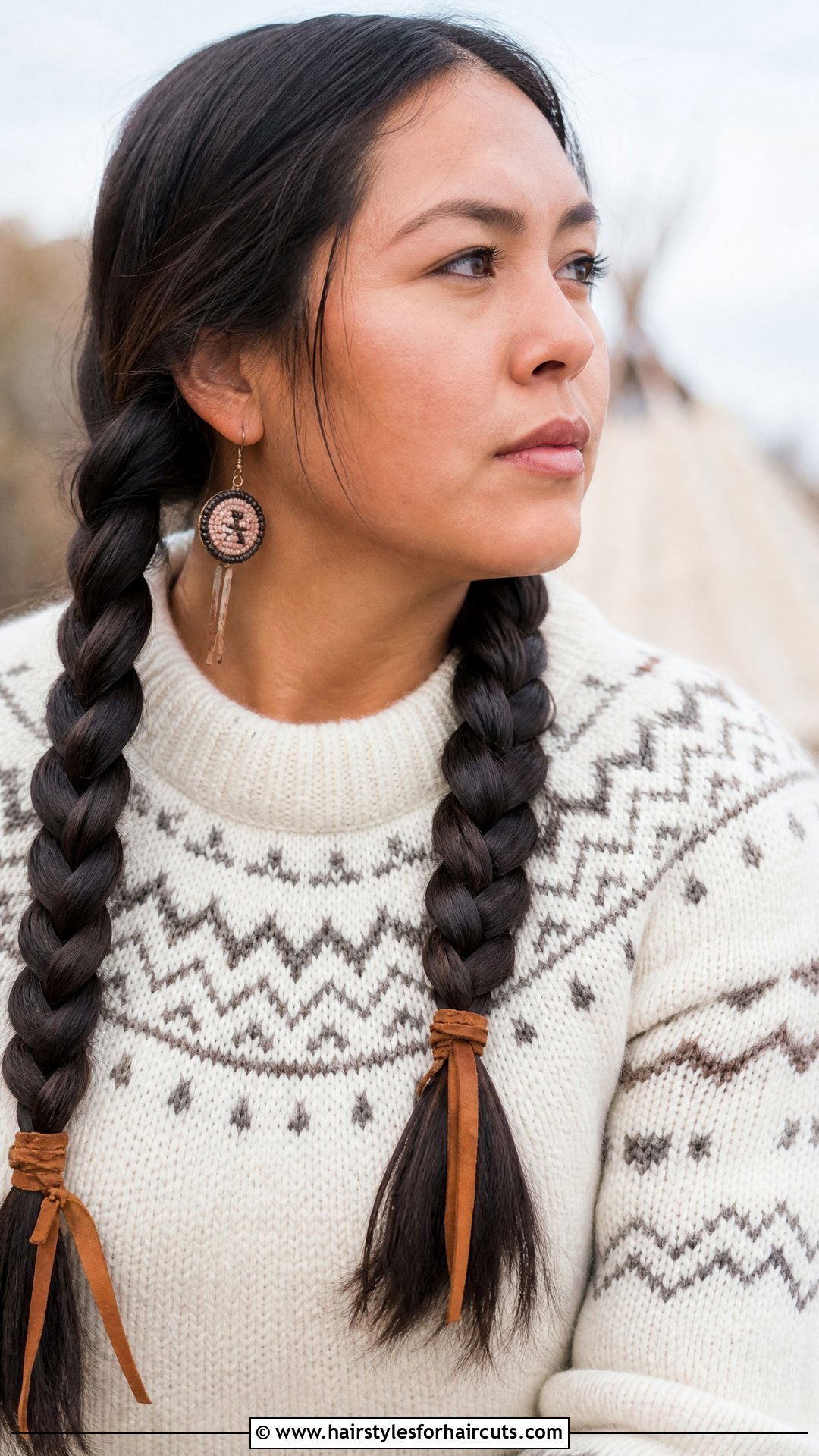
The gentle sweep of thick, glossy braids falling over the shoulders evokes a deep sense of heritage and connection. Native American tribal braids are perhaps one of the most recognizable indigenous styles, traditionally worn by many tribes across North America. The hair is typically parted down the middle and braided into two long, thick plaits, often tied with leather strips, feathers, or beadwork. For many nations, hair is considered sacred, and the act of braiding represents unity of mind, body, and spirit. While the basic two-braid structure is common, the specific adornments and wrapping techniques differ among tribes. This beautiful, simple style remains a powerful emblem of indigenous identity and respect.
13. Tribal Goddess Locs

Have you been searching for a protective style that feels both ethereal and deeply grounded? Tribal goddess locs offer a bohemian-inspired twist on traditional dreadlocks, blending ancient techniques with modern elegance. Unlike standard locs, goddess locs are created using a crochet method or wrapping technique that leaves the ends loose and wavy, giving the hair a soft, romantic silhouette. The roots and body of the locs often feature intricate curly accents that peek through the wrapped sections. This style pays homage to the Rastafarian and African tribal traditions of loccing while adding a touch of contemporary flair. They are lightweight, versatile, and perfect for anyone wanting a majestic, free-spirited aesthetic.
14. Swazi Bun Hairstyle

There is an undeniable grace in a hairstyle that is both meticulously crafted and wonderfully practical. The Swazi bun hairstyle, traditionally worn by women in Eswatini, is a perfect example of this balance. The hair is carefully gathered at the back of the head and formed into a large, neat, spherical bun. It is often secured with a colorful scarf or traditional headwrap that adds a vibrant pop of color and keeps the style firmly in place. This elegant look is deeply embedded in Swazi culture, often indicating marital status and respect for tradition. It keeps the wearer cool in the heat while presenting a polished, dignified appearance that beautifully celebrates cultural heritage.
15. Igbo Half Moon Updo

Can you imagine sculpting your hair into a perfect crescent shape? The Igbo half moon updo is a breathtaking traditional hairstyle from the Igbo people of Nigeria. This style features the hair meticulously shaped into a curved, arching crest that wraps around the head, resembling the delicate curve of a half moon. The hair is often treated with palm oil and shaped using a wooden carving tool to achieve the desired rigid, sculptural form. Sometimes, the crest is adorned with intricate carvings or decorative pins. This magnificent updo is traditionally worn by married women of high status during important cultural festivals, serving as a stunning representation of beauty, wealth, and community respect.
16. Tribal Shaved Sides With Braids
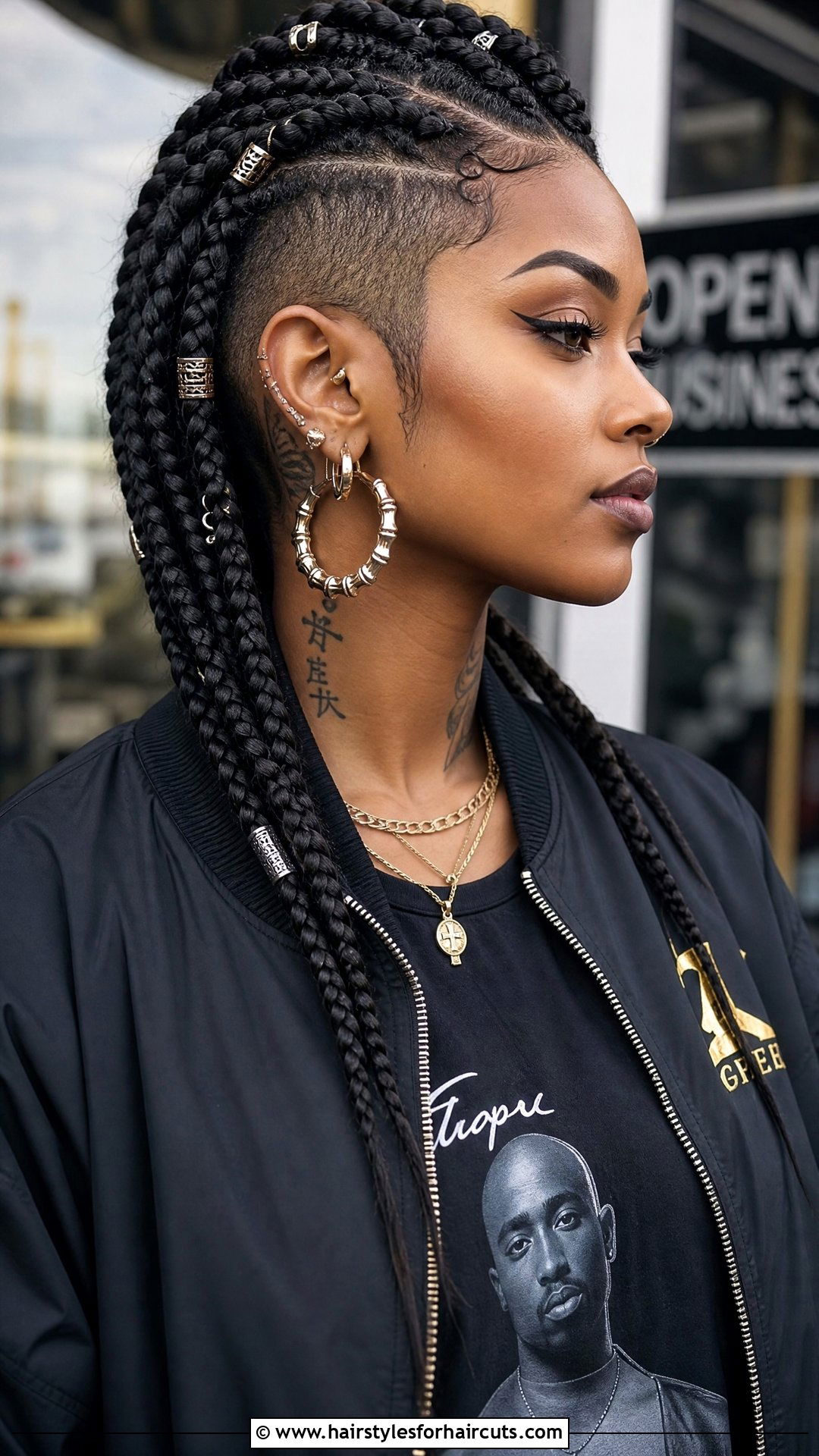
What could be more striking than the bold contrast between a smooth shave and intricate woven patterns? Tribal shaved sides with braids offer a fierce, modern take on traditional warrior aesthetics. This style draws inspiration from historical indigenous practices where shaving the head signified readiness for battle or a rite of passage. Today, the sides and back are buzzed close to the scalp, while the longer hair on top is styled into long braids, dreadlocks, or a central mohawk. The sharp contrast highlights the scalp and the texture of the braids, creating an edgy, high-impact look. It is a fantastic choice for those wanting a low-maintenance, bold style that radiates confidence and strength.
17. Mursi Lip Plate Braided Crown

The sight of a beautifully framed face surrounded by complex, tight weaves is truly unforgettable. The Mursi lip plate braided crown originates from the Mursi people of Ethiopia, known for their striking lip plates. The hair is styled into a series of incredibly tight, intricate micro-braids that are often gathered and woven into a thick, elaborate crown around the head. This braided structure provides a stunning, textured contrast to the facial adornments. The crown keeps the hair off the neck in the intense heat while serving as a marker of cultural identity and resilience. It is a deeply impressive style that showcases remarkable braiding artistry and cultural endurance.
18. Hamar Braided Ochre Bun

The striking color of red earth stands out vividly against the bright sun of East Africa. The Hamar braided ochre bun is a signature look for the women of the Hamar tribe in Ethiopia. The hair is first heavily coated with a mixture of fat and red ochre, giving it a vibrant, earthy crimson glow. It is then twisted into thick, heavy dreadlocks and gathered into a thick bun at the back of the head. Often, the bun is adorned with bright beads or cowrie shells for extra visual impact. This rich, textured style not only protects the hair from the harsh environment but also serves as a beautiful emblem of tribal belonging and womanhood.
19. Tribal Lemonade Braids

Have you ever wanted a style that sweeps effortlessly to one side like a waterfall? Tribal lemonade braids take the popular side-swept cornrow trend and infuse it with traditional African patterns. Popularized globally but rooted in deep braiding traditions, these braids are carved into intricate, curving parts that flow elegantly from one side of the head to the opposite shoulder. The addition of tribal elements, such as zigzag parts, beads, or metallic cuffs, transforms this modern style into a tribute to indigenous artistry. The lightweight, protective nature of these braids makes them incredibly comfortable to wear, while the flawless, symmetrical patterns ensure you turn heads wherever you go.
20. Yoruba Braided Crest

There is a regal quality to a hairstyle that stands tall and commands absolute attention. The Yoruba braided crest is a magnificent traditional style from the Yoruba people of Nigeria, historically worn by kings, warriors, and high-ranking individuals. The hair is meticulously braided or sculpted into a high, prominent ridge running from the forehead to the nape, creating a majestic silhouette. The braiding technique involves carefully wrapping the hair around a core or using stiffening agents to keep the crest standing upright. This towering style symbolizes power, authority, and a deep connection to the spiritual realm. It remains an awe-inspiring example of how hair can be transformed into a crown of cultural pride.
21. Tribal Faux Locs Updo

Why wear your locs down when you can pile them up into a breathtaking, regal masterpiece? The tribal faux locs updo combines the trendy, accessible nature of faux locs with the sophisticated elegance of traditional African updos. The locs are installed using synthetic extensions, then carefully gathered, twisted, and pinned into a towering bun or braided crown at the top of the head. This style allows for incredible versatility, as the locs can be styled into intricate loops, swoops, and cascading curves. Adorned with wooden beads or gold cuffs, this updo offers a striking, protective way to embrace the look of dreadlocks while maintaining a polished, culturally inspired aesthetic for special events.
22. Karo Braided Bun
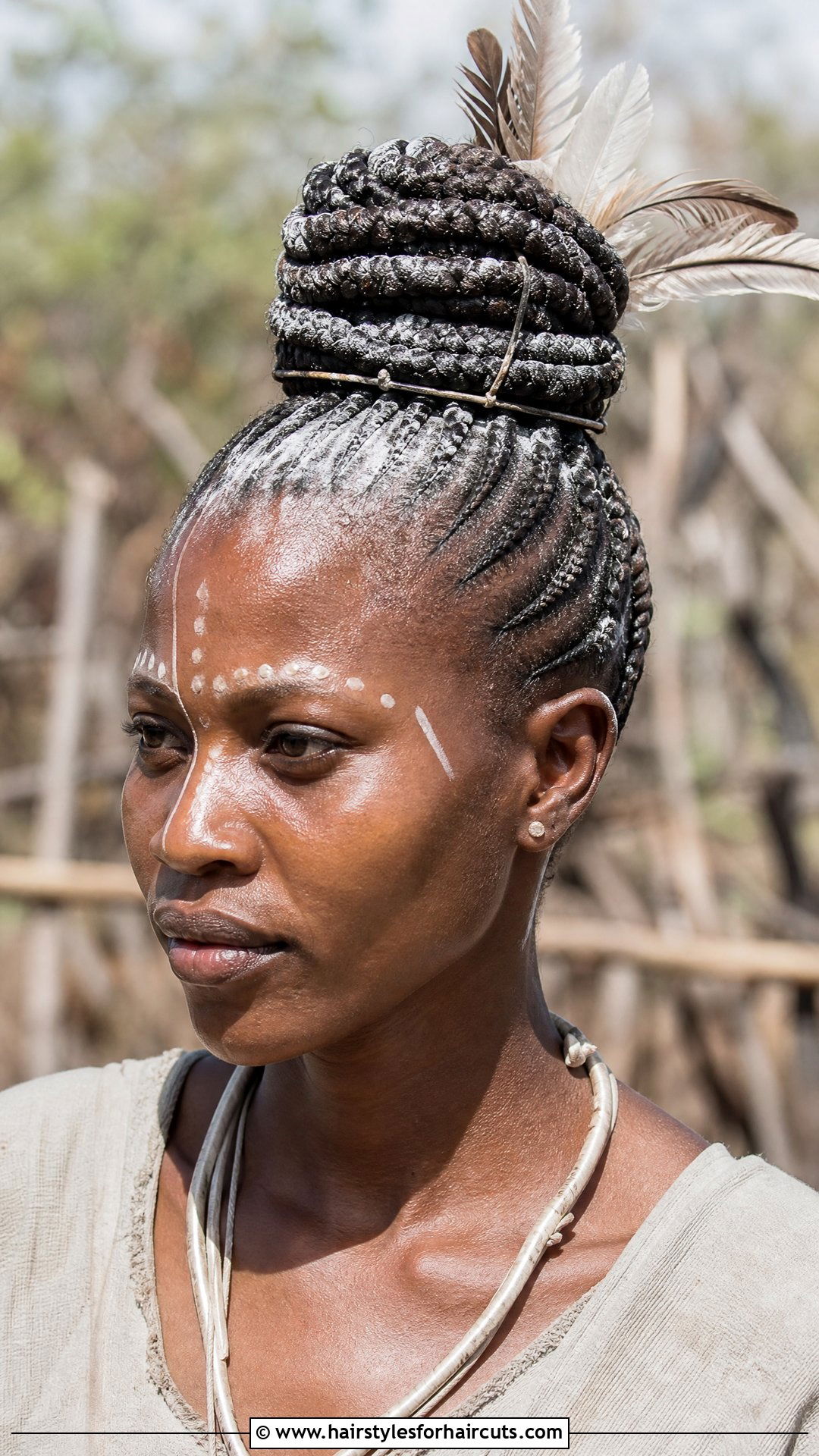
The subtle beauty of a perfectly symmetrical bun can speak volumes about a community’s artistic standards. The Karo braided bun is a cherished hairstyle among the Karo people of Ethiopia, who are famous for their elaborate body painting and hair art. The hair is carefully parted into distinct sections, braided tightly, and then coiled into a smooth, compact bun at the crown or back of the head. To enhance the look, the hair is often mixed with ochre and animal fat, giving it a sleek, sculpted finish. This beautiful, minimalist style is often accessorized with white chalk or feathers, creating a stunning visual contrast that celebrates natural beauty and artistic expression.
23. Tribal Micro Braids
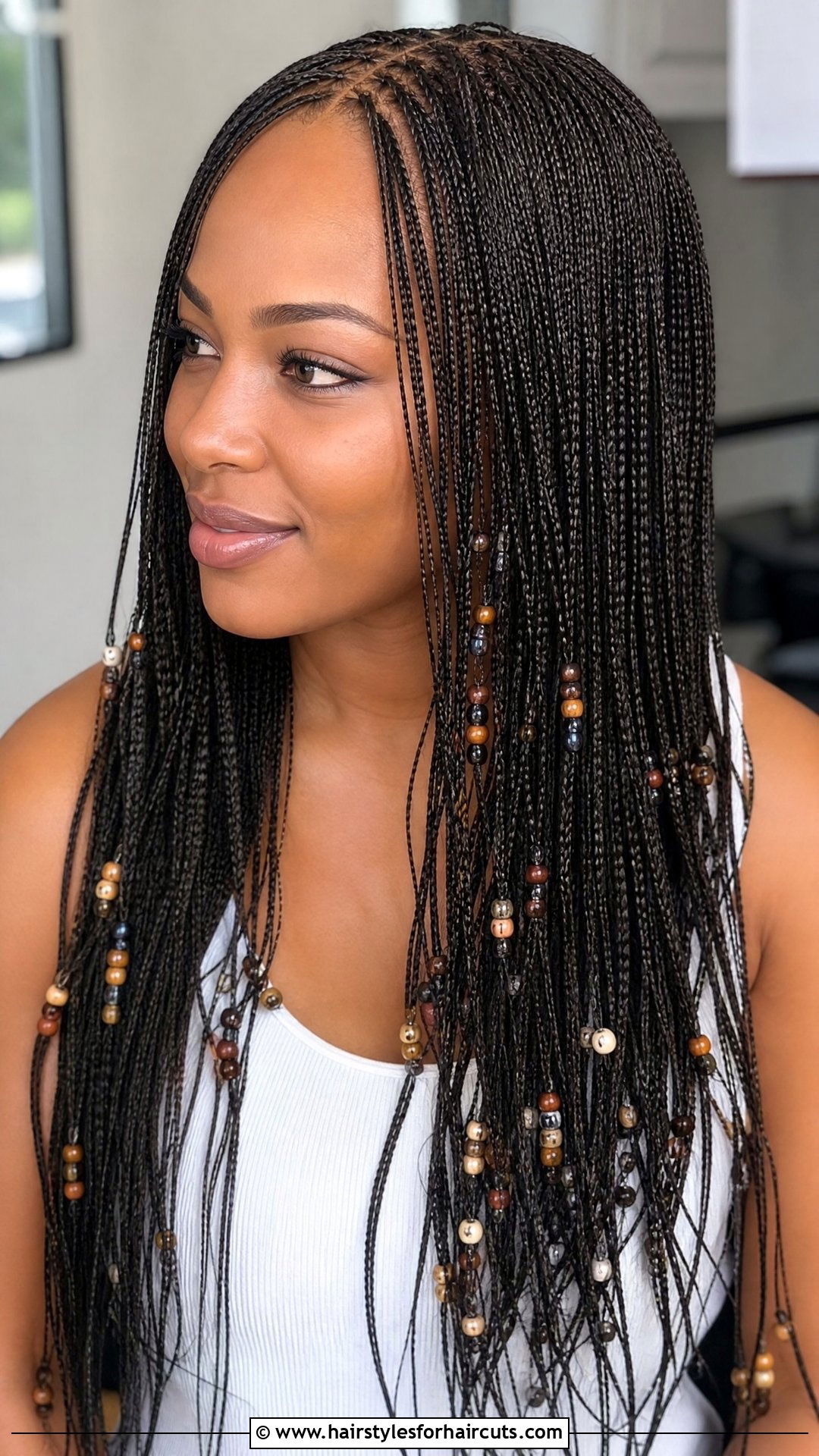
Have you ever marveled at the incredible patience and skill required to create hundreds of tiny, delicate braids? Tribal micro braids are a testament to the extraordinary craftsmanship of African hair styling. Unlike thicker cornrows or box braids, micro braids are incredibly thin, taking hours or even days to complete. These slender plaits offer immense versatility, as they can be worn loose, pulled into an updo, or styled into intricate patterns along the scalp. The fine texture of the braids mimics the movement of free-flowing hair while providing exceptional protection for the natural hair underneath. Adorned with small beads or shells, this meticulous style is a stunning display of endurance and cultural dedication.
24. Tuareg Wrapped Turban Braids

What could be more iconic than the striking blue veils and intricate wraps of the desert nomads? Tuareg wrapped turban braids offer a unique look that blends practical hair care with cultural modesty. The Tuareg men of the Sahara often grow their hair long and braid it into thick, intricate plaits. These braids are then carefully concealed beneath a massive, multi-layered indigo turban known as a tagelmust. While the braids themselves are often hidden, they are an essential part of the overall styling, keeping the hair protected from the harsh desert winds and sand. When revealed, the long, thick braids stand as a proud symbol of nomadic heritage and masculine beauty.
25. Senegalese Tribal Twist Updo

The smooth, rope-like texture of perfectly executed twists creates a deeply satisfying visual rhythm. The Senegalese tribal twist updo takes the classic Senegalese twist technique and elevates it into a sophisticated, cultural statement. Originating from Senegal, these twists are created by wrapping synthetic braiding hair around the natural hair, resulting in a sleek, tightly coiled rope. When gathered into an updo, the twists can be spiraled into a massive, elegant bun or woven into a braided crown at the top of the head. This style provides excellent protection for natural hair while offering a refined, polished look that beautifully honors the rich braiding traditions of West Africa.
Conclusion:
Ultimately, taking the time to explore these 25 tribal hairstyles reveals far more than just beautiful ways to style hair. Each braid, knot, and sculpted crest tells a vibrant story of survival, community, and deep-rooted identity. These styles have stood the test of time, transitioning from ancient ceremonial necessities to modern symbols of cultural pride and artistic expression. Whether you choose to wear a fierce Fulani braid or an elegant Bantu knot, you are participating in a rich global legacy. Embracing these looks with respect and understanding allows us to appreciate the incredible craftsmanship and profound history that shapes the diverse world of indigenous hair traditions today and for future generations.

Leave a Reply