
Step back into the elegant era of the 1800s with these 25 victorian hairstyles that still captivate today. The Victorian period was defined by its strict social rules, but hair was an area where women could express incredible creativity and status. From intricate braided crowns to voluminous pompadours and soft romantic curls, these looks are truly timeless. Whether you are attending a themed event, a wedding, or just want to add some historical flair to your everyday look, there is a stunning option here for you. Modern styling tools make achieving these classic silhouettes easier than ever. Explore this curated collection of gorgeous historical hairdos and find the perfect elegant updo or flowing style to make you feel like true royalty.
1. Victorian Braided Updo

Have you ever wondered how women achieved such intricate looks without modern tools? The Victorian braided updo is a masterpiece of woven textures. This style features multiple braids wrapped and pinned into a beautiful, complex shape at the back of the head. It was a popular choice for daytime events and formal occasions alike. The tight weaving kept hair neat and controlled, which was very important during this era. Today, you can easily recreate this look by using a texturizing spray for grip before braiding. Secure the braids in a low figure-eight pattern for an authentic touch. This elegant updo works wonderfully for thick hair, giving you a regal and polished finish that lasts all day long.
2. Victorian Gibson Girl Updo

Picture the ultimate symbol of feminine beauty at the turn of the century. The Gibson Girl updo represents the pinnacle of Victorian and Edwardian style. Created by illustrator Charles Dana Gibson, this look features a massive, fluffy bouffant swept up on top of the head with soft, loose tendrils framing the face. Women used hair pads called “rats” to achieve that impressive height and volume. To get this iconic shape today, tease the hair at your crown and gently smooth the top layer over the padding. Pin the hair securely into a loose, soft bun at the back. The result is a romantic, statuesque silhouette that instantly elevates your entire aesthetic with classic, undeniable charm.
3. Victorian Psyché Knot

Feel the effortless romance of a simpler but striking historical look. The psyché knot became incredibly popular during the late Victorian era as women started moving away from overly stiff designs. This hairstyle is essentially a low, loose chignon or knot situated at the nape of the neck. It features a soft center part and gently swept-back sides that gather into the twist. The knot itself is slightly puffed rather than pulled tight, giving it a relaxed and natural appearance. It perfectly showcases the neck and shoulders. Use a soft hold gel to keep flyaways at bay while maintaining that gentle, touchable quality. This gorgeous look remains a favorite for modern brides seeking vintage elegance.
4. Victorian Pompadour Updo

Imagine sweeping your hair up into a dramatic, face-framing volume. The Victorian pompadour updo is all about height at the front. Women would carefully comb the front section of their hair forward, backcomb it heavily for volume, and then sweep it back over a supportive pad. The rest of the hair was usually styled into a bun or curls at the back. This style conveyed confidence and high fashion. To achieve a modern version, use a volumizing mousse at your roots before blow-drying. Pin the front section back securely, letting the back fall into a neat chignon. It creates a striking profile and beautifully elongates the neck for a truly sophisticated finish.
5. Victorian Chignon Bun

Discover the enduring charm of the most classic historical style. The Victorian chignon bun is a low, elegant knot positioned right at the nape of the neck. During the 19th century, this was the standard for respectable women, keeping hair tidy and out of the way. The style often featured a clean center part with the hair drawn back smoothly. Sometimes, decorative combs or fresh flowers were added for special occasions. You can create this timeless look by applying smoothing cream to tame frizz, then twisting the hair into a classic figure-eight shape. Secure it with bobby pins and a light mist of hairspray. It is a practical yet incredibly graceful option for any modern event.
6. Victorian Sausage Curls Updo

Listen to the subtle rustle of perfectly formed ringlets framing a delicate face. Sausage curls were a hallmark of Victorian beauty, especially in the early to mid-1800s. These thick, glossy curls were often worn framing the face or cascading down the back. For an updo, the back hair was braided or pinned up, while the front and sides featured these distinct, barrel curls. Achieving this look historically involved rag rolling or using hot tongs. Today, a large-barrel curling iron makes quick work of it. Pin the curls loosely to maintain their bounce and shape. This style adds incredible softness to the face and delivers a highly authentic historical vibe for any costume or formal event.
7. Victorian Braided Crown

Have you ever wanted to feel like royalty without a heavy tiara? The Victorian braided crown offers a natural, majestic solution. This style involves creating two long braids on either side of the head and then crossing them over the top to form a halo. It was a favorite for younger women and often seen in outdoor or garden settings. The braid crown keeps all the hair off the neck, making it ideal for warmer weather. Add small ribbon weaves through the braids for a pop of color and extra authenticity. This look is surprisingly simple to execute but looks incredibly intricate. It provides a romantic, ethereal quality that works beautifully for modern festivals or vintage weddings.
8. Victorian Marcel Wave Updo

Trace the distinct S-shaped waves that revolutionized historical hair styling. The Marcel wave became a sensation in the late Victorian era, thanks to inventor François Marcel. Unlike crimping, these deep, alternating waves added sophisticated texture to the hair. Women wore these waves cascading down or pinned up in elegant arrangements. For a stunning updo, the sides feature the distinct wave pattern, while the back is gathered into a soft bun. You can achieve this today using a deep-waver iron or a double-barrel curling iron. Pin the waves close to the scalp to maintain the pattern. This style gives a glamorous, high-society finish that instantly catches the eye and highlights your facial features perfectly.
9. Victorian Bouffant Updo

Experience the dramatic height that defined a generation of high society. The Victorian bouffant updo was all about volume, volume, and more volume. Women used backcombing and padding extensively to create a towering effect at the crown of the head. The sides were smoothed back, and the ends were tucked under or formed into a roll. This look was a staple for evening galas and formal portraits. To recreate this striking silhouette today, focus on building a solid base with heavy teasing and strong hold hairspray. Gently smooth the outer layer to hide the teasing. It is a bold, architectural style that commands attention and gives you an unmistakably powerful and polished vintage presence.
10. Victorian Half Up Half Down Style

Catch the gentle breeze with a style that offers the best of both worlds. The Victorian half up half down style perfectly balances formality with romantic softness. The top section of the hair is pulled back, often featuring a slight pouf or braided details, while the bottom flows freely in soft curls. This look was considered appropriate for daytime activities and less formal gatherings. Women often added decorative combs or small flowers where the pinned and loose sections met. Simply curl the bottom half, tease the crown for volume, and pin the sides back. It is a highly flattering look for almost any face shape and remains a popular choice for casual vintage-inspired outings today.
11. Victorian Loop Updo
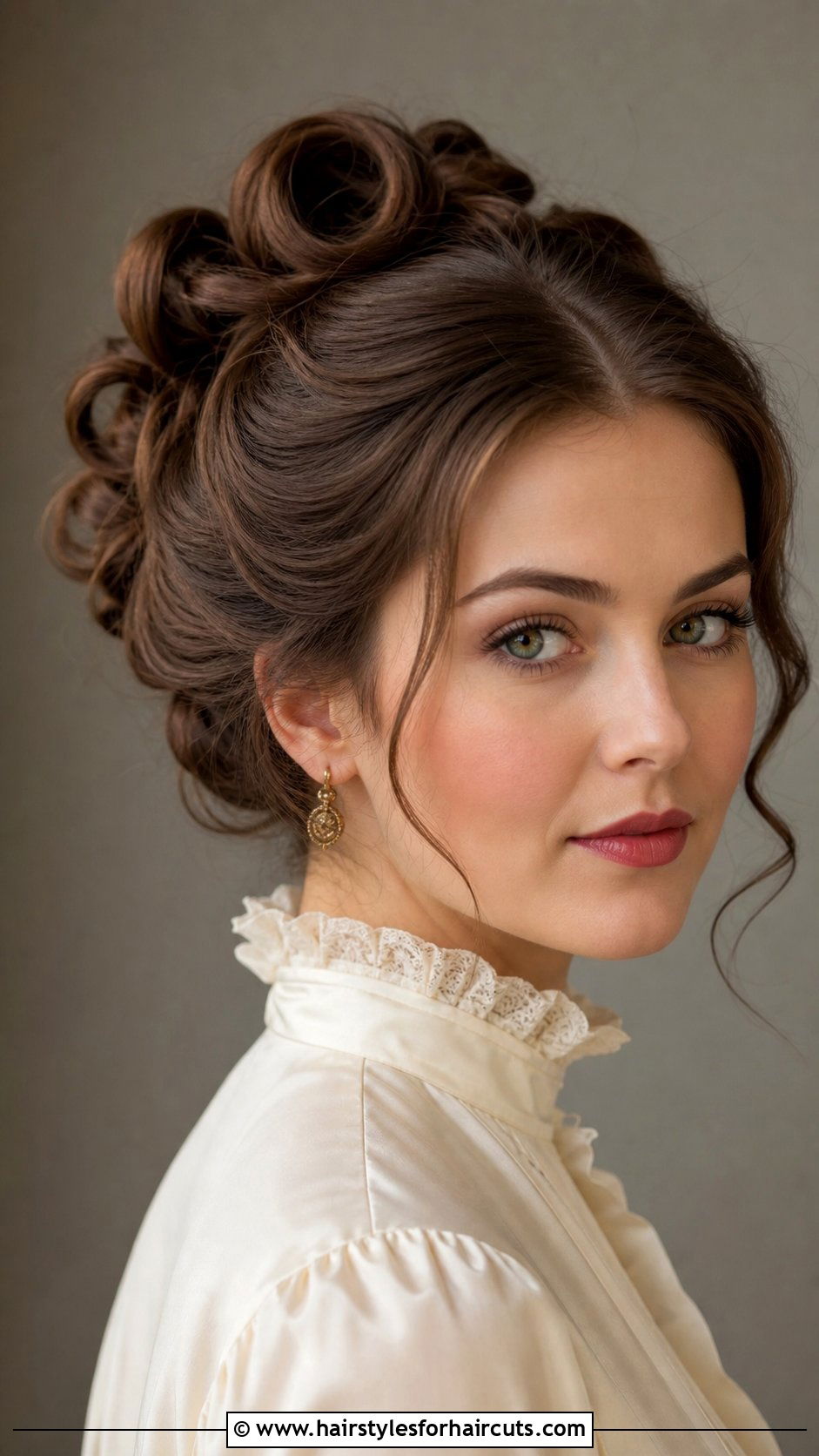
Appreciate the sculptural beauty of hair folded like fine silk ribbons. The Victorian loop updo features sections of hair pulled through a pin or barrette to create soft, hanging loops. This technique was a clever way to manage long hair while creating visual interest. Multiple loops could be arranged down the back of the head, resembling a cascade. It gave the appearance of very thick, abundant hair. Modern stylists often use this technique to add texture to bridal styles. Use a large hair pin to anchor the loops, ensuring they are uniform in size. This elegant arrangement provides a unique textural element that sets it apart from standard braids or buns.
12. Victorian Waterfall Curls

Visualize cascading tendrils of hair that look like a flowing river. Victorian waterfall curls were a breathtaking choice for evening wear. This style typically involved the hair being piled high at the front, with long, thick curls tumbling down the back like a waterfall. Often, the curls were created using rags or paper to ensure they were bouncy and frizz-free. For a modern take, use a curling wand to create loose, flowing ringlets starting from the mid-shaft. Pin the top section up for volume, letting the curls fall naturally. This creates a dramatic, sweeping effect that moves beautifully. It is the ultimate romantic look for anyone wanting to make a grand, elegant entrance.
13. Victorian Milkmaid Braid

Step into the countryside with a practical yet picturesque historical style. The Victorian milkmaid braid involves two simple plaits wrapped over the top of the head. Originally a working-class style to keep hair immaculate during daily chores, it was later adopted by upper-class women for casual summer outings. The braids cross over each other, completely enclosing the head in a crown of woven hair. This style works best on medium to long hair. You can pull out a few face-framing pieces to soften the look. It is a charming, rustic style that requires minimal tools but delivers maximum visual impact. This braid remains a staple for bohemian and vintage-inspired fashion enthusiasts everywhere.
14. Victorian Roll Updo
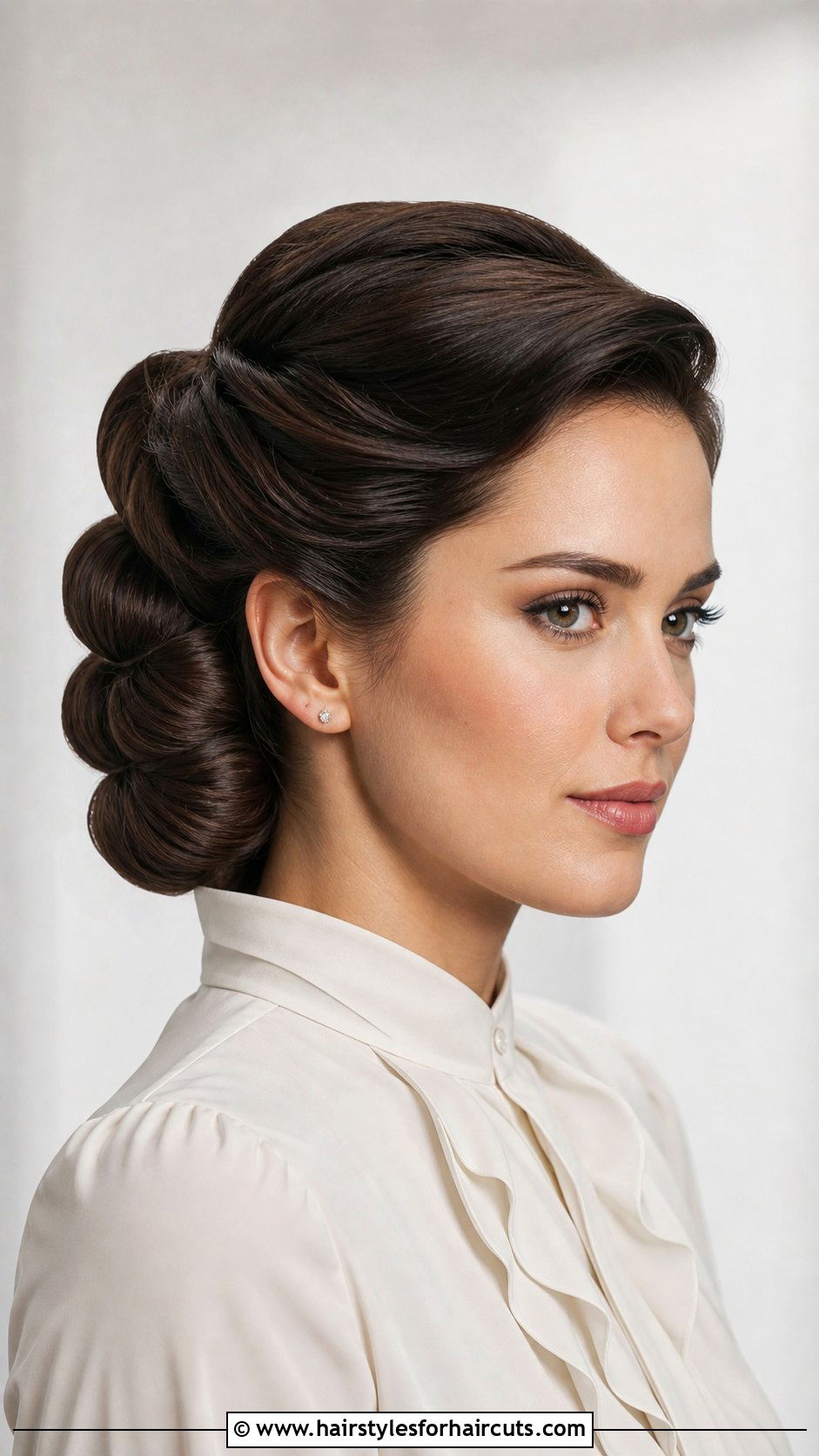
Notice the smooth, seamless lines of hair rolled into perfect cylinders. The Victorian roll updo is a sleek and sophisticated choice. Hair is sectioned, twisted, and rolled inward to create tubular shapes, often placed at the nape or sides of the head. This style was a predecessor to the victory rolls of the 1940s, but Victorian rolls were typically softer and less theatrical. They relied on the natural shine of the hair to make a statement. Use a bit of pomade to smooth down any flyaways before rolling. This creates a very neat, tailored appearance that works beautifully for professional settings or formal dinners. It is a timeless technique that always looks incredibly elegant.
15. Victorian Pineapple Updo

Marvel at the intricate detailing that makes this style truly unique. The Victorian pineapple updo involves taking sections of hair, looping them, and spreading the ends out like the spiky top of a pineapple. This technique was often used to create elaborate, towering structures on top of the head. It was a sign of high fashion and wealth, requiring a lady’s maid to execute properly. The spread ends were sometimes curled or ribbed for extra texture. To recreate a softer modern version, gently loop sections of hair through an elastic or pins, teasing the ends slightly. It adds fun, unexpected height and texture. This is a fantastic conversation starter at any historical costume event.
16. Victorian Fishtail Braid Updo
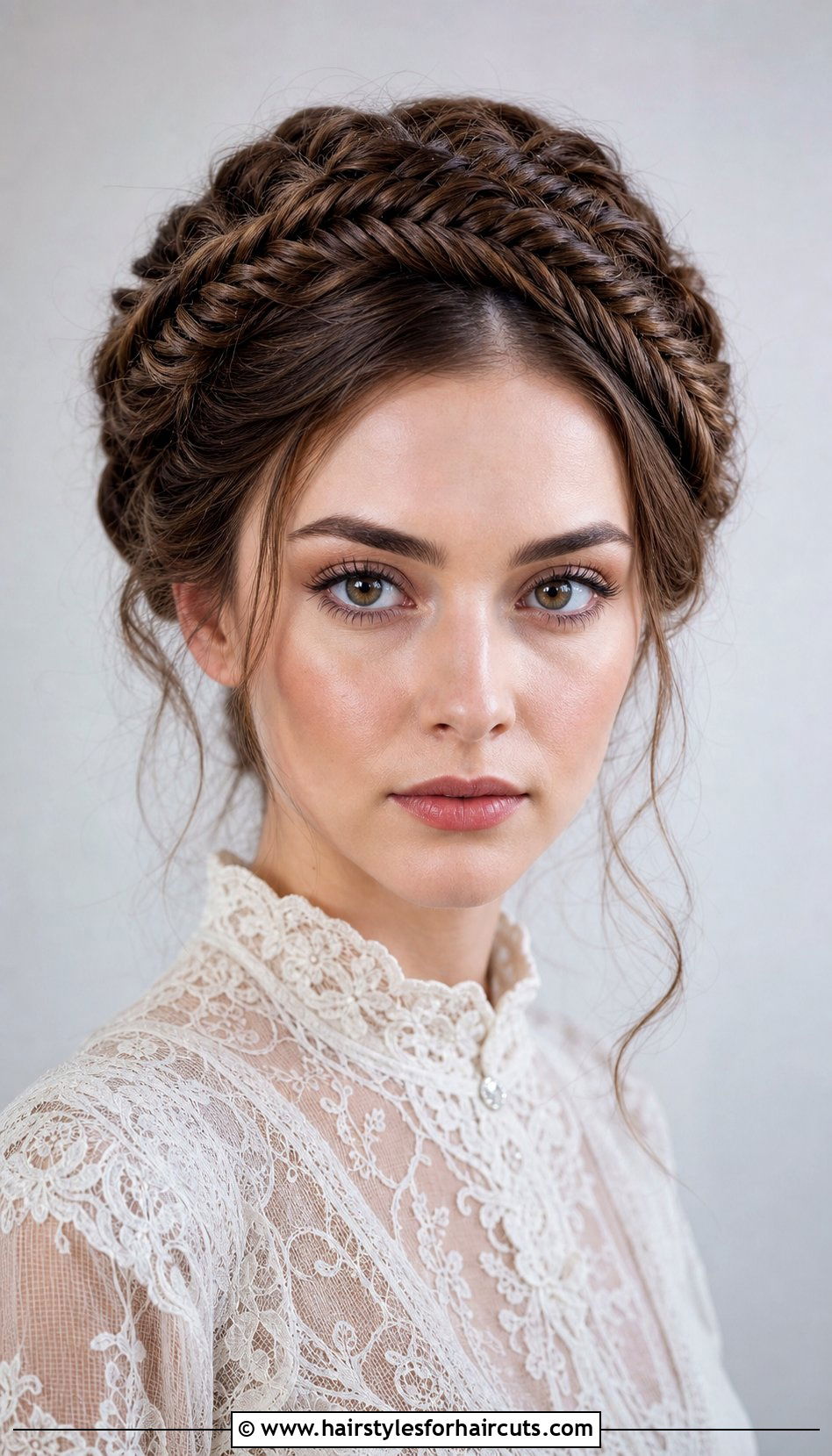
Run your fingers over the intricate, herringbone pattern of a classic plait. The Victorian fishtail braid updo elevates a simple weaving technique into a stunning formal arrangement. While standard three-strand braids were common, the fishtail offered a tighter, more delicate look that resembled fine lace. Women would braid their hair tightly and then wrap it around their head or pin it into a complex chignon. The tight weave ensured the style lasted for days. Apply a styling cream before braiding to keep the sections smooth and defined. This updo provides a rich, textural element that catches the light beautifully. It is a sophisticated option for anyone who loves detailed, meticulous hair artistry.
17. Victorian Curl Updo

Embrace the bouncy, playful energy of tightly coiled ringlets pinned high. The Victorian curl updo is different from the sausage curl look; these curls are often smaller, pinned randomly, and piled onto the top of the head. This created a very fluffy, cloud-like appearance that was highly desirable in the 1870s and 1880s. The volume was key, and women often used hairpieces to achieve the required fullness. To get this look today, use a small-barrel curling iron and pin each curl individually to the crown. Let a few curls dangle around the forehead. It offers a youthful, energetic vibe that softens strong facial features and adds a touch of whimsical romance.
18. Victorian Twisted Updo

Discover the understated elegance of simple ropes of hair. The Victorian twisted updo relies on two-strand twists rather than braids to create its shape. The hair is divided, twisted, and then wrapped around itself into a low bun or figure-eight. This method was incredibly popular because it was easy to do without a maid’s help. The twists create a thicker, more substantial look than a basic bun. Apply a volumizing powder at the roots before twisting to give the hair some grit and hold. This style is perfect for everyday wear, offering a clean, graceful silhouette that does not require hours in front of the mirror. It is practical, beautiful, and timeless.
19. Victorian Center Part Updo

Trace the severe but striking line that dictates this classic silhouette. The Victorian center part updo was practically mandatory during the early to mid-Victorian era. A sharp, clean line down the middle of the scalp symbolized modesty and respectability. The hair was then drawn back tightly over the ears and secured in a bun or braid at the back. There were no fluffy bangs or soft tendrils to hide the forehead. Use a fine-tooth comb and a strong gel to achieve that razor-sharp part today. It gives a very sleek, architectural feel to the face. This look projects quiet confidence and pairs beautifully with high-collared dresses or dramatic makeup looks.
20. Victorian Low Bun

Appreciate the simple, grounding weight of hair gathered at the nape. The Victorian low bun is the most foundational style of the era. Unlike the elaborate piled-high looks, the low bun was worn by women of all classes. It was practical, easy to maintain, and kept hair out of the way for work or daily chores. It could be smooth and sleek or slightly soft and loose. The key was keeping it at the very bottom of the hairline. Apply a smoothing serum to keep the look polished. This is the ultimate minimalist vintage style. It provides a blank canvas to showcase spectacular earrings or a beautiful necklace without competing for attention.
21. Victorian Side Chignon

Feel the asymmetrical charm of a bun placed slightly off-center. The Victorian side chignon offers a slight twist on the traditional back bun. Positioned just below or behind the ear, this style was considered a bit more romantic and less severe. It allowed beautiful necklines to be shown off on one side. Women often adorned this look with ornate hair combs or fresh greenery. To create this, simply gather your hair to one side and twist it into a loose knot. Pin it securely, allowing a few wispies to escape. It frames the face beautifully and adds a touch of relaxed glamour to any outfit. This is a universally flattering and highly feminine choice.
22. Victorian Ringlet Updo

Listen to the slight bounce of perfect, spiraling curls. The Victorian ringlet updo focuses on long, corkscrew curls that are pinned up to create a halo effect. Unlike the stiff sausage curls, ringlets were often finer and more delicate. They were frequently worn by younger girls and unmarried women. The back hair would be braided, while the sides and front were composed of these long, hanging spirals. Use a thin curling iron and a setting spray to get defined, lasting spirals today. Gently pin a few curls back to keep them out of your eyes while letting the rest frame your face. This creates an angelic, youthful look that is impossible to ignore.
23. Victorian Hair Comb Updo

Catch the glint of metal or the shine of tortoiseshell holding a style in place. The Victorian hair comb updo relies on beautiful decorative combs as the main focal point. The hair itself was often styled in a simple low bun or chignon, but the comb transformed it into a work of art. Intricate metalwork, pearls, or carved horn were popular choices. The comb was inserted at the top or side to hold the rolls in place. You can easily recreate this by styling a basic updo and adding a vintage comb. It is a fantastic way to elevate a simple hairstyle instantly. This look is perfect for formal occasions where you want to showcase antique accessories.
24. Victorian Braided Bun

Notice the textural contrast between a woven plait and a smooth, rounded knot. The Victorian braided bun combines two classic elements into one cohesive style. A single, thick braid is formed from the nape of the neck and then wrapped around its own base to create the bun. This was a highly practical way to secure very long, thick hair. The braid adds visual interest and dimension that a plain bun lacks. Apply a shine spray to make the braid stand out before wrapping it. Pin the ends securely underneath. It is a durable, beautiful style that will not budge throughout the day. This is an ideal choice for busy women who still want a polished look.
25. Victorian Puff And Curls Updo

Experience the ultimate combination of structured volume and soft texture. The Victorian puff and curls updo features a dramatic, puffed section at the crown, paired with cascading curls at the back or sides. This style was the height of fashion in the 1860s. The “puff” was achieved using a pad or net to support the hair, while the curls provided a romantic counterbalance. It is a highly dramatic and feminine look. To get this today, use a hair donut at the crown, smooth hair over it, and curl the remaining lengths. It creates a striking, hourglass silhouette for the hair that perfectly complements fitted bodices and full skirts. This look is pure historical drama.
Conclusion:
Mastering these 25 victorian hairstyles opens up a world of timeless elegance and romantic beauty. The Victorian era was a remarkable time for hair fashion, bringing us techniques and silhouettes that we still love and use today. From the towering heights of the pompadour to the simple grace of the psyché knot, there is a historical look for every hair type and occasion. You do not need a lady’s maid to achieve these stunning results. With modern styling tools, a little patience, and the right accessories, you can bring the past to life. Try incorporating one of these gorgeous updos into your next special event. Embrace the charm, volume, and undeniable sophistication of the 1800s.

Leave a Reply