
Vintage hairstyles for short hair offer a timeless way to add elegance and character to your look. These classic cuts, from the daring bobs of the 1920s to the sleek mods of the 1960s, prove that short hair can be incredibly versatile and stylish. Whether you’re drawn to the glamour of Old Hollywood or the rebellious spirit of the flapper era, there’s a vintage short hairstyle that perfectly captures your personal flair. This guide explores 25 iconic looks, each a complete styling statement that transforms your entire appearance, not just a single detail.

1. 1920s Eton Crop Hairstyle

This remarkably bold and androgynous cut was the epitome of 1920s rebellion. The Eton Crop is a super short, sleek hairstyle, often slicked down close to the head, with no visible parting. It was famously worn by women seeking a drastic break from traditional long hair, symbolizing the newfound freedom of the flapper era. The style is exceptionally low-maintenance but makes a powerful statement, framing the face sharply and highlighting facial features. To achieve an authentic look, hair is cut very short all over, often with a slightly longer fringe brushed forward, and smoothed down with pomade or gel for a polished finish. It pairs perfectly with a cloche hat or a headband for a complete vintage ensemble.
2. 1920s Orchid Bob Hairstyle

The Orchid Bob is a softer, more feminine variation of the iconic 1920s bob. Unlike the blunt bob, this style features gentle, sweeping curves that frame the face, reminiscent of the petals of an orchid flower. It typically falls just below the ears, with the ends curved under or flipped slightly upward. This look often incorporated Marcel waves or finger waves for added texture and movement, creating a more romantic and approachable vibe than the severe Eton Crop. It was a popular choice for women who wanted to embrace the short hair trend without going extremely short. Styling involves setting the hair in waves and using a light hold product to maintain the soft, sculpted shape throughout the day.
3. 1920s Kiss Curl Hairstyle
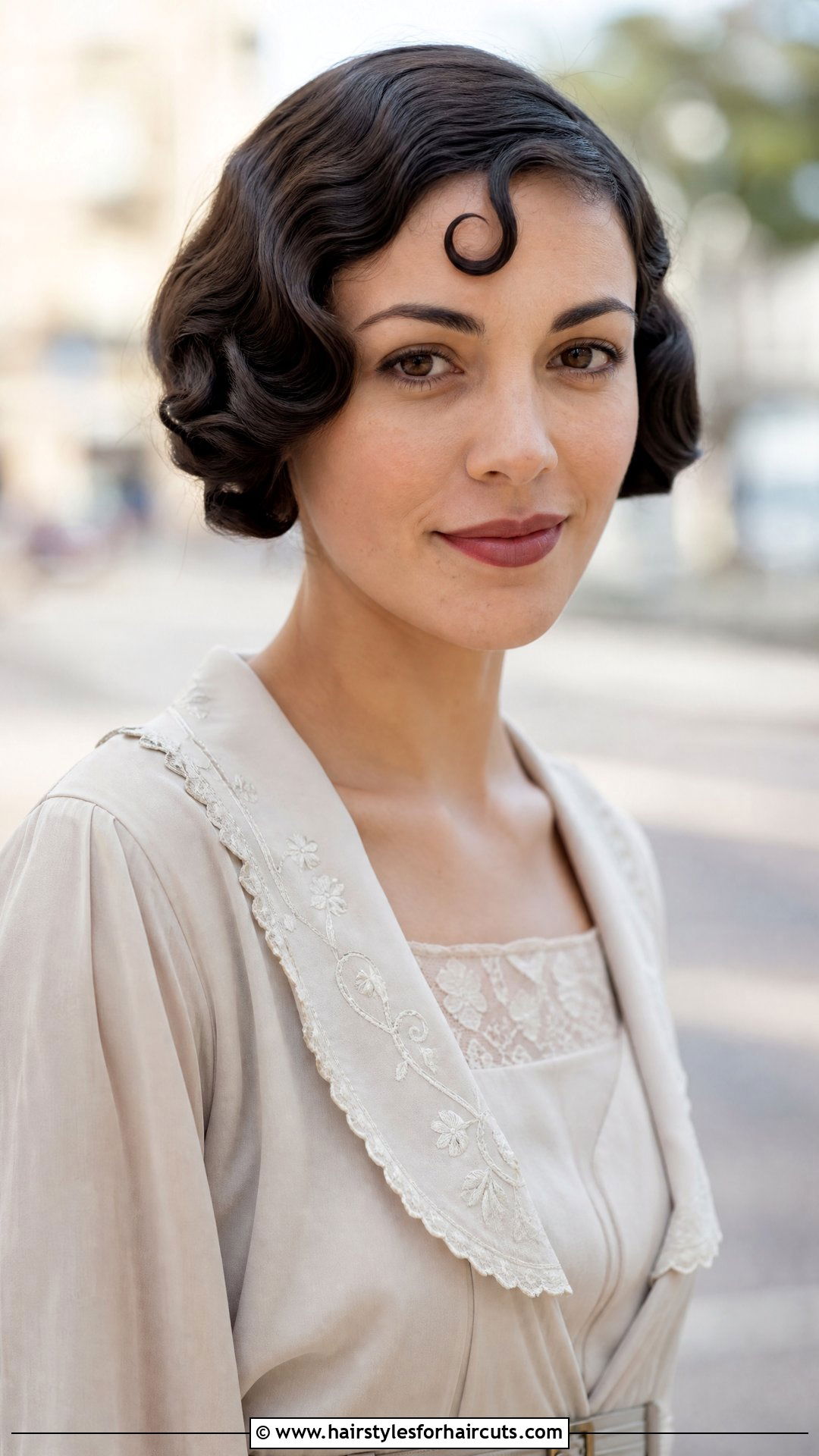
A playful and flirtatious accent that defined 1920s glamour, the kiss curl is a single, perfectly sculpted curl or wave placed strategically on the forehead or cheek. It wasn’t a standalone cut but a defining styling element for short hair, particularly bobs and crops. The kiss curl was often paired with a sleek bob or an Eton Crop, adding a touch of softness and femininity to otherwise severe styles. Creating this look involved using a curling iron or pin curls to form a precise, spiral curl, then securing it with a bobby pin until set. It was a signature detail for Hollywood starlets and fashionable women, symbolizing the era’s mix of innocence and sophistication.
4. 1920s Flapper Bob Hairstyle

The quintessential flapper bob is the hairstyle most associated with the roaring twenties. It is a blunt, one-length cut that typically sits at the chin or just below, with no layers. This simple yet revolutionary style was a stark rejection of the long, Gibson Girl hair of the previous era. It was often worn straight and sleek, but could also be styled with waves, curls, or the famous kiss curl for added drama. The bob’s uniform length made it easy to tuck under a cloche hat, a essential accessory for any flapper. Achieving this look requires a precise cut and smoothing the hair with a shine serum or pomade to maintain its sharp, geometric line.
5. 1930s Pageboy Hairstyle

The 1930s Pageboy is a sleek, polished style that evolved from the 192s bob, becoming softer and more glamorous. It features a side part with hair swept smoothly to one side, often with the ends curled under in a gentle roll that resembles the shape of a pageboy’s cap. This look is all about smooth, shiny waves with not a hair out of place, reflecting the decade’s bias towards refined elegance. The Pageboy could be worn at various lengths, from just below the ears to the shoulders, and was frequently seen on Hollywood actresses like Jean Harlow. Styling involves setting the hair in large pin curls or using a curling iron to create smooth, uniform waves, then brushing them into a seamless, glossy finish.
6. 1930s Finger Wave Hairstyle

Finger waves are a sculpted, S-shaped wave pattern created using your fingers, a comb, and styling lotion. This iconic 1930s technique wasn’t a haircut but a sophisticated styling method applied to short hair, particularly bobs. The waves are molded close to the scalp, creating a sleek, structured look that exudes vintage glamour. It was a staple for evening wear and special occasions, giving short hair an elegant, dressed-up feel. Creating finger waves requires patience and practice: hair is dampened with setting lotion, then shaped into waves using the fingers and a comb, and allowed to dry completely before being gently brushed out for a soft, controlled wave pattern.
7. 1930s Marcel Wave Hairstyle

Similar to finger waves but created with a heated curling iron, the Marcel wave offers a more defined and lasting curl pattern. Named after François Marcel, the inventor of the curling iron, this technique produces deep, uniform waves that add significant volume and texture to short hair. The Marcel wave was hugely popular in the 1930s for its polished, glamorous finish, often seen on movie stars and in fashion magazines. Unlike finger waves, which are sculpted wet, Marcel waves are set into dry hair with heat, resulting in a bouncier, more resilient wave. This style works beautifully on bob cuts, giving them a sophisticated, movie-star quality.
8. 1940s Victory Rolls Hairstyle

Victory rolls are a iconic 1940s style where sections of hair are rolled upward and pinned to create tube-like curls, often framing the face. While commonly associated with longer hair, this look was adapted for short hair by creating smaller, more compact rolls or focusing on the front sections. The style symbolized patriotism and effort during wartime, as women used their hair to show support. For short hair, victory rolls can be placed on the sides of the head, with the back hair styled in soft waves or curls. This look pairs perfectly with a bandana or headscarf for a authentic 1940s Rosie the Riveter vibe.
9. 1940s Pin-Up Curl Hairstyle

The classic pin-up curl is a voluminous, bouncy curl that exudes playful femininity. In the 1940s, this style was often achieved with pin curls or rag rollers for short hair, creating tight, defined curls that were then brushed out for softer, more glamorous waves. Pin-up styles for short hair often featured a deep side part with curls piled on one side or styled into a half-up, half-down look. This aesthetic is synonymous with wartime morale-boosting posters and Hollywood stars like Betty Grable. To get the look, set your short hair in small pin curls, let them dry completely, then gently brush them into smooth, shiny waves and arrange them into a playful, face-framing style.
10. 1940s Hollywood Wave Hairstyle

This is the epitome of 1940s silver screen glamour. The Hollywood wave is a smooth, shiny, S-shaped wave that cascades elegantly, often with a deep side part. For short hair, this meant a bob cut styled into these luxurious, flowing waves. The look was all about polished perfection and old-world elegance, frequently seen on actresses like Veronica Lake. Achieving this style involves setting the hair in large pin curls or using a large-barrel curling iron, then carefully brushing the curls into seamless, glossy waves. A light spritz of hairspray keeps the waves in place without stiffness, maintaining that fluid, glamorous movement.
11. 1950s Italian Cut Hairstyle

The Italian Cut is a short, layered hairstyle that became a sensation in the 1950s, popularized by actresses like Sophia Loren. It is a textured, choppy cut with layers throughout, often worn with a side-swept fringe and plenty of volume. This style feels more relaxed and playful than the sleek looks of previous decades, with a soft, feathery quality. The layers are designed to move naturally and can be styled with a bit of mousse for lift and texture. It’s a versatile look that works well with natural wave or can be blow-dried smooth for a more polished finish, capturing the effortless elegance of la dolce vita.
12. 1950s Bouffant Hairstyle

The bouffant is all about height and volume at the crown, creating a rounded, puffy silhouette. For short hair, this was achieved by backcombing the top section of hair and smoothing the outer layer over it, then setting the style with hairspray. The sides and back were often kept sleeker, sometimes curled under. This look, epitomized by First Lady Jackie Kennedy, was the height of 1950s and early 1960s sophistication. A short bouffant can be worn with a slight flip at the ends or smooth all around, and it pairs wonderfully with a headband or a small tiara for formal occasions.
13. 1950s Poodle Cut Hairstyle

The Poodle Cut is a tight, curly short hairstyle that resembles the fluffy coat of a poodle, hence the name. It was a playful, high-maintenance style popular in the 1950s, featuring short, all-over curls with extra volume on top. This look was achieved with tight perm curls or by setting the hair in very small pin curls. The result is a soft, rounded, and incredibly curly style that frames the face with bouncy ringlets. It’s a fun, whimsical look that stands out, best maintained with curl-enhancing products and a diffuser attachment when drying to keep the curls defined and frizz-free.
14. 1950s Pixie Cut Hairstyle

The pixie cut emerged in the 1950s as a daring, ultra-short style, popularized by Audrey Hepburn in “Roman Holiday.” It’s a short, layered cut with longer pieces on top that can be styled with texture and volume, and shorter, tapered sides and back. The pixie is chic, low-maintenance, and highlights facial features beautifully. For a vintage 1950s feel, style it with a bit of gel or pomade for a piece-y, textured look, or brush it smooth for a more polished appearance. This cut represents a major step in the liberation of women’s hair fashion, embracing simplicity and natural beauty.
15. 1960s Mod Bob Hairstyle

The Mod bob is a sharp, geometric cut that defines the 1960s mod fashion movement. It’s a blunt, one-length bob, often worn at the jawline or slightly longer, with absolutely no layers. This style is all about clean lines and a severe, striking shape. It was famously worn by fashion icons like Mary Quant and Vidal Sassoon’s clients. The Mod bob is typically styled stick-straight and smooth, emphasizing its precise cut. For authentic vintage styling, use a flat iron and shine spray to achieve a glossy, glass-like finish. This look is the epitome of 1960s space-age chic and minimalist cool.
16. 1960s Vidal Sassoon Bob Hairstyle

Vidal Sassoon revolutionized hairdressing in the 1960s with his architectural, wash-and-wear cuts. His bob is a precision-cut, geometric style that falls into place perfectly without needing much styling. Unlike the blunt Mod bob, Sassoon’s bobs often featured subtle layering or graduation at the back, allowing for natural movement. The most famous is the “Five-Point Cut,” a asymmetric, layered bob. These cuts were designed to be low-maintenance and liberating, freeing women from weekly salon sets. A Sassoon bob should be cut by a skilled stylist to ensure the shape is perfect, then can be simply blow-dried or air-dried for a sleek, modern look.
17. 1960s Twiggy Pixie Hairstyle

Twiggy’s pixie is the iconic 1960s version of the short cut, characterized by its boyish charm and wispy, feathery layers. It’s a very short, layered cut with long, side-swept bangs that often cover one eye. The sides and back are clipper-cut short, while the top is left longer and styled for texture and movement. This look is androgynous yet undeniably feminine, capturing the youthful, rebellious spirit of the swinging sixties. To style, use a matte paste or wax to piece out the layers and create that signature disheveled, effortless vibe. It’s a timeless cut that flatters many face shapes.
18. 1960s Flipped Bob Hairstyle

The flipped bob is a playful 1960s take on the classic bob, where the ends are flipped upward and outward. This style often featured a side part and was cut just below the chin, with the bottom inch or two flipped using a curling iron or rollers. The flip added a bouncy, cheerful quality to the sleek bob, making it perfect for the decade’s optimistic vibe. It’s a relatively easy style to achieve: blow-dry your bob smooth, then use a large-barrel curling iron on the ends, rolling the hair upward and away from your face, and set with hairspray for a retro flip that holds all day.
19. 1920s Cloche Hat Hairstyle

The cloche hat and the bob were inseparable in the 1920s. The hairstyle worn under a cloche was specifically designed to complement the hat’s bell shape. Hair was cut in a bob that followed the line of the hat, often with a subtle wave or the hair tucked smoothly behind the ears. When the hat was removed, the hair would often retain a slight indentation, creating a natural, lived-in wave. This look is about the harmony between the cut and the accessory. To achieve it, ensure your bob is cut to sit just below the hat’s brim, and style it with a bit of mousse for soft hold that won’t flatten under the hat.
20. 1930s Scarf Roll Hairstyle

During the 1930s, headscarves were both a practical and stylish accessory. The scarf roll hairstyle involves tying a scarf around the head, over styled hair, creating a polished and put-together look. For short hair, this often meant styling the hair in soft waves or curls first, then placing the scarf over it, tying it at the nape or on the side, and tucking any loose ends under. The scarf protects the hairstyle while adding a pop of color and pattern. This look is perfect for bad hair days or a day at the beach, offering a quick way to look glamorous with minimal effort.
21. 1940s Snood Hairstyle
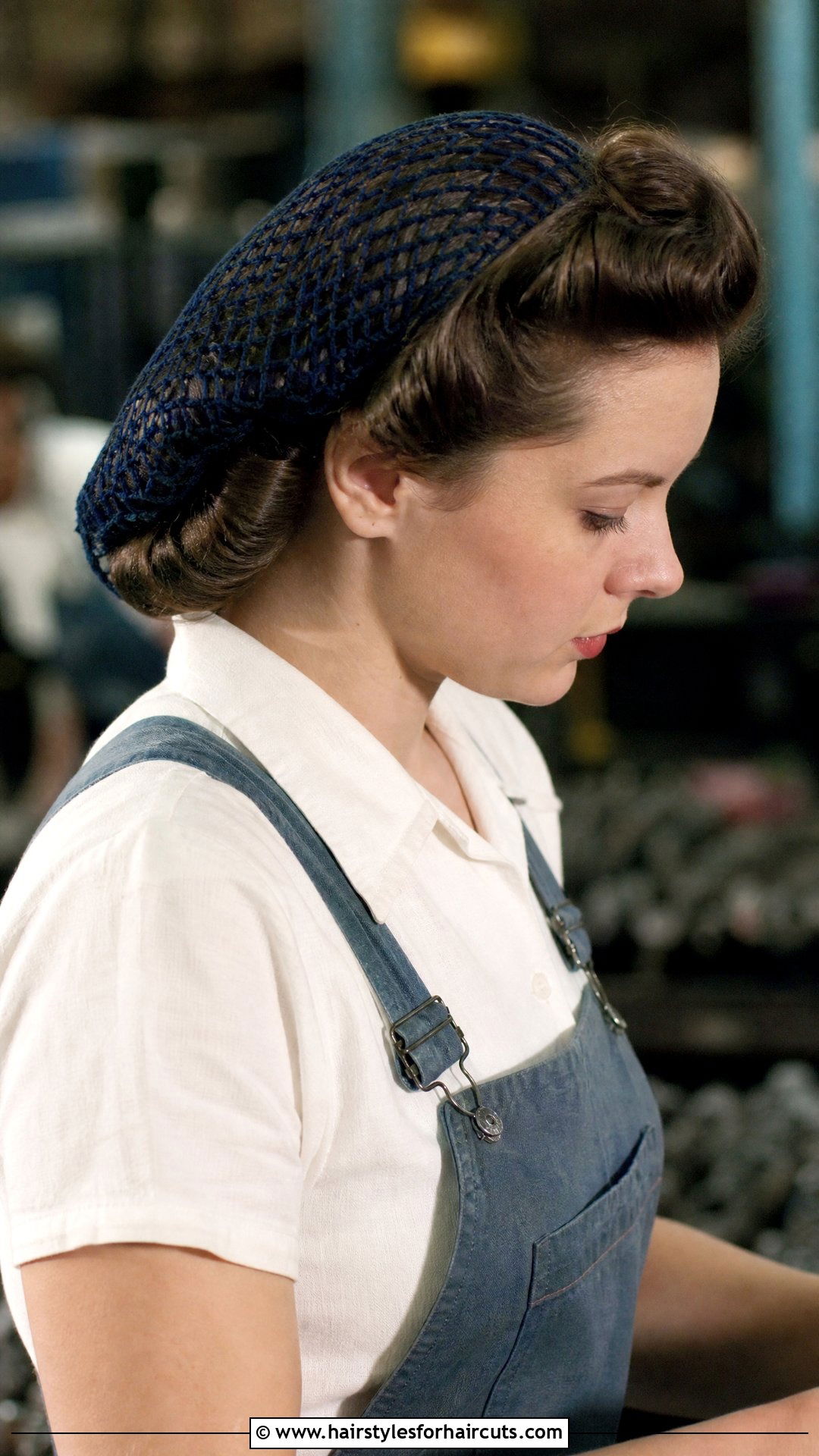
A snood is a net-like bag used to hold the hair at the back of the head. In the 1940s, it was a common and practical way to keep long hair out of the way during factory work, but it was also worn as a fashion accessory. For short hair, a small snood could be used to hold a low chignon or rolled style at the nape, or simply to add a decorative element. The hair would be styled first—often in rolls or waves—then gathered into the snood. This look is both practical and charming, instantly recognizable as 1940s era, and it pairs beautifully with period clothing.
22. 1950s Headband Curl Hairstyle

Headbands were a popular accessory in the 1950s, used to both style and decorate short hair. This look involves setting the hair in curls or waves, then placing a headband—often a scarf or a plastic style—over the hair, pushing it back from the face. The headband helps to hold the style in place and adds a preppy, polished finish. For short hair, this could mean a simple headband worn over a sleek bob or with the front sections pinned back. It’s a sweet, youthful look that’s easy to recreate, simply style your short hair as desired, then position the headband about an inch back from your hairline.
23. 1960s Pillbox Hat Hairstyle

The pillbox hat, famously worn by Jackie Kennedy, sat directly on top of the head and required a specific hairstyle to anchor it. The hair was typically styled in a sleek bouffant or smooth bob with volume at the crown, allowing the hat to perch securely. The back hair was often curled under or styled in a low roll. For short hair, this meant creating height and smoothness on top, with the sides and back providing a stable base. This look is the height of 1960s elegance and requires setting the hair with rollers or backcombing to create the necessary volume and structure to support the hat.
24. 1950s Curly Short Hairstyle

Beyond the poodle cut, the 1950s embraced a variety of curly short styles, from tight ringlets to softer, bouncy curls. These looks were often achieved with perms or pin curls and were all about controlled volume and shine. A curly short style could be worn with a side part and the curls piled on top, or with a fringe and curls framing the face. The key is well-defined curls that look healthy and vibrant. Use curl cream or mousse to enhance and hold your curls, and always diffuse or air-dry to prevent frizz. This style captures the fun, feminine essence of the decade.
25. 1960s Straight Short Hairstyle

As the 1960s progressed, a more natural, straight-haired look emerged, contrasting with the voluminous styles earlier in the decade. This look is a simple, straight bob or pixie cut, worn smooth and sleek. It reflects the growing influence of youth culture and a desire for less artificial styles. To achieve this vintage straight look, blow-dry your hair smooth with a round brush, or use a flat iron for a perfectly sleek finish. Apply a shine serum for that healthy, glossy sheen reminiscent of the era’s more relaxed, modern aesthetic. It’s a clean, minimalist look that feels timeless.
Conclusion:
Exploring these 25 vintage hairstyles for short hair reveals a rich tapestry of cultural history, technological innovation in styling, and evolving ideals of beauty. From the rebellious flapper bobs of the 1920s to the sleek, architectural cuts of the 1960s, each style offers a unique way to connect with the past while expressing personal style in the present. These looks are more than just retro inspiration; they are a testament to the enduring versatility and transformative power of short hair. By understanding the key cuts and techniques of each era, you can recreate these iconic looks with authenticity and confidence, adding a touch of timeless glamour to your modern life.

Leave a Reply